
Room size claims on air devices can be misleading because they are usually based on ideal, controlled environments rather than real-world conditions. They often ignore variables like high ceilings, furniture, pets, or smokers that decrease performance. These ratings can also be inflated to make devices seem more capable than they truly are. To truly understand how effective an air purifier will be in your space, it helps to look beyond the labels and explore the factors that influence real-world results.

Get oils, diffusers and self-care delivered free — and shop member deals
- Fast, free delivery on millions of items
- Access to Prime Big Deal Days deals on October 6–7
- Prime Video, Amazon Music and more included
Key Takeaways
- Room size ratings are often based on ideal conditions, not actual real-world environments.
- High-rated capacity doesn’t guarantee effective air cleaning in larger or complex spaces.
- Environmental factors like ceiling height and furniture can reduce device efficiency.
- Filter quality and maintenance are crucial; ratings don’t reflect ongoing performance.
- Energy usage and airflow rates influence real-world effectiveness beyond label claims.

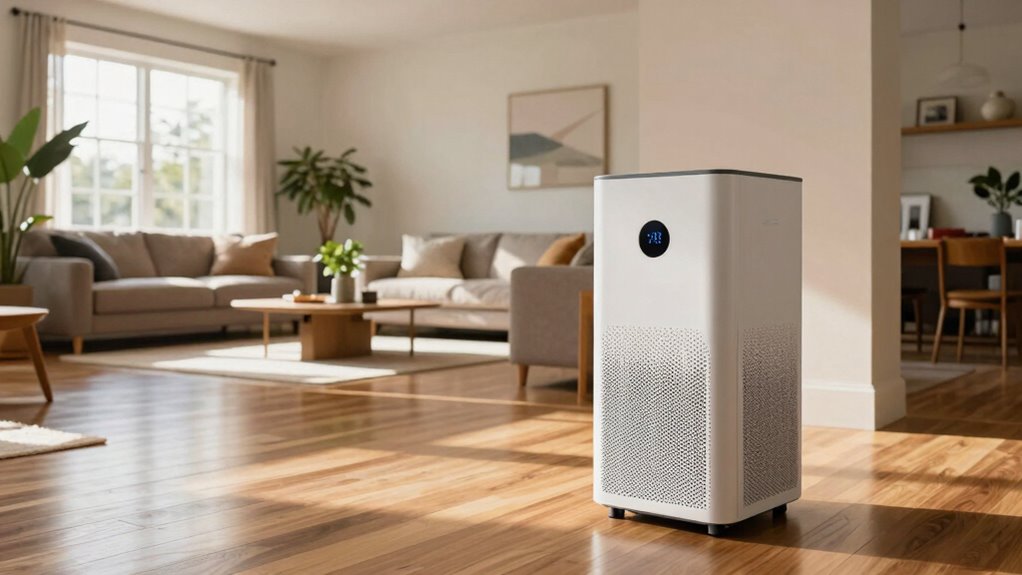
When shopping for air purifiers or humidifiers, you’ll notice that manufacturers often specify a “room size” for their devices. This metric suggests that the device can handle a certain square footage, but it doesn’t tell the full story. Many consumers assume that if a purifier is rated for a specific room size, it will perfectly clean the air in that space. Unfortunately, this isn’t always the case. The room size claim is often based on ideal conditions, ignoring real-world factors that can impact performance.
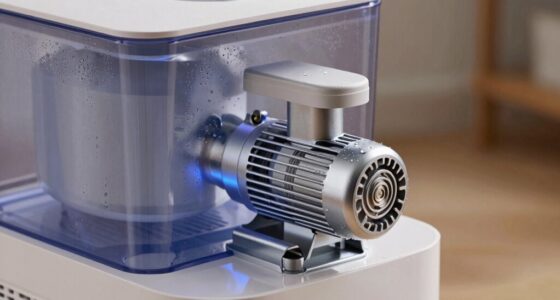
One key aspect to consider is air purifier filtration efficiency. A device might be rated for a large room, but if its filters aren’t effective at capturing the smallest airborne particles, it won’t deliver the clean air you expect. High-quality filters, like HEPA filters, are essential for removing allergens, dust, and pollutants, but they also require proper maintenance and replacement. If you ignore these factors, the device’s ability to maintain healthy air diminishes, regardless of its room size claim.
Effective filtration and regular maintenance are crucial for your air purifier to truly improve air quality.
Another overlooked factor is device energy consumption. Even if a purifier claims to service a large space, it might need to run at full power constantly to achieve ideal results. This can lead to increased energy use, higher utility bills, and faster wear on the device. Some manufacturers inflate room size ratings to make their products seem more capable, but the device’s actual performance in terms of airflow and filtration efficiency can fall short under real conditions.
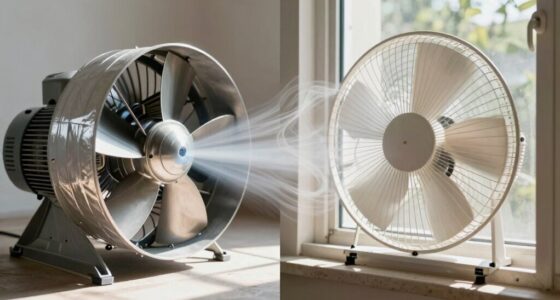
Environmental variables also play a role. For example, high ceilings, open floor plans, or the presence of pets and smokers can all affect how well a device performs. The initial room size claim doesn’t account for these variables, which can greatly reduce a purifier’s effectiveness. As a result, your air quality might not improve as much as advertised, leading to frustration or unnecessary device upgrades. Additionally, understanding the performance factors behind these ratings can help you make a more informed choice. The initial room size claim doesn’t account for these variables, which can greatly reduce a purifier’s effectiveness. A comprehensive evaluation of a device’s features, including airflow capacity and filter quality, provides a more accurate picture of its real-world performance. It’s also important to consider the airflow rate and how it interacts with room size and layout to ensure adequate circulation. Recognizing these performance considerations can prevent overspending on devices that won’t meet your needs. As a result, your air quality might not improve as much as advertised, leading to frustration or unnecessary device upgrades. In the end, the room size claims serve as a rough guideline rather than an absolute guarantee. To truly assess a device’s suitability, you need to look beyond the label. Consider the quality of its filtration system, the device’s energy consumption during operation, and how your environment may influence performance. Remember, a device rated for a larger room isn’t necessarily more effective if it’s inefficiently designed or poorly maintained. It’s about understanding the nuances behind these ratings, so you can choose an air purifier or humidifier that genuinely meets your needs, rather than being misled by simplified claims.
HEPA air purifier for large rooms
As an affiliate, we earn on qualifying purchases.
As an affiliate, we earn on qualifying purchases.
Frequently Asked Questions
How Do Room Size Claims Affect Air Purifier Performance in Real-World Scenarios?
Room size claims can be misleading because they often overstate a device’s ability to improve air quality efficiently. When you rely solely on these claims, you might find your air purifier underperforming in real-world scenarios, especially if the room is larger than the claim. To guarantee device efficiency, consider the purifier’s CADR rating and your room’s actual size, rather than just the manufacturer’s suggested room size.
What Factors Influence the Actual Effectiveness of Air Devices Beyond Size Claims?
You might think bigger means better, but factors like air quality and noise levels actually determine effectiveness. Ironically, a large device with high noise levels can be less practical than a smaller, quieter one that improves air quality efficiently. Your room’s layout, filter quality, and device maintenance also influence performance. So, don’t rely solely on size claims—consider how these other factors impact real-world use.
Are There Better Ways to Determine an Air Purifier’s Suitability for My Room?
You can better determine an air purifier’s suitability by checking its filter efficiency and noise levels. Look for models with high CADR ratings, indicating effective air cleaning, and filters like HEPA for better purification. Also, consider noise levels—choose quieter units for bedrooms or offices. Testing a purifier in your room if possible helps you assess its performance and comfort, ensuring it meets your specific needs beyond just room size claims.
How Do Different Brands Compare in Accuracy of Their Room Size Claims?
You might find that some brands overstate their air purifiers’ capabilities, like a salesperson promising a product can do more than it actually can. Brand credibility varies; some stick to honest claims, while others rely on marketing strategies to boost sales. Research reviews and independent tests to gauge accuracy. Ultimately, trusted brands tend to match their room size claims more closely, helping you choose an air purifier that genuinely fits your space.
Can Incorrect Room Size Claims Lead to Health or Safety Issues?
Incorrect room size claims can compromise your air quality, leading to ineffective purification and potential health risks. If an air device is too small for your space, it might not filter pollutants properly, causing safety hazards like allergens or airborne viruses to linger. Conversely, overestimating room size can waste energy and reduce efficiency. Always guarantee the device matches your room size to maintain safe, healthy air quality and avoid safety hazards.
Conclusion
Keep in mind that room size claims on air devices can be more of a rough guide than a guarantee. Don’t just rely on those numbers; pay attention to your actual space and air quality needs. Remember, a little extra effort can go a long way. Sometimes, it’s better to be safe than sorry, so do your homework and choose a device that truly fits your room. Better safe than sorry, after all!
Fall Picks
fall essentials
As an affiliate, we earn on qualifying purchases.