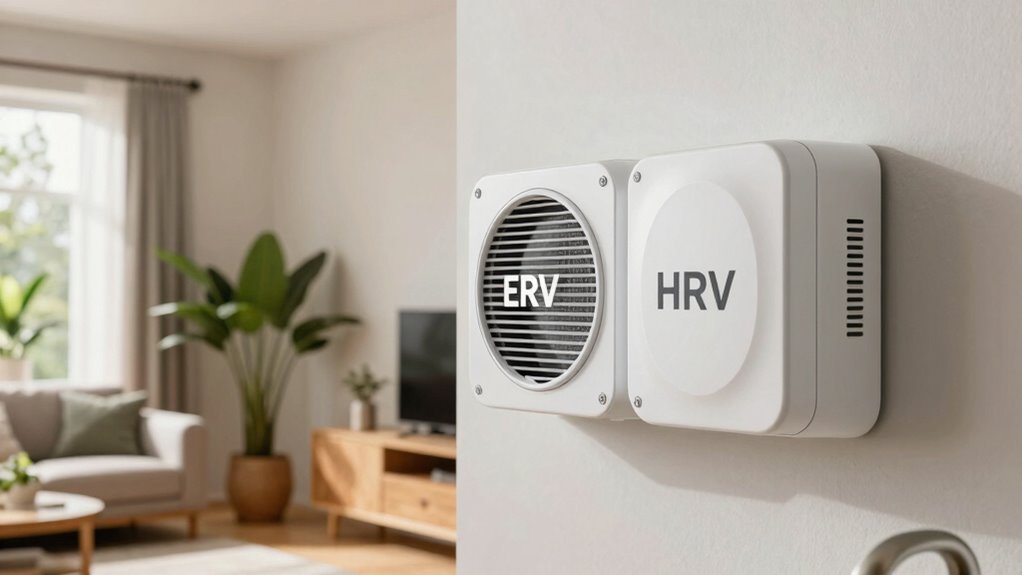

If you live in a colder climate, an HRV is usually your best choice because it recovers heat from outgoing air, helping you save energy and stay warm. For warmer or more humid regions, an ERV is better since it manages moisture and improves indoor comfort. Your home’s specific needs and the local environment shape the right option. To make the best decision for your home, keep exploring how each system works and fits your situation.
Key Takeaways
- Cold climate homes typically benefit from HRVs to recover heat and maintain indoor temperature stability.
- Warm or humid climate homes often need ERVs to manage moisture and improve indoor air quality.
- Homes with existing HVAC systems that handle continuous ventilation are compatible with both HRVs and ERVs.
- Energy-conscious homes in cold regions favor HRVs for heat recovery, while those in humid areas prefer ERVs for moisture control.
- Buildings requiring balanced humidity and pollutant reduction often opt for ERVs to enhance indoor comfort.
When choosing between an ERV (Energy Recovery Ventilator) and an HRV (Heat Recovery Ventilator), understanding which type suits your home is essential for ideal indoor air quality and energy efficiency. Both systems work to exchange stale indoor air with fresh outdoor air, but they do so differently depending on your climate and home features. Your decision should consider how each system impacts indoor air quality and how well it integrates with your existing HVAC system.
Choosing between an ERV and HRV depends on your climate and home needs for optimal air quality and energy efficiency.
If you live in a colder climate, an HRV might be more suitable. HRVs are designed primarily to recover heat from outgoing air and transfer it to incoming fresh air, helping maintain a steady indoor temperature. This process improves indoor air quality by continuously bringing in fresh air, but it doesn’t focus on controlling humidity levels. If your home tends to be dry during winter, an HRV can help preserve warmth and prevent excessive dryness, making it a good fit for homes where maintaining temperature is a priority. Keep in mind that HRVs work best when your HVAC system is compatible with continuous ventilation, ensuring smooth operation without overloading your system.
In warmer or more humid climates, an ERV could be the better choice. ERVs not only recover heat but also transfer moisture between incoming and outgoing air streams. This helps manage indoor humidity levels, which is crucial for comfort and preventing mold growth. If your home struggles with excess humidity or if you want to improve indoor air quality by reducing pollutants and allergens, an ERV offers a balanced approach. Because ERVs transfer moisture, they can help keep your home more comfortable without overloading your HVAC system. Compatibility is key here; you’ll want to ensure your existing HVAC setup can handle the additional ventilation load and moisture transfer to avoid potential issues like excess humidity or inadequate air exchange. Additionally, understanding indoor air quality and how these systems influence it can guide your choice for healthier living spaces. Considering climate-specific needs can also help determine whether an ERV or HRV is more appropriate for your home environment.
Ultimately, your choice depends on the climate you live in, your home’s specific needs, and how well the ventilation system aligns with your existing HVAC setup. Both systems enhance indoor air quality by providing fresh air while reducing energy loss, but their effectiveness hinges on the environmental conditions and system compatibility. If you’re in a cold climate, an HRV can help save energy and keep your indoor temperature stable. Conversely, if humidity control and moisture transfer are more pressing concerns, an ERV might be the better fit. Incorporating energy efficiency considerations can also help optimize your system’s performance and long-term savings. It’s also helpful to consider system compatibility to ensure seamless integration and optimal performance. By understanding these differences, you can select the ventilation system that best supports your home’s comfort, indoor air quality, and energy efficiency.
As an affiliate, we earn on qualifying purchases.
Frequently Asked Questions
How Do ERV and HRV Systems Impact Indoor Air Quality?
ERV and HRV systems improve your indoor air quality by continuously exchanging stale air with fresh outdoor air. They help with air filtration, removing pollutants and allergens, and humidity control, preventing excess moisture or dryness. This balanced ventilation reduces indoor air contaminants and maintains comfortable humidity levels, making your home healthier. By choosing the right system, you guarantee better air quality, comfort, and energy efficiency in your living space.
Are ERV or HRV Systems More Energy-Efficient in Cold Climates?
In cold climates, HRV systems are generally more energy-efficient because they focus on heat recovery, conserving warmth better. Imagine a snowball rolling downhill—less energy is lost as heat, just like HRVs retain more warmth. You’ll see better energy savings with HRVs in winter, making them more climate-suitable. An HRV keeps your home warm and saves energy, perfect for cold climates where warmth retention is essential.
What Maintenance Is Required for ERV and HRV Units?
You need to regularly maintain your ERV or HRV system by cleaning or replacing filters during filtration upgrades. Check and clean the core components to guarantee proper airflow, especially after system installation. Inspect fans and seals for wear, and schedule professional servicing annually. Proper maintenance keeps your system running efficiently, improves indoor air quality, and prolongs its lifespan, making sure you get the most out of your ventilation investment.
Can ERV and HRV Systems Be Combined With Other HVAC Systems?
Did you know that integrating ERV and HRV systems can save up to 30% on energy costs? Yes, you can combine these systems with other HVAC units through thoughtful design integration, ensuring efficient airflow and ventilation. While the cost comparison varies, mixing these systems often leads to better indoor air quality and energy savings. Just consult a professional to optimize compatibility and performance in your home.
What Is the Typical Lifespan of ERV and HRV Units?
You can typically expect ERV and HRV units to last around 10 to 15 years with proper maintenance. Ventilation standards emphasize regular filter changes and system checks to guarantee efficiency. When considering system integration, choose units designed for compatibility with your existing HVAC setup. Investing in quality units and adhering to maintenance schedules helps extend their lifespan, ensuring your home stays well-ventilated and energy-efficient over time.
Conclusion
Choosing between ERV and HRV systems is like picking the right key for a lock—you need what’s best for your home’s unique needs. If you’re in a colder climate, an ERV might be your best friend, efficiently managing humidity and heat. For milder areas, an HRV could be enough. Think of it as finding the perfect fit for your home’s fresh air supply, ensuring comfort and energy efficiency all year round.