

Pet dander can travel much farther than you might think because tiny skin flakes easily become airborne and stay suspended for hours or days. Air currents, ventilation, and activities like vacuuming help spread these particles across rooms and even between spaces. They cling to dust, clothing, and surfaces, reaching areas without direct pet contact. If you want to understand how airborne pet allergens affect your space and health, there’s more to explore about controlling their spread.

Get oils, diffusers and self-care delivered free with Prime
- Fast, free delivery on millions of items
- Prime Video, Amazon Music and more included
- Member-only deals all year
Key Takeaways
- Tiny pet dander particles easily become airborne and can float for hours or days, traveling beyond immediate pet areas.
- Air currents, ventilation, and activities like vacuuming disperse pet allergens throughout indoor spaces.
- Poor filtration in heating and cooling systems can spread pet dander through ducts to distant rooms.
- Pet allergens can be found in places without recent pet presence, reaching offices and public areas.
- Regular cleaning, air filtration, and controlling humidity help reduce airborne pet dander and limit its spread.
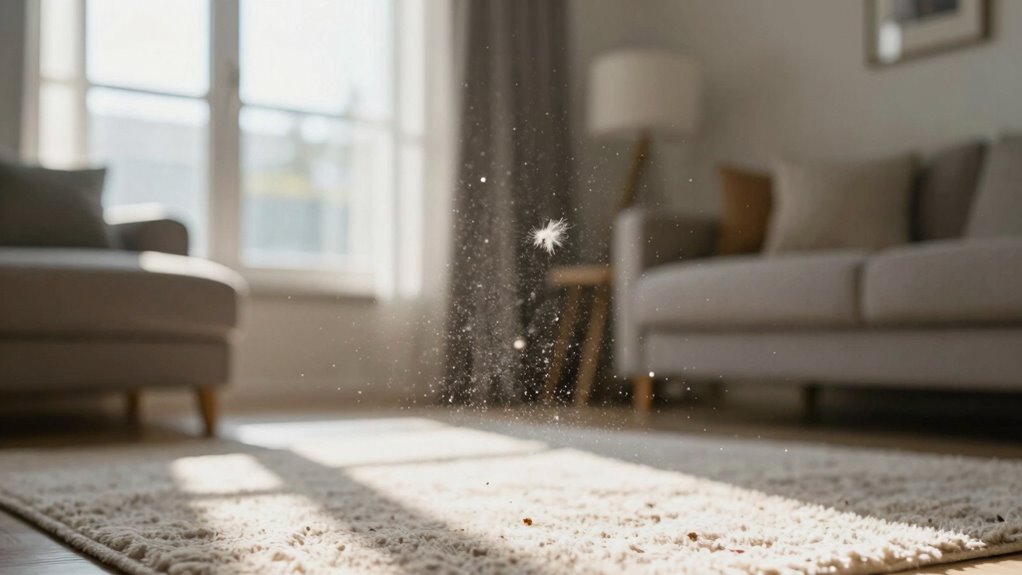
Pet dander can travel surprisingly far through the air, making it a common allergen even in spaces where pets aren’t present. When you think about allergy triggers, pet dander often comes to mind, but what might surprise you is just how far these tiny airborne particles can spread. Dander consists of microscopic skin flakes shed by cats, dogs, and other furry animals. These particles are so small that they easily become airborne, floating through the air and lingering for hours or even days. As a result, you can encounter pet allergens in places where no pets have been recently, simply because the airborne particles have traveled there.
The movement of pet dander is driven by air currents, ventilation systems, and even your own activities. When you vacuum, sweep, or walk through a room, you stir up these airborne particles, causing them to disperse further. Once airborne, these particles can attach to dust, clothing, and other surfaces, further spreading the allergen throughout your environment. Because of their size, pet dander particles can stay suspended in the air longer than larger dust particles, making it easier for them to travel significant distances. This means that even if a pet isn’t in a particular room, you might still experience allergy symptoms because the airborne particles have traveled there from another space.
You might not realize how far pet dander can reach until you notice allergy symptoms in places where pets have never been. Offices, apartments, and public spaces can all harbor pet allergens because of the airborne particles’ ability to move across rooms and floors. Heating and cooling systems, especially those with poor filtration, can carry these allergens through ducts, spreading them even more. This is why allergy triggers aren’t always confined to a specific area — they’re carried by the air, making pet dander a pervasive and often underestimated allergen. Additionally, the airborne nature of allergens highlights the importance of maintaining good ventilation and filtration systems. Properly managing airflow and filtration can significantly reduce the presence of airborne allergens, making indoor environments safer for allergy sufferers.
Understanding how pet dander travels helps you realize the importance of good air filtration and cleaning routines. HEPA filters, for example, can trap airborne particles and significantly reduce allergen levels in your home. Regular cleaning, laundering fabrics, and controlling humidity also help minimize the spread of pet dander. Recognizing that airborne allergens can disperse extensively emphasizes the need for proactive measures, especially if you or someone in your household has allergies. Moreover, the particle suspension of pet dander underscores how these tiny particles can remain floating in the air for extended periods, increasing the likelihood of inhalation. It is also important to note that air circulation plays a critical role in how quickly these particles spread throughout a space. The key is recognizing how easily pet allergens can become airborne and spread beyond the immediate vicinity of your pet, impacting your environment in ways you might not expect.
HEPA air purifier for pet dander
As an affiliate, we earn on qualifying purchases.
As an affiliate, we earn on qualifying purchases.
Frequently Asked Questions
How Long Do Pet Dander Particles Stay Airborne?
Pet dander particles can stay airborne for several minutes to hours, depending on their size. Smaller dander particles, due to their tiny size, linger longer because of airborne allergen persistence. You might notice these particles remain suspended in the air longer than expected, especially in poorly ventilated areas. To reduce exposure, improve ventilation and regularly clean surfaces where dander settles, helping to minimize airborne allergen levels in your space.
Can Pet Dander Travel Through HVAC Systems?
Pet allergen transmission through HVAC systems can happen if filters are ineffective or poorly maintained, allowing dander to circulate throughout your home. While ducts can carry pet dander, proper dander containment strategies—like using HEPA filters and regular cleaning—can considerably reduce spread. Think of your HVAC as both a pathway and a barrier; maintaining it correctly keeps pet allergens localized and minimizes airborne dander travel.
Do Different Pets Produce Different Amounts of Dander?
Yes, different pets produce varying amounts of dander, impacting pet allergy symptoms. Cats generally shed more dander than dogs, especially certain breeds, while smaller animals like rabbits produce less. To manage pet allergy, you should focus on dander reduction strategies, such as regular grooming and cleaning. Understanding which pets shed more helps you choose suitable animals and reduce allergen exposure, making your living space more comfortable.
How Does Humidity Affect Pet Dander Dispersal?
Humidity levels markedly impact pet dander dispersal. When the air is humid, pet dander particles tend to settle faster, which can help with allergy relief. Conversely, dry air allows dander to stay airborne longer, increasing allergy symptoms. Regular pet grooming reduces dander, especially in dry environments. To minimize allergies, maintain balanced humidity and groom your pet frequently, ensuring dander doesn’t linger and spread throughout your home.
Are Some Breeds Less Likely to Spread Dander?
Some breeds are less likely to spread dander, acting like the quiet heroes of allergy relief. Breed-specific allergies vary, but hypoallergenic breeds such as poodles and Bichon Frises produce less dander, making them better choices. Dander reduction techniques, like regular grooming and HEPA filters, amplify their benefits. You can enjoy a cuddle without the sneezes, proving that sometimes, nature’s quietest can make the loudest difference.
Conclusion
Now that you see how pet dander can travel farther than you imagined, remember—it’s not just about what’s in the air, but what it carries. Like whispers in a storm, these tiny particles can reach distant corners of your home, silently affecting your health. Stay vigilant, clean regularly, and keep air purifiers running. Because in the battle against allergens, understanding their reach is the first step toward victory—don’t let invisible invaders win.
Halloween Picks
halloween
As an affiliate, we earn on qualifying purchases.