
If you’re wondering which is more powerful, air scrubbers or air purifiers, the answer depends on your needs. Air scrubbers are generally more powerful, designed to filter larger air volumes and tackle a broader range of pollutants, making them ideal for industrial or commercial spaces. Air purifiers are smaller and suited for personal or residential use. Want to discover more about their differences? Keep exploring to find the best fit for your environment.

Get oils, diffusers and self-care delivered free — and shop member deals
- Fast, free delivery on millions of items
- Access to Prime Big Deal Days deals on October 6–7
- Prime Video, Amazon Music and more included
Key Takeaways
- Air scrubbers are generally more powerful, designed to handle larger spaces and broader pollutant ranges.
- They often incorporate advanced filtration, UV, or ionization technologies for comprehensive air cleaning.
- Air purifiers are smaller, portable, and ideal for personal or small-room use with less capacity.
- Built-in air scrubbers are permanent fixtures, suitable for industrial or commercial environments.
- The choice depends on the required scale and intensity of air purification needed.

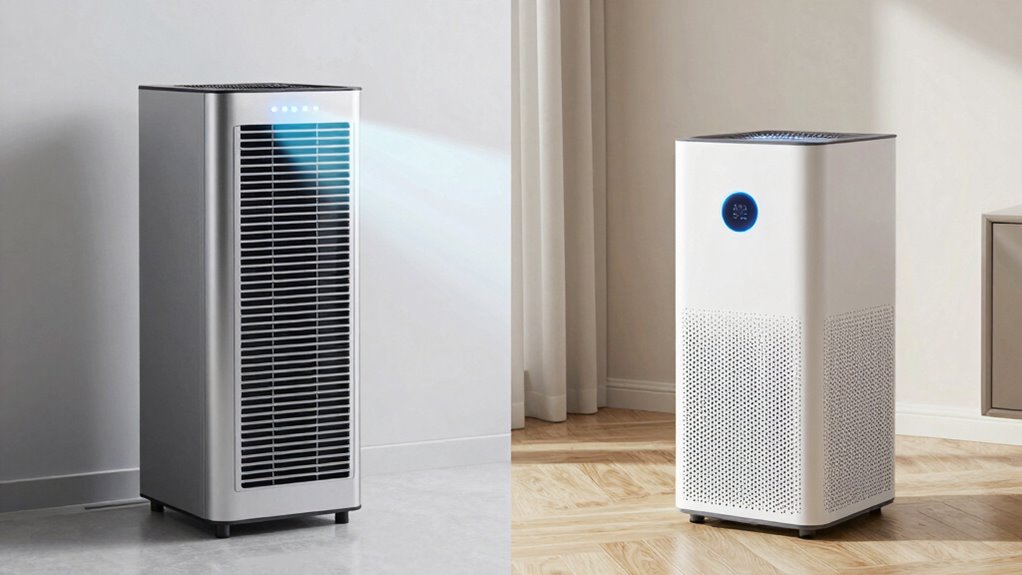
Are air scrubbers and air purifiers truly different, or do they serve similar purposes? While both devices aim to improve indoor air quality, they do so in distinct ways. An air purifier is usually a smaller, user-friendly device designed to filter the air in a single room or small space. It’s portable, making it easy to move around as needed, and is ideal for everyday use in homes, offices, or bedrooms. On the other hand, an air scrubber tends to be larger, often built-in or used as a permanent fixture in commercial or industrial settings. It’s designed to handle larger volumes of air and often incorporates advanced filtration systems to remove a broader spectrum of pollutants.
Air purifiers are portable for small spaces; air scrubbers are larger and suited for industrial environments.
When it comes to indoor air quality, understanding the differences between portable and built-in options helps you determine which is more suitable for your needs. Portable air purifiers are convenient because you can place them exactly where you need cleaner air most. They typically feature HEPA filters that trap dust, pollen, pet dander, and other allergens effectively. Some models also include activated carbon filters to reduce odors and VOCs. Built-in air scrubbers, however, are integrated into the HVAC systems of buildings or installed as permanent fixtures. They often boast higher capacity and more robust filtration technologies, capable of addressing airborne chemicals, mold spores, bacteria, and other contaminants on a much larger scale. Additionally, the effectiveness of these devices can vary based on maintenance and filter quality.
Power is another key factor that differentiates these devices. Air scrubbers are generally more powerful because they are designed for extensive spaces like commercial buildings, hospitals, or factories. They often use high-capacity filters and sometimes UV light or ionization to eliminate pathogens. In contrast, portable air purifiers are tuned for smaller spaces, making them less powerful but more convenient. If you’re looking to improve air quality in a single room or a small apartment, a portable unit is usually sufficient. For larger spaces or areas with significant pollution or contamination, an air scrubber’s strength and built-in design make it more effective.
Ultimately, your choice depends on the scale of your indoor air quality concerns. If you need quick, flexible solutions for personal spaces, portable air purifiers are ideal. But if you’re managing a large facility or require a more extensive approach, investing in a built-in air scrubber offers greater power and coverage. Both serve the purpose of cleaner air, but their design and capacity determine which one is the better fit for your specific environment. Understanding air filtration technologies can help you make an informed decision.
HEPA air purifier for small rooms
As an affiliate, we earn on qualifying purchases.
As an affiliate, we earn on qualifying purchases.
Frequently Asked Questions
How Long Does It Take for Air Scrubbers to Clean a Room?
It typically takes a few hours for an air scrubber to clean a room, depending on its air exchange rate and room size compatibility. Larger rooms or lower exchange rates may extend the process to 4-6 hours or more. To guarantee effective cleaning, choose an air scrubber designed for your room’s size and run it continuously until the air quality improves. Regular monitoring helps determine the most suitable duration.
Are Air Purifiers Effective Against All Airborne Bacteria?
Yes, air purifiers are highly effective against airborne bacteria, though they can’t eliminate every single germ in the universe. Their bacteria removal capabilities boost air purification efficiency, making your space considerably cleaner. While they excel at reducing many bacteria, some tiny or resistant strains might slip through. Still, for most airborne bacteria, air purifiers dramatically improve your indoor air quality, giving you cleaner, healthier breathing every moment.
Can Air Scrubbers Eliminate Chemical Fumes and VOCS?
Yes, air scrubbers can eliminate chemical fumes and VOCs effectively. They use activated carbon filters to absorb and neutralize harmful chemicals, making your indoor air safer. By continuously filtering the air, scrubbers target and remove chemical fumes and VOCs, which are common indoor pollutants. You’ll notice improved air quality, especially in spaces with new furniture, paints, or cleaning products that release these fumes.
Do Air Purifiers Require Regular Filter Replacements?
You need to know that air purifiers do require regular filter replacements to keep them functioning efficiently. The frequency of filter maintenance depends on usage and air quality, but generally, filters should be replaced every 3 to 6 months. Neglecting this can reduce effectiveness and worsen indoor air quality. Regular filter replacement guarantees your purifier keeps removing pollutants, allergens, and odors effectively, maintaining a healthier environment.
Which Device Is Better for Allergy Sufferers?
For allergy sufferers, an air purifier with HEPA filtration is your best choice. It effectively removes airborne allergens like pollen, pet dander, and dust mites, providing relief. You’ll want a device designed specifically for allergen removal, ensuring it captures tiny particles that trigger your allergies. Regular maintenance, like filter replacement, keeps it running efficiently. This way, you can breathe easier and enjoy a healthier indoor environment.
Conclusion
When choosing between air scrubbers and purifiers, consider your specific needs. Air scrubbers are more powerful for large spaces and heavy-duty cleaning, removing up to 99.97% of airborne particles. Did you know that a recent study found that air scrubbers can reduce indoor pollutants by up to 60% faster than purifiers? Ultimately, your choice depends on your space and air quality goals, but understanding their strengths helps you make the best decision for a healthier environment.
Fall Picks
fall essentials
As an affiliate, we earn on qualifying purchases.