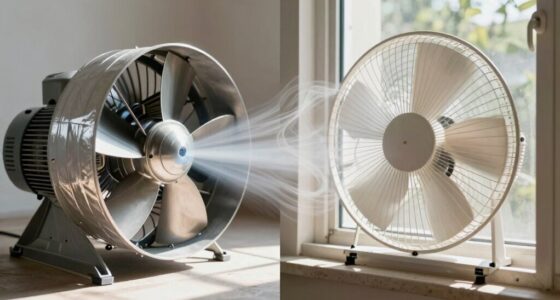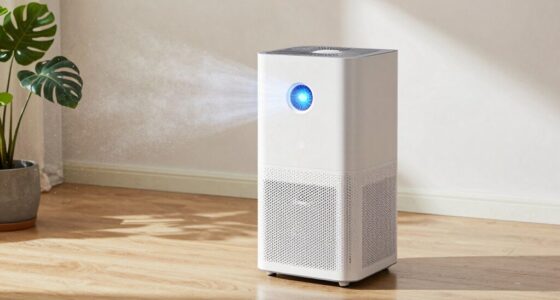
Bathroom fans are essential for keeping your space healthy and comfortable by removing excess moisture, odors, and airborne germs. They prevent problems like mold, mildew, and structural damage that often go unnoticed. Quiet, efficient fans encourage consistent use, which improves indoor air quality and reduces health risks. Properly choosing and maintaining your fan can save you future troubles and money. If you want to understand how to get the best results, keep exploring—the benefits might surprise you.

Get oils, diffusers and self-care delivered free with Prime
- Fast, free delivery on millions of items
- Prime Video, Amazon Music and more included
- Member-only deals all year
Key Takeaways
- Bathroom fans remove excess moisture, preventing mold, mildew, and structural damage.
- Proper ventilation improves indoor air quality, reducing airborne contaminants and odors.
- Quiet, efficient fans encourage regular use, enhancing overall bathroom comfort and health.
- Well-designed fans balance noise levels and airflow, optimizing performance and energy efficiency.
- Consistent use of quality fans protects home integrity and promotes a healthier living environment.

Bathroom fans might seem like a small detail, but they play an essential role in maintaining a healthy and comfortable space. They’re necessary for improving ventilation efficiency, which means they help remove excess moisture, odors, and airborne contaminants from your bathroom. Without proper ventilation, humidity can build up quickly, leading to mold, mildew, and even structural damage over time. That’s why choosing a fan with good airflow capacity is vital—you want it to clear out the air efficiently, especially after a shower or bath. When your bathroom isn’t properly ventilated, you might notice lingering smells or dampness that just won’t go away, creating an uncomfortable environment and potentially affecting your health.
Proper bathroom ventilation prevents mold, odors, and damage, ensuring a healthier, more comfortable space.
Many people underestimate the importance of noise levels when it comes to bathroom fans. While a powerful fan can seem like the obvious choice, if it’s loud and disruptive, it can become more of a nuisance than a help. Low noise levels mean you won’t be annoyed every time you turn it on, making it easier to keep your bathroom fresh without sacrificing peace and quiet. Modern fans are designed to balance ventilation efficiency with quieter operation, so you get the best of both worlds. When you pick a fan that operates quietly, it encourages consistent use, which is key to maintaining good air quality and preventing problems caused by excess moisture. Additionally, ventilation efficiency plays a crucial role in preventing long-term issues like mold growth and structural damage. Properly functioning fans also contribute to better indoor air quality, which is important for your overall health. Selecting the right fan involves understanding performance factors, such as airflow capacity and noise level, to ensure you make an informed choice.
It’s also worth noting that a bathroom fan’s design influences how well it performs. A well-designed fan won’t just be quiet; it will also be effective at moving air through your space. Look for models with high-quality motors and appropriate size ratings for your bathroom. An undersized fan won’t do enough to ventilate properly, while an oversized one may be unnecessarily loud or consume more energy. The right fan strikes a balance, offering good ventilation efficiency without creating a disruptive noise level. Investing in the right fan means you’re not just avoiding mold and odors but also enjoying a more comfortable and healthier bathroom environment. Proper installation and regular maintenance also contribute to optimal performance, ensuring your fan continues to function effectively over time.
In the end, bathroom fans matter more than most people realize because they directly impact your space’s air quality and comfort. By prioritizing good ventilation efficiency and low noise levels, you guarantee that your bathroom remains a clean, fresh, and peaceful place. It’s a small upgrade that can make a big difference in your daily routine and protect your home’s integrity over time.
As an affiliate, we earn on qualifying purchases.
Frequently Asked Questions
How Often Should I Clean My Bathroom Fan?
You should clean your bathroom fan at least every six to twelve months. Regular cleaning helps with fan maintenance, ensuring it operates efficiently and prevents mold buildup. If you notice reduced airflow or increased noise, it’s time for a cleaning sooner. Removing dust and debris from the fan and vent keeps it in good shape, prolongs its lifespan, and maintains a healthy bathroom environment. Consistent cleaning is key for peak performance.
Can a Bathroom Fan Reduce Mold Growth Effectively?
Surprisingly, your bathroom fan can indeed reduce mold growth effectively. It tackles moisture control and improves ventilation benefits, creating an environment less hospitable for mold. By consistently running your fan during and after showers, you actively prevent humidity buildup. Ironically, a small device like this holds the power to save you from costly mold removal, proving that proper ventilation isn’t just a luxury—it’s an essential defense for a healthier bathroom.
What’s the Ideal Size of a Bathroom Fan?
The ideal size of a bathroom fan depends on your bathroom’s square footage, following ventilation standards. For example, a standard bathroom needs at least 1 CFM (cubic foot per minute) per square foot. When you install the fan, make certain it matches your bathroom’s size to effectively remove moisture and prevent mold. Proper fan installation guarantees peak performance, so don’t overlook matching the fan size to your space for the best results.
Are Energy-Efficient Bathroom Fans Worth the Investment?
Yes, energy-efficient bathroom fans are worth the investment. They help reduce your energy bills while providing effective ventilation, which dispels common ventilation myths. Plus, modern models operate with low noise levels, making them more pleasant to use. Over time, you’ll save money on electricity and maintenance, and you’ll enjoy a healthier bathroom environment. Investing in an energy-efficient fan is a smart choice for comfort, cost savings, and better air quality.
How Long Do Bathroom Fans Typically Last?
Bathroom fans typically last about 10 years with proper ventilation technology and regular fan maintenance. The lifespan depends on quality, usage, and how well you maintain it. To prolong its life, clean the fan and vent regularly, and replace filters as needed. Good ventilation technology helps prevent moisture buildup, reducing wear and tear. Staying attentive with fan maintenance ensures your bathroom fan stays effective and lasts longer.
Conclusion
So, don’t overlook your bathroom fan. It’s not just about preventing foggy mirrors or bad odors — it’s about protecting your health and home. Some might think it’s unnecessary or noisy, but modern fans are quiet and efficient. Ignoring proper ventilation can lead to mold, mildew, and even respiratory issues. Trust me, investing in a good bathroom fan is a small step that makes a big difference for your comfort and wellbeing.
Halloween Picks
halloween
As an affiliate, we earn on qualifying purchases.