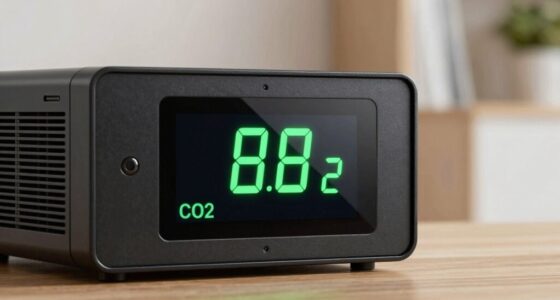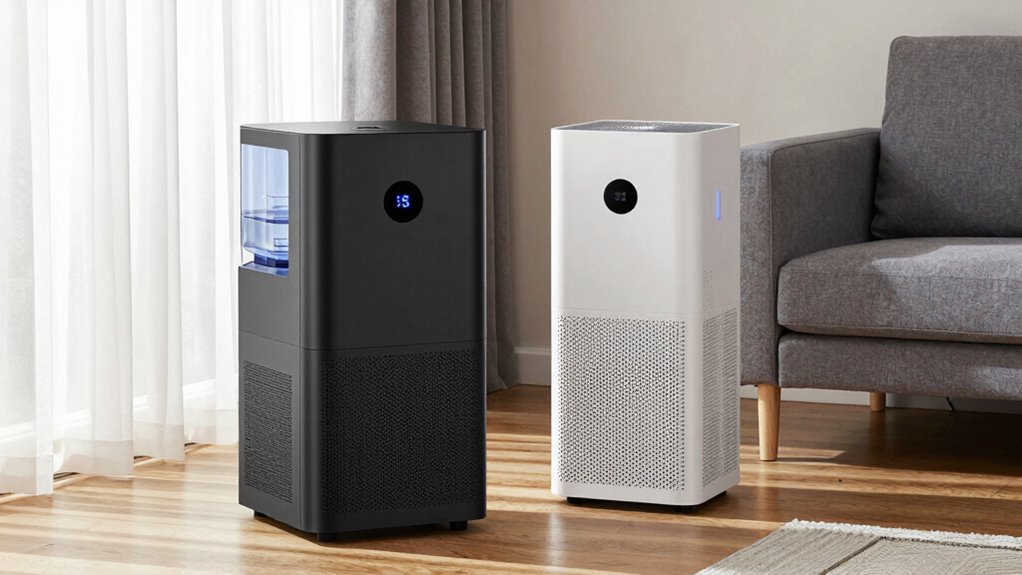

If your main concern is excess moisture, mold, or musty odors, a dehumidifier is your best choice to control humidity levels and prevent damp-related issues. However, if airborne allergens, pet dander, or bacteria bother you, an air purifier will do a better job filtering out those pollutants. To make the right decision, consider which problem impacts your indoor environment most. Keep exploring to discover which device suits your needs perfectly.

Get oils, diffusers and self-care delivered free with Prime
- Fast, free delivery on millions of items
- Prime Video, Amazon Music and more included
- Member-only deals all year
Key Takeaways
- Choose a dehumidifier for excess moisture, mold, and musty odors; opt for an air purifier to remove airborne allergens and toxins.
- Consider energy use: dehumidifiers often consume more power, while air purifiers typically have lower energy costs.
- For ongoing costs, dehumidifiers need water tank maintenance; air purifiers require filter replacements.
- Identify your main problem—moisture vs. airborne pollutants—to select the most effective device.
- Using both is unnecessary; select the device that best addresses your specific indoor air quality concern.
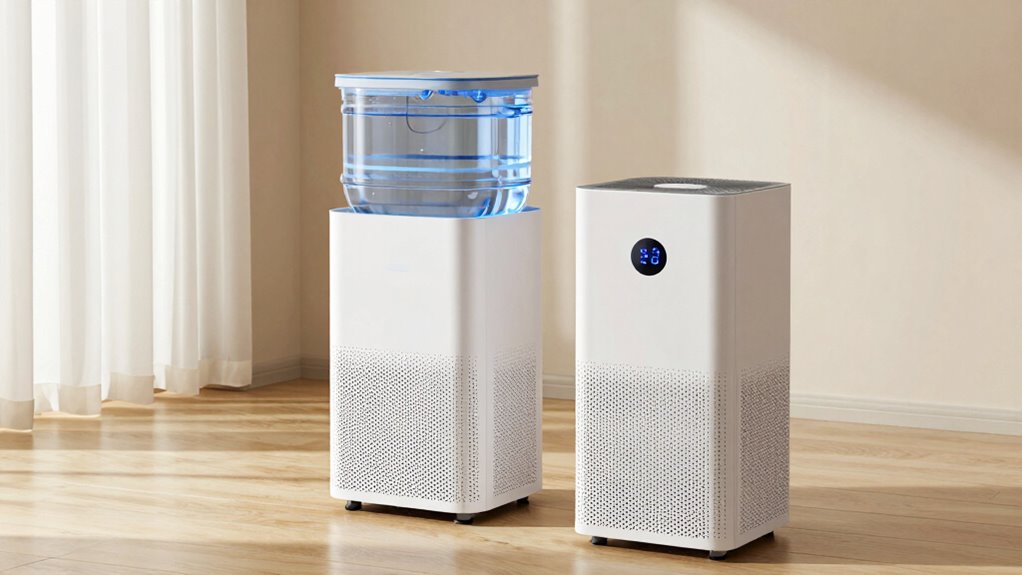
When choosing between a dehumidifier and an air purifier, it’s important to understand their distinct roles in improving indoor air quality. Both devices target different issues—one manages moisture levels, while the other filters airborne pollutants—so your choice depends on your specific needs. If your primary concern is excess humidity, a dehumidifier can help prevent mold growth, reduce dust mites, and create a more comfortable environment. Conversely, if you’re worried about airborne allergens, pet dander, or airborne bacteria, an air purifier is better suited to clean the air effectively.
Choosing between a dehumidifier and an air purifier depends on whether moisture or airborne pollutants are your main concern.
Energy efficiency is an important factor to contemplate. Dehumidifiers tend to consume more power because they run continuously to maintain ideal humidity levels, especially in damp environments. However, modern models are increasingly energy-efficient, helping you save on electricity bills over time. Air purifiers, on the other hand, usually operate at lower power levels since they cycle air through filters, but the energy consumption can vary depending on the filtration technology and fan speed settings. If you’re mindful of energy costs, look for devices with good energy ratings and adjustable settings to maximize performance without racking up your utility bills.
Maintenance cost is another key consideration. Dehumidifiers require regular emptying of water tanks or connection to a drainage system, along with periodic cleaning of filters and coils to keep them functioning efficiently. These maintenance tasks can add to the overall cost and effort involved in keeping the device in top shape. Air purifiers also need filter replacements, which can be a recurring expense, especially if you opt for HEPA or activated carbon filters. The frequency and cost of these replacements depend on usage and the model’s design. While both devices involve ongoing maintenance, air purifiers generally have lower maintenance costs but may need more frequent filter changes to maintain ideal performance.
Ultimately, your decision hinges on what problem you’re trying to solve. If excess moisture causes issues like mold, musty odors, or comfort problems, a dehumidifier is your best bet. If airborne allergens or pollutants are your main concern, an air purifier will serve you better. Keep in mind the energy efficiency and maintenance costs associated with each device to ensure that your choice aligns with your budget and lifestyle. Additionally, understanding the practical applications of each device can help you make an informed decision that fits your specific indoor environment. By understanding these differences, you can select the right device that effectively targets your indoor air quality needs without unnecessary expense or effort.
As an affiliate, we earn on qualifying purchases.
Frequently Asked Questions
Can a Dehumidifier Also Improve Indoor Air Quality?
Yes, a dehumidifier can improve indoor air quality by controlling humidity levels. When humidity is kept in check, it prevents mold growth and reduces dust mites, which can trigger allergies and respiratory issues. By maintaining ideal humidity, your air stays fresher and healthier. While it doesn’t filter out airborne pollutants like an air purifier, a dehumidifier is essential for mold prevention and creating a comfortable, balanced environment.
Do Air Purifiers Remove Excess Moisture From the Air?
Like a gentle rain clearing the fog, air purifiers mainly target pollutants and allergens, not excess moisture. They don’t remove humid air or provide moisture removal like a dehumidifier. If you’re battling high humidity, an air purifier won’t be enough. You need a dehumidifier to effectively reduce moisture levels, prevent mold, and improve indoor comfort. So, for excess moisture, stick with a dehumidifier, not just an air purifier.
Which Device Is Better for Allergy Relief?
An air purifier is better for allergy relief because it filters out airborne allergens and mold spores that trigger your symptoms. Look for models with HEPA filters, which effectively trap tiny particles. While dehumidifiers reduce moisture and mold growth, they don’t target airborne allergens directly. Using an air purifier helps you breathe easier, especially when allergies flare up, by cleaning the air of the particles that cause discomfort.
How Much Energy Does Each Device Consume?
Did you know that dehumidifiers typically use about 300-700 watts, while air purifiers consume 50-200 watts? You’ll find that air purifiers usually offer better power efficiency, making them more energy-conscious choices for daily use. If energy consumption is your concern, an air purifier might be the better option, as it consumes less power and saves you money on electricity bills over time.
Can Using Both Devices Together Be More Effective?
Using both devices together can be more effective, especially if you maintain them properly. Regular humidifier maintenance guarantees your device runs efficiently, while changing air purifier filters keeps the air clean. By combining a dehumidifier and air purifier, you address humidity and air quality simultaneously, creating a healthier environment. Just make sure to balance their use to avoid overworking your units and keep your home comfortable and safe.
Conclusion
So, while a dehumidifier tackles excess moisture and prevents mold, an air purifier clears out airborne pollutants. If you’re worried about allergens or odors, an air purifier might seem like the better choice. But remember, in damp environments, controlling humidity is key to overall air quality. Combining both can give you the best of both worlds, ensuring your space stays healthy and comfortable—so don’t settle for just one; consider your specific needs.
Halloween Picks
halloween
As an affiliate, we earn on qualifying purchases.