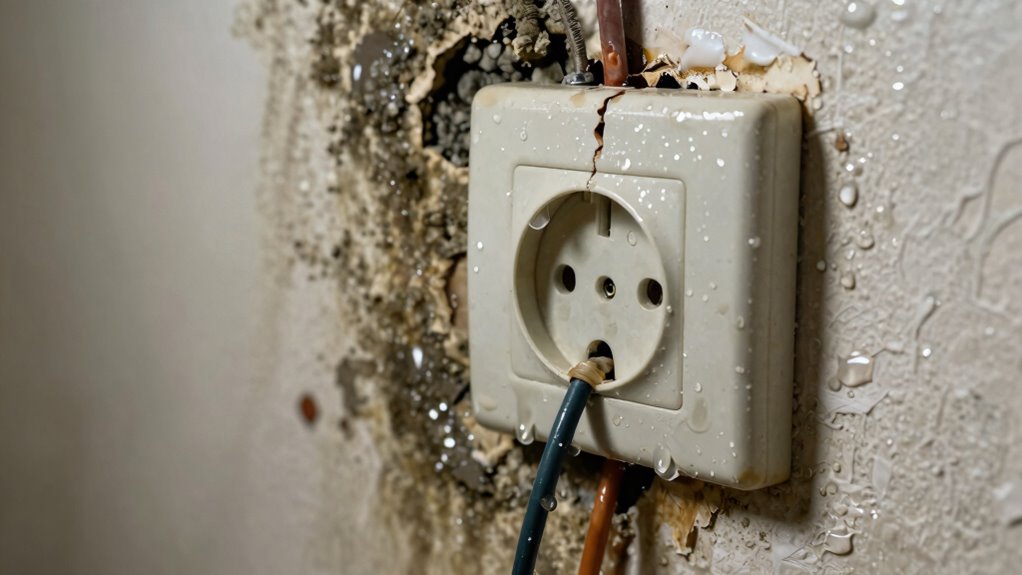

Water leaks quickly become electrical hazards because moisture seeps into walls and around wiring, causing insulation to break down and corrosion to develop. This weakens connections and increases the risk of shorts, sparks, or shocks. Water can also reach outlets, switches, and appliances, making them unsafe. Ignoring leaks allows damage to worsen over time, raising the danger. Stay with us to uncover more ways water infiltrates your electrical system and how to protect yourself.

Get oils, diffusers and self-care delivered free with Prime
- Fast, free delivery on millions of items
- Prime Video, Amazon Music and more included
- Member-only deals all year
Key Takeaways
- Water infiltrates electrical components, causing corrosion and loose connections that increase the risk of faults and sparks.
- Moisture reduces insulation around wires, elevating the chances of short circuits and electrical shocks.
- Hidden leaks can silently weaken protective barriers, leading to undetected electrical damage over time.
- Water contact with live wires creates immediate shock hazards and potential fire risks.
- Ongoing water infiltration accelerates deterioration of electrical systems, making hazards emerge rapidly.
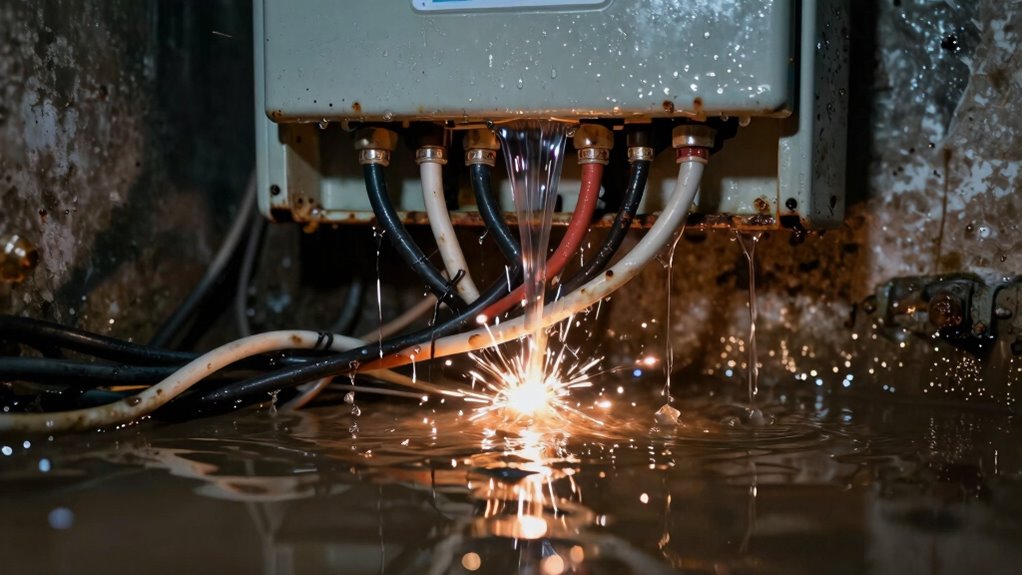
Water leaks might seem harmless at first, but they pose serious electrical hazards that can lead to shocks, fires, or even fatalities. When water seeps into your walls, ceiling, or floors, it creates an environment where electrical systems are vulnerable. Water infiltration is a silent threat because it often occurs unnoticed until damage becomes severe. As water spreads through your home, it can reach electrical outlets, wiring, or appliances, compromising electrical safety in ways you might not immediately see. This infiltration reduces insulation around wires, increasing the risk of short circuits and sparks. Because water conducts electricity, any contact with live wires becomes dangerous, raising the chance of electric shocks for anyone nearby.
Water leaks threaten electrical safety, risking shocks, fires, and hidden damage that worsens over time. Stay vigilant and act quickly.
Your home’s electrical system is designed to operate in dry conditions. When water infiltrates, it weakens the protective barriers that keep electricity contained and safe. Over time, moisture can corrode electrical components, causing loose connections and increasing the likelihood of electrical faults. These faults can spark fires if left unaddressed. The danger escalates when water reaches circuit breakers or fuse boxes, potentially causing them to trip or fail. If you ignore a water leak, you’re allowing moisture to continually compromise your electrical safety, making it more likely that a minor leak could turn into a major disaster. Regular inspections and preventative measures are essential to catching issues early before they escalate.
The speed at which water leaks become hazardous depends on the location and amount of infiltration. Even small leaks can cause enough moisture buildup to damage wiring over a short period. In areas like basements or attics, where water tends to accumulate, the risks multiply. If you notice any signs of water infiltration—such as staining, mold, or a musty smell—it’s essential to act fast. Recognizing the importance of proper electrical safety measures is crucial in preventing potential disasters. Regular inspections and prompt repairs are your best defenses against water-related electrical hazards, especially in vulnerable areas where leaks are more likely to occur. Additionally, understanding how electrical systems are affected by water can help you implement effective mitigation strategies to protect your home. Moreover, being aware of common water infiltration points can help you target areas that need immediate attention.
Protecting your home from water infiltration isn’t just about preventing property damage; it’s an imperative step in maintaining electrical safety. Installing proper drainage, sealing leaks, and ensuring your wiring is up to code can greatly reduce risks. Remember, water and electricity are a hazardous combination, and even minor leaks should never be overlooked. Staying vigilant and addressing water leaks immediately keeps your home safer, reducing the chances of shocks, fires, or worse. Your proactive approach can save lives, protect your property, and give you peace of mind knowing that water leaks won’t turn into a hidden electrical hazard.
As an affiliate, we earn on qualifying purchases.
Frequently Asked Questions
Can Water Leaks Cause Long-Term Electrical System Damage?
Water leaks can cause long-term electrical system damage by compromising electrical insulation and promoting moisture infiltration. When water seeps into wiring or electrical components, it weakens insulation, increasing the risk of shorts or electrical failures. Over time, persistent moisture infiltration can corrode connections and damage devices, leading to costly repairs or safety hazards. Addressing leaks promptly helps protect your electrical system from long-term deterioration and guarantees safe operation.
How Quickly Can Water Leaks Trigger Electrical Fires?
Water leaks can trigger electrical fires within minutes, especially if water contacts electrical insulation or circuit components. As water seeps in, it causes circuit corrosion and weakens insulation, increasing the risk of short circuits. This rapid deterioration can spark fires quickly, often before you notice the leak. To prevent this, address leaks immediately and inspect your electrical system regularly for signs of moisture or corrosion.
Are Certain Electrical Systems More Vulnerable to Water Damage?
Yes, certain electrical systems are more vulnerable to water damage. Systems with poor electrical insulation are at higher risk because water can easily penetrate insulation, causing shorts. Additionally, circuit corrosion accelerates when water is present, degrading connections and increasing the chance of failure. You should regularly inspect vulnerable systems, especially those near water sources, to prevent water-induced electrical hazards and guarantee safety.
What Safety Precautions Should I Take During a Water Leak?
Think of water detection as your alarm system—act swiftly and prevent disaster. During a water leak, turn off power at the source to avoid electrical shocks, acting as an emergency shutdown. Keep electrical devices away from water, and wear rubber gloves if you need to handle equipment. Prioritize safety by unplugging devices and calling professionals immediately, ensuring your safety and minimizing damage.
How Effective Are Waterproof Electrical Components Against Leaks?
Waterproof electrical components are quite effective against leaks, but they aren’t foolproof. They help prevent corrosion risks and insulation failure by keeping water out, which minimizes short circuits and damage. However, if the waterproofing is compromised or if water gets in through damaged seals, risks remain. Regular inspections and maintenance are vital to guarantee these components continue to protect your electrical system effectively.
Conclusion
Remember, water leaks are like silent thieves, quietly stealing your safety. If you ignore even a small drip, it can quickly turn into an electrical storm waiting to happen. Stay vigilant and address leaks promptly—think of it as patching up a crack in your fortress before the storm hits. Protect your home, and don’t let water and electricity dance a dangerous tango. Your safety is worth every quick action.
Fall Picks
fall essentials
As an affiliate, we earn on qualifying purchases.