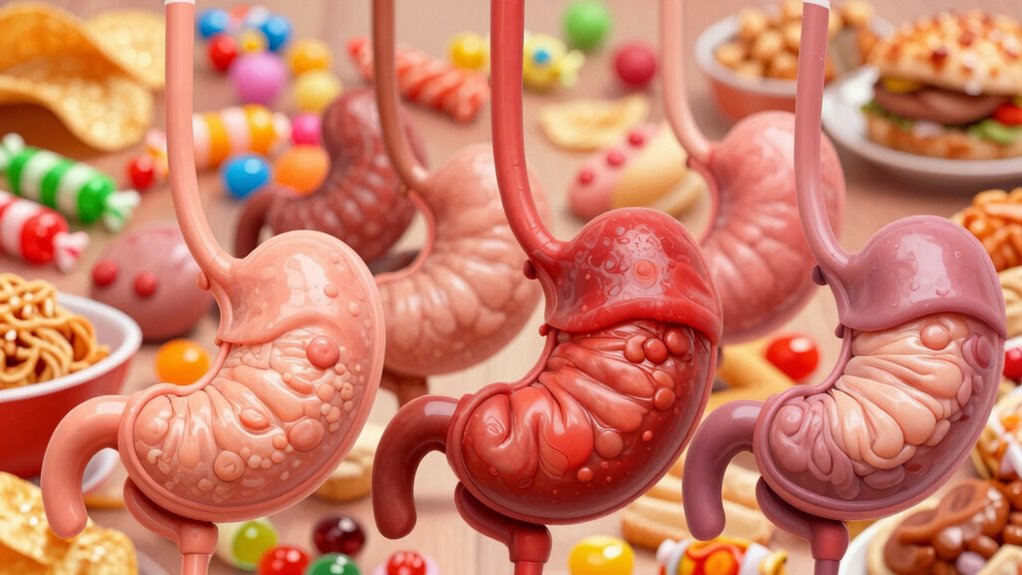

Your stomach reacts differently to processed foods based on your microbiome, enzyme levels, and gut lining health. If your gut bacteria are out of balance or you produce fewer digestive enzymes, you’re more likely to experience discomfort, bloating, and sensitivity. Additives and preservatives can irritate your gut lining, worsening these issues. Over time, processed foods can weaken your gut’s defenses. Keep exploring to discover how you can improve your gut health and reduce sensitivity.
Key Takeaways
- Variations in gut microbiome diversity influence individual resilience to processed food-induced irritation.
- Differences in digestive enzyme levels affect how well processed foods are broken down.
- Pre-existing gut permeability or “leaky gut” increases sensitivity to additives and preservatives.
- A healthier microbiome can buffer against processed food-related discomfort.
- Long-term processed food consumption can weaken digestive resilience, causing more severe reactions.

Many people find that eating processed foods can trigger or worsen stomach sensitivity, causing discomfort, bloating, or indigestion. The reason lies partly in how these foods interact with your gut microbiome—the community of bacteria that lives in your digestive system. When you consume processed foods high in refined sugars, unhealthy fats, and artificial additives, they can disrupt this delicate balance. A disrupted gut microbiome can lead to less efficient digestion, making you more prone to symptoms like gas, bloating, and pain. Your microbiome depends on fiber-rich, whole foods to thrive, but processed foods often lack these beneficial nutrients, leaving your gut bacteria starved and out of balance.
Processed foods can disrupt your gut bacteria, causing discomfort, bloating, and indigestion. Prioritize fiber-rich, whole foods for gut health.
Another key factor is the role of digestive enzymes. These enzymes are vital because they help break down food into smaller, absorbable molecules. Processed foods tend to contain fewer natural enzymes and might even interfere with your body’s ability to produce enough of them. Without sufficient digestive enzymes, your body struggles to break down complex carbs, proteins, and fats, leading to incomplete digestion. This incomplete process can cause fermentation by bacteria in the gut, which produces gas and causes bloating, discomfort, and indigestion. Some processed foods also contain preservatives or artificial ingredients that further hinder enzyme activity, further impairing digestion, and compounding the problem. Additionally, these additives can negatively impact your gut’s microbial diversity, reducing the variety of beneficial bacteria.
Your body’s response to processed foods varies depending on your gut microbiome’s health and your enzyme production. If your microbiome is already imbalanced or your digestive enzyme levels are low, processed foods can hit harder, triggering more intense symptoms. Conversely, a healthy microbiome and good enzyme activity can sometimes buffer the effects, allowing you to tolerate certain processed foods better. However, over time, a diet heavy in processed foods can erode this resilience, leading to increased sensitivity and digestive issues. Maintaining a balanced gut environment**** through diet and lifestyle choices can help mitigate these effects and improve overall digestion.
Furthermore, processed foods often contain additives and preservatives that can irritate your gut lining, making it more permeable—a condition sometimes called “leaky gut.” This increased permeability allows substances that normally wouldn’t pass through to enter your bloodstream, contributing to inflammation and further disrupting your gut microbiome. The combination of these factors creates a cycle where processed foods continually challenge your digestive system, especially if your microbiome and enzyme production aren’t in ideal condition. Additionally, artificial ingredients found in many processed foods can exacerbate gut irritation and hinder beneficial bacteria growth. An understanding of gut permeability can help explain how these ingredients impact overall gut health. Recognizing how processed foods influence gut health underscores the importance of choosing nutrient-dense, minimally processed options to support optimal digestion.

Physician's CHOICE Digestive Enzymes for Bloating & Digestion – Fast-Acting 16 Enzyme Formula with Organic Prebiotics & Probiotics for Gut & Digestive Health – Meal Time Discomfort Relief – 60 CT
Beat the Bloat & Say Goodbye to Meal Time Discomfort: 16 beneficial enzymes that digest proteins, carbs, fruits,…
As an affiliate, we earn on qualifying purchases.
As an affiliate, we earn on qualifying purchases.
Frequently Asked Questions
Can Processed Foods Cause Long-Term Digestive Issues?
Processed foods can cause long-term digestive issues, especially if they disrupt your gut microbiome. These foods often contain additives and preservatives that may lead to food allergies or sensitivities over time. You might notice symptoms like bloating, discomfort, or irregular bowel movements. To protect your digestion, consider reducing processed food intake and focusing on whole, nutrient-rich options that support healthy gut bacteria and minimize the risk of long-term issues.
Are Children More Affected by Processed Foods’ Impact on the Stomach?
Did you know that children’s digestion can be more sensitive, with up to 20% experiencing food sensitivities? You might notice your child’s stomach reacting more strongly to processed foods, which can disrupt their digestion more than adults’. Their developing digestive systems are more vulnerable, making them more affected by additives and preservatives in processed foods. So, paying attention to child digestion is essential to avoid discomfort and long-term health issues.
Do Gene Variations Influence Reactions to Processed Foods?
Yes, gene variations influence how you react to processed foods. Your genetic predisposition affects enzyme variability, which determines how well your body digests certain ingredients. If you have specific gene variants, you might process additives, preservatives, or sugars differently, leading to more stomach discomfort. Understanding your genetic makeup can help you identify which processed foods may cause issues, allowing you to make better choices tailored to your unique enzymatic responses.
How Quickly Can Processed Foods Trigger Stomach Discomfort?
Processed foods can trigger stomach discomfort within minutes or hours, depending on your sensitivity. Food additive effects, like preservatives or artificial flavors, may cause rapid reactions, especially if you’re sensitive. High sugar content can lead to bloating or cramps quickly as your body reacts to the sudden influx of sugars. Your unique digestion and gene variations influence how fast you experience these symptoms, so reactions vary from person to person.
Are There Specific Processed Ingredients That Worsen Stomach Sensitivity?
You might find that artificial additives and preservatives worsen your stomach sensitivity. Studies show that up to 60% of people experience discomfort from these ingredients. Artificial additives, like artificial sweeteners and colorings, can irritate your gut lining, while preservative effects may disrupt your gut bacteria, leading to bloating or pain. If you’re prone to stomach issues, avoiding foods with these ingredients can help reduce your discomfort and improve digestion.

NatureBell Probiotic 200 Billion CFU – 40 Strains Per Serving | 240 Veggie Capsules with Prebiotics and Probiotics – Full Spectrum Complex with Enzymes – Daily Probiotics for Women & Men
Full spectrum 5-in-1 digestive enzyme, prebiotic, probiotic, postbiotic, and fiber complex, 240 veggie capsules that offer 120 servings…
As an affiliate, we earn on qualifying purchases.
As an affiliate, we earn on qualifying purchases.
Conclusion
So, steer clear of surplus sugars, salty snacks, and synthetic sauces that stir up stomach struggles. Understanding your unique sensitivities can help you make mindful, manageable choices. Don’t ignore the signals your stomach sends; instead, choose nourishing, natural foods that nurture your gut. Remember, your digestive health depends on your decisions—dedicate daily diligence to better eating habits. Small steps today can set the stage for a healthier, happier stomach tomorrow.

Ancient Nutrition Gut Health Supplement Leaky Gut Capsules, 60ctFormulated with Licorice Root, Astragalus, Marshmallow, and L-Glutamine, Gluten Free, Paleo and Keto Friendly, 60 Ct
You will receive (1) bottle of Leaky Gut Capsules, 60 Count
As an affiliate, we earn on qualifying purchases.
As an affiliate, we earn on qualifying purchases.

Benefiber Daily Prebiotic GLP-1 Friendly Fiber Supplement Powder for Digestive Health, Unflavored – 250 Teaspoons (17.6 Ounces)
WHAT'S INCLUDED: One 17.6-ounce bottle of unflavored Benefiber Daily Prebiotic Fiber Supplement Powder for Digestive Health (1)
As an affiliate, we earn on qualifying purchases.
As an affiliate, we earn on qualifying purchases.