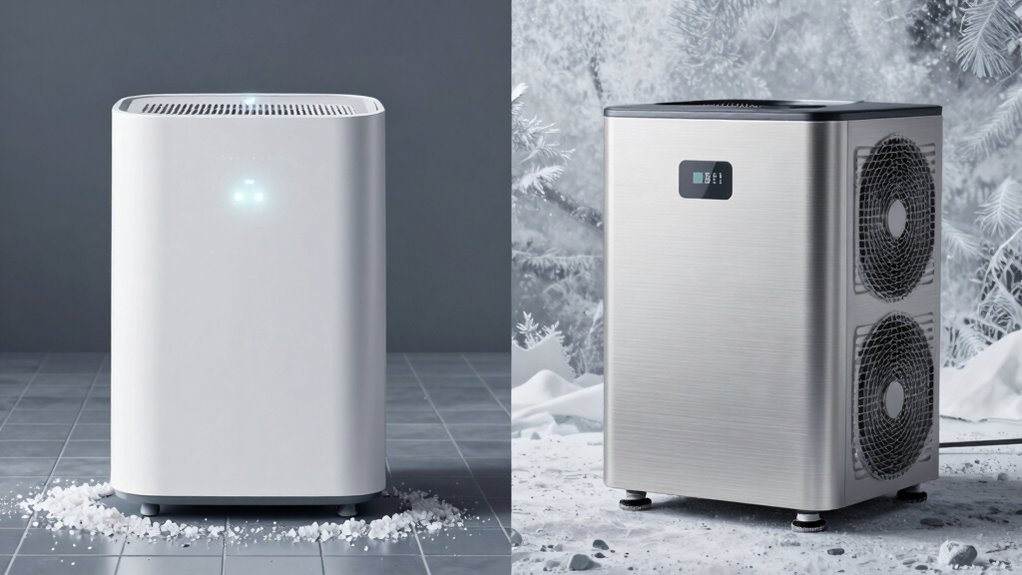
In cold spaces, desiccant dehumidifiers usually use less power and work better since they rely on a chemical process independent of temperature, making them ideal for chilly environments like basements or garages. Compressor models perform well in warmer, humid conditions but tend to use more energy and generate more noise. To find the best fit for your space, consider temperature, noise level, and maintenance needs—continuing ahead will reveal more essential insights.
Key Takeaways
- Desiccant dehumidifiers are more energy-efficient and effective in cold spaces below 65°F.
- Compressor dehumidifiers perform better and more efficiently at higher temperatures.
- Desiccant units operate quietly, making them suitable for cold, noise-sensitive environments.
- In cold environments, desiccant models typically have lower operational costs and easier maintenance.
- Environmental temperature is a crucial factor in choosing the most suitable dehumidifier for cold spaces.
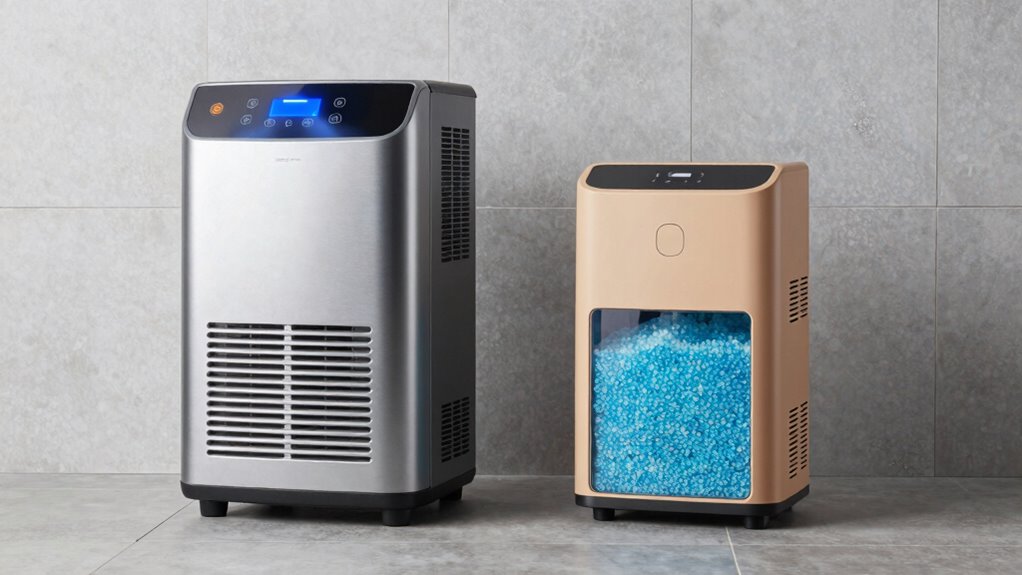
When choosing a dehumidifier, understanding the differences between desiccant and compressor models can make a big impact on your decision. One of the key factors to evaluate is energy efficiency. Desiccant dehumidifiers tend to use less power in colder environments because they rely on a chemical process that doesn’t depend on a compressor. This makes them ideal if you’re working within a space that often dips below 65°F, like basements or garages. On the other hand, compressor dehumidifiers are generally more energy-efficient in warmer conditions, as their refrigeration cycle becomes more effective at higher temperatures. If your space stays warm and humid, a compressor model might save you money on electricity over time. Additionally, marine equipment often requires specialized dehumidification solutions, so understanding these differences can help you choose the best equipment for your boat or marine environment. It’s also worth noting that climate considerations play a significant role in selecting the right type of dehumidifier for your needs. Recognizing the impact of environmental factors on dehumidifier performance can further help in making the most suitable choice. Furthermore, temperature sensitivity can influence the lifespan of certain dehumidifier components, emphasizing the importance of selecting a model suited for your environment. Noise levels are another major point to think about. Compressor dehumidifiers typically produce more noise because they operate a compressor and a fan constantly. If you’re sensitive to sound or plan to run the dehumidifier in a living area or bedroom, a desiccant model offers a quieter alternative. Desiccant dehumidifiers work through a rotating wheel or silica gel material that absorbs moisture without the need for a noisy compressor. As a result, they tend to be much quieter—almost whisper-quiet—making them suitable for environments where peace and quiet are essential. Additionally, energy consumption can vary significantly between the two types, impacting your long-term operating costs. Size and weight also come into play when comparing these two types. Desiccant units are usually lighter and more portable, which makes them easier to move around, especially if you need dehumidification in multiple spaces. Compressor models tend to be bulkier because of their refrigeration components. If space is limited or you need to frequently relocate your dehumidifier, a desiccant model might be your best choice. Another consideration is maintenance. Desiccant dehumidifiers require less upkeep, as they don’t have filters or coils that need regular cleaning. Compressor models, however, may require occasional filter changes and cleaning of coils to maintain their best performance.

AEOCKY 10 Pints/Day Rotary Desiccant Dehumidifier, Humidistat, Never Frost
- Trusted Industry-Leading Brand: Top-rated dehumidifier on Amazon US 2025
- Advanced Rotary Desiccant Technology: Efficient moisture removal for small spaces
- Normal Initial Scent and Warmth: Slight scent and warmth during first use
As an affiliate, we earn on qualifying purchases.
As an affiliate, we earn on qualifying purchases.
Frequently Asked Questions
Which Dehumidifier Type Is More Energy-Efficient Long-Term?
You’ll find compressor dehumidifiers are generally more energy-efficient long-term, thanks to their lower energy consumption for removing moisture. They tend to have a smaller environmental impact because they use less power over time. Desiccant models, while effective in colder spaces, often consume more energy, which can increase your utility bills and carbon footprint. So, for ongoing use, compressor dehumidifiers are typically the better choice environmentally and economically.
How Do Maintenance Requirements Differ Between Desiccant and Compressor Units?
You’ll find that desiccant dehumidifiers require less frequent filter changes, typically lasting longer than compressor units, which need more regular filter maintenance due to dust buildup. Noise levels vary, with desiccant models usually running quieter, making them better for sensitive spaces. Overall, desiccant units demand less maintenance effort, but you should still keep an eye on filter lifespan and noise levels to guarantee ideal operation and longevity.
Can Both Types Operate Effectively in Extremely Cold Environments?
In a cold climate, both types can battle humidity control, but don’t expect miracles. Compressor dehumidifiers struggle as the frost forms on their coils, turning them into decorative ice sculptures. Desiccants, however, keep working like little moisture magicians—unaffected by the chill—making them your best bet for effective humidity control in freezing environments. So, if you want dry air in winter’s icy grip, desiccants are your chilly champion.
What Are the Initial Costs for Each Dehumidifier Type?
The initial costs for desiccant dehumidifiers are generally higher than compressor models, mainly due to their specialized components and materials. When considering cost comparison, you’ll find that upfront investment for a desiccant unit can be markedly steeper, especially for larger capacities. However, in cold environments, desiccants may save you money long-term by operating more efficiently, but the first expense is definitely higher.
Are There Specific Applications Better Suited for Desiccant or Compressor Dehumidifiers?
If you’re controlling humidity in a cold storage, a compressor dehumidifier is ideal due to its efficiency at lower temperatures and good material compatibility. For example, in a museum with delicate artifacts, desiccant dehumidifiers excel because they work effectively in colder environments without damaging sensitive materials. Choose based on humidity control needs and material compatibility to guarantee ideal performance and preservation.
Conclusion
So, whether you choose a desiccant or compressor dehumidifier, remember it’s about what suits your space best. Some worry desiccants can be noisy, but modern models have quieter options. Don’t let that scare you off—they’re great for small or cold areas where compressor units struggle. Ultimately, picking the right one depends on your needs, not just the specs. Trust your instincts, and you’ll keep your space comfortably dry without breaking a sweat.