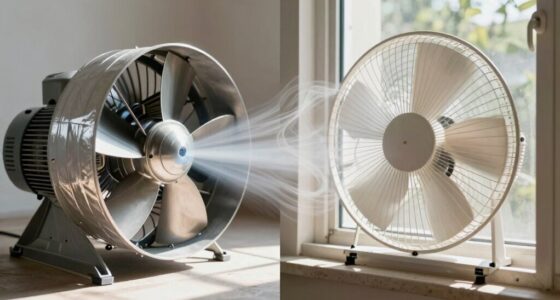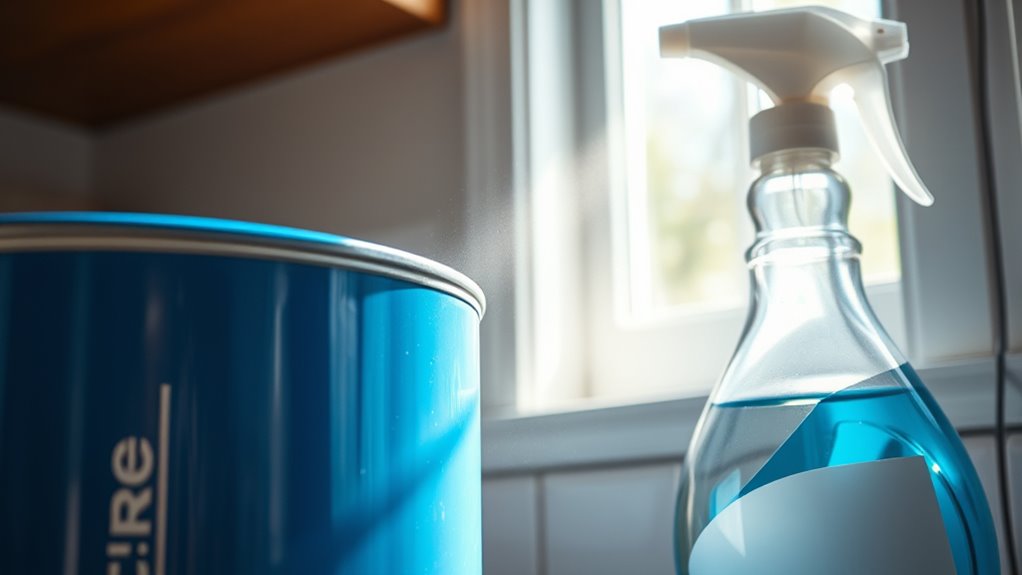

I know that VOCs in my home mainly come from paints, cleaners, and off-gassing household items like furniture and electronics. Even low-VOC paints can emit chemicals during drying, and many cleaning products release fumes that linger. New furniture and carpets also off-gas for weeks, adding to indoor pollution. Managing these sources with good ventilation and choosing safer products helps improve air quality. Keep going to discover how to reduce these common indoor VOCs effectively.

Get oils, diffusers and self-care delivered free with Prime
- Fast, free delivery on millions of items
- Prime Video, Amazon Music and more included
- Member-only deals all year
Key Takeaways
- Paints, including low- and zero-VOC types, emit VOCs during application and curing processes.
- Cleaning products like sprays and disinfectants release VOCs when used indoors.
- New furniture, carpets, and electronics off-gas chemicals over weeks or months.
- Proper ventilation and source control are essential to reduce indoor VOC levels.
- Proper storage and airing out of household items help minimize ongoing VOC emissions.

Have you ever wondered where the fumes in your home come from? It’s a question I’ve asked myself many times, especially when I notice a lingering chemical smell after painting or cleaning. These fumes are often linked to volatile organic compounds, or VOCs, which are common indoor air pollutants. Improving indoor air quality isn’t just about opening windows; it involves understanding and reducing sources of VOCs. That’s where VOC reduction strategies come into play, helping to create a healthier living environment.
Many household products contribute to indoor VOC levels, starting with paints. Even those labeled “low-VOC” or “zero-VOC” release some chemicals into the air during application and drying. I’ve learned that the type of paint I choose makes a huge difference. Water-based paints tend to emit fewer VOCs than oil-based ones, but it’s still best to use them in well-ventilated areas and allow plenty of curing time before spending extended periods in the room. When possible, I opt for paints with third-party certifications for low emissions, and I avoid painting during humid or hot days, as these conditions can increase off-gassing.
Choosing low-VOC paints and ensuring proper ventilation can significantly reduce indoor chemical emissions.
Cleaning products are another major source of VOCs. Many sprays, disinfectants, and air fresheners contain chemicals that quickly impact indoor air quality. I’ve started switching to natural or fragrance-free cleaners, which considerably cut down on chemical fumes. When I do use more potent products, I make sure to open windows and turn on exhaust fans to help ventilate the space. Proper storage of these chemicals is also key; keeping them sealed and away from living areas minimizes accidental exposure and ongoing VOC release.
Off-gassing from household items like furniture, carpets, and even new electronics adds to the indoor VOC load. I’ve noticed that new furniture and carpeting can emit chemical odors for weeks or even months. To combat this, I try to air out new items in well-ventilated areas before bringing them inside or placing them in main living spaces. Regular cleaning and vacuuming with a HEPA filter help remove dust and chemical residues that settle on surfaces, further improving indoor air quality. Additionally, research into sound vibrations suggests that certain types of vibrations could potentially influence indoor air quality by affecting the dispersion of these compounds.
As an affiliate, we earn on qualifying purchases.
Frequently Asked Questions
How Can I Detect Hidden Sources of VOCS in My Home?
To detect hidden sources of VOCs in my home, I start with VOC detection kits that can identify airborne chemicals. I also look for signs like strong odors or lingering fumes around paints, cleaners, or new furniture. Using a portable VOC monitor helps me monitor air quality continuously. Regularly inspecting hidden spots, like inside cabinets or behind appliances, reveals off-gassing sources I might otherwise miss.
Are There Safe Alternatives to Traditional Household Cleaning Products?
Yes, there are safe alternatives to traditional household cleaning products. I recommend trying natural alternatives like vinegar, baking soda, and lemon juice for DIY cleaning. These ingredients are effective, non-toxic, and reduce VOCs in your home. Plus, making your own cleaning solutions is simple and eco-friendly. Give it a try, and you’ll create a healthier environment while avoiding harsh chemicals and off-gassing.
How Often Should I Ventilate My Home to Reduce VOC Buildup?
Did you know indoor air can be up to five times more polluted than outdoor air? I recommend ventilating your home at least 15 minutes daily to promote air exchange and reduce VOC buildup. If you’ve been using strong cleaners or paints, increase ventilation to 30 minutes or more. Regular air exchange keeps indoor air fresh, lessens VOC concentrations, and helps you breathe easier every day.
Do VOC Levels Vary Seasonally or With Weather Changes?
VOC levels do vary seasonally and are influenced by weather impact. During colder months, when I keep windows closed more often, VOC concentrations tend to rise due to less ventilation. Conversely, in warmer weather, increased airflow helps reduce VOC buildup. Seasonal fluctuations can markedly affect indoor air quality, so I make sure to ventilate more during high VOC periods and be mindful of sources like paints and cleaners.
What Are the Long-Term Health Effects of Low-Level VOC Exposure?
I believe that long-term health effects from low-level VOC exposure can include chronic health risks like respiratory issues, headaches, and even more serious conditions over time. Cumulative exposure is key here; even small amounts can add up, gradually impacting your health. It’s essential to minimize VOC exposure at home by improving ventilation and choosing low-VOC products to protect yourself from these potential risks.
Conclusion
Did you know that indoor VOC levels can be up to 10 times higher than outdoor levels? Staying aware of common sources like paints, cleaners, and off-gassing from furniture is essential for healthier air at home. By choosing low-VOC products and ventilating well, you can greatly reduce your exposure. Small changes make a big difference, so let’s be mindful and create a safer, cleaner environment for ourselves and our loved ones.
Halloween Picks
halloween
As an affiliate, we earn on qualifying purchases.