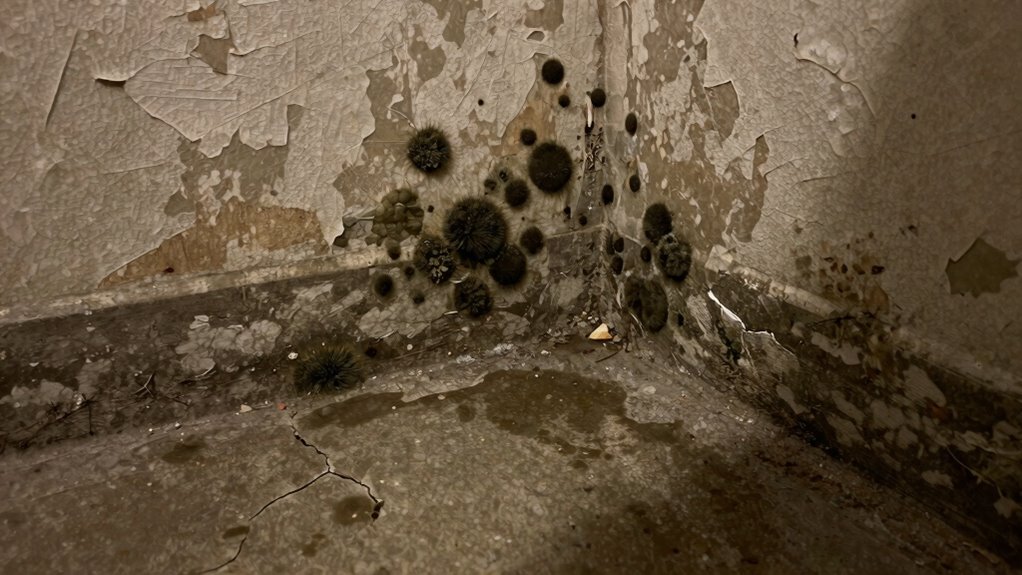

Treating mold only as an air quality issue ignores the key role moisture plays in its growth. While air purifiers and ventilation can help, they don’t address the root causes like leaks, high humidity, and condensation. Mold thrives on persistent dampness, embedding into surfaces and causing ongoing problems. If you focus only on air, you risk missing the real solution. Keep going to discover why managing moisture is essential for lasting mold prevention.

Get oils, diffusers and self-care delivered free with Prime
- Fast, free delivery on millions of items
- Prime Video, Amazon Music and more included
- Member-only deals all year
Key Takeaways
- Focusing solely on air quality ignores moisture sources that promote mold growth.
- High indoor humidity and leaks sustain mold colonies on surfaces, not just in the air.
- Air purifiers don’t address underlying moisture problems necessary for mold prevention.
- Surface cleaning fails to remove hidden mold embedded in walls and materials.
- Effective mold control requires moisture management, not just air filtration.

Have you ever thought mold problems are simply about the air you breathe? It’s a common assumption, but in reality, mold growth isn’t just about air quality—it’s deeply connected to the environment inside your home. When you focus only on the air, you overlook the root cause: indoor humidity levels and moisture management. Mold thrives in damp, humid conditions, and if you’re not addressing these factors, you’re basically fighting a losing battle.
Indoor humidity plays a crucial role in mold development. When humidity rises above 60%, it creates the perfect environment for mold spores to settle and grow. This isn’t just about feeling damp or stuffy; it’s about the microscopic conditions that allow mold to flourish. If you ignore these humidity levels and just rely on air purifiers or ventilation, you might temporarily improve air quality but won’t eliminate the underlying moisture problem. Mold spores can embed into walls, carpets, and other surfaces, making removal much more difficult and costly over time.
High indoor humidity above 60% fuels mold growth and hidden damage in walls and carpets.
Treating mold solely as an air problem makes you overlook the importance of controlling moisture. For example, if you’re experiencing water leaks, condensation buildup, or high humidity from activities like cooking or showering, these issues feed mold growth regardless of how well you filter the air. Simply increasing ventilation or using dehumidifiers without fixing leaks or addressing moisture sources won’t prevent mold from returning. Mold isn’t just floating around in the air; it’s growing on surfaces where moisture persists. Additionally, many people underestimate how persistent mold can be once it settles into building materials. Mold spores can colonize drywall, wood, and insulation, turning a simple air-quality concern into a structural problem. If you treat mold only as an air issue, you might clean visible surfaces but leave behind hidden colonies lurking in walls or behind cabinets. These hidden molds can release spores back into the air, causing recurring health issues and damaging your home’s integrity. Recognizing the connection between moisture and mold growth is essential for effective prevention.
In essence, ignoring moisture and indoor humidity means you’re only addressing the symptoms, not the cause. You need to control moisture at its source—fix leaks, improve insulation, and maintain proper humidity levels—while also managing airflow. This combined approach is far more effective than just trying to clean the air. Mold isn’t just about what you breathe; it’s about what’s happening behind the scenes in your home’s environment. Managing indoor humidity and moisture control are crucial steps that shouldn’t be overlooked. Being aware of humidity levels and their impact on mold growth can significantly enhance your mold prevention strategies. In addition, understanding the relationship between moisture and indoor air quality can help you create a healthier living space. If you want to truly eliminate mold, you must look beyond air quality and focus on moisture control. Recognizing that indoor humidity levels directly influence mold growth is essential for effective prevention.
dehumidifier for mold prevention
As an affiliate, we earn on qualifying purchases.
As an affiliate, we earn on qualifying purchases.
Frequently Asked Questions
Can Mold Affect Indoor Plants or Furniture?
Yes, mold can affect your indoor plants and furniture. Mold exposure can lead to plant toxicity, harming or killing your plants if left unchecked. For furniture, mold causes deterioration by breaking down materials like wood and fabric, leading to stains, warping, and decay. You should regularly inspect and clean your plants and furniture to prevent mold growth, ensuring a healthier environment and extending their lifespan.
Are Certain Materials More Prone to Mold Growth?
Certain materials are more prone to mold growth because of their material vulnerability and surface susceptibility. Porous materials like drywall, fabric, and wood absorb moisture easily, creating ideal conditions for mold. Non-porous surfaces such as metal or glass resist mold, but if they stay damp or have organic residues, mold can still develop. You should focus on these vulnerable materials, cleaning and drying them thoroughly to prevent mold from taking hold.
How Long Does It Take for Mold to Develop?
Mold growth can start within 24 to 48 hours when moisture control slips, and damp surfaces linger like a hidden threat. Imagine a forgotten corner of your basement, where humidity quietly fuels mold’s silent spread. If moisture persists, mold quickly takes hold—spreading spores and creating an unhealthy environment. To prevent this, address leaks immediately, keep humidity low, and regularly inspect areas prone to dampness, stopping mold before it takes root.
Is Mold Always Visible to the Naked Eye?
Mold isn’t always visible to the naked eye, especially in its early stages. You might not see it, but poor humidity control and stagnant air circulation create ideal conditions for mold growth behind walls or under floors. To prevent this, guarantee proper ventilation and keep humidity levels low. Regular inspections and maintaining good air circulation help catch hidden mold early, protecting your health and home from unseen damage.
What Are the Health Risks of Hidden Mold?
Hidden spores can pose serious health risks because you might not see or smell them, making detection difficult. They can trigger allergic reactions, asthma attacks, or respiratory issues, especially if you’re sensitive or have existing conditions. Prolonged exposure to these unseen mold spores can cause chronic health problems. It’s essential to address hidden mold promptly through thorough inspections and proper cleanup, rather than just relying on air quality improvements.
Conclusion
You can’t just sweep mold out of the air like dust—it’s more like a hidden iceberg, with much of its damage lurking beneath the surface. Treating mold solely as an air issue is like patching a leaky boat without fixing the real hole. To truly protect your home and health, you need to tackle the root causes, not just the visible symptoms. Otherwise, you’re sailing straight into trouble, blind to the storm that lurks beneath.
Halloween Picks
halloween
As an affiliate, we earn on qualifying purchases.