After home projects like painting, renovation, or deep cleaning, your indoor air quality worsens because these activities release pollutants, dust, and VOCs that linger in the air. Poor ventilation traps these particles inside, making it harder to breathe and affecting your health. Using fans, air purifiers, and proper materials can help improve air quality. Keep going to discover how to better manage indoor air and breathe easier during future projects.
Key Takeaways
- Renovation activities release VOCs, dust, and chemical fumes, increasing indoor pollutants.
- Construction materials and paints emit airborne particles that degrade air quality.
- Disturbing dust and mold spores during projects can worsen indoor air conditions.
- Reduced ventilation during renovations traps airborne contaminants indoors.
- Post-project lingering pollutants and insufficient air purification contribute to poorer indoor air quality.
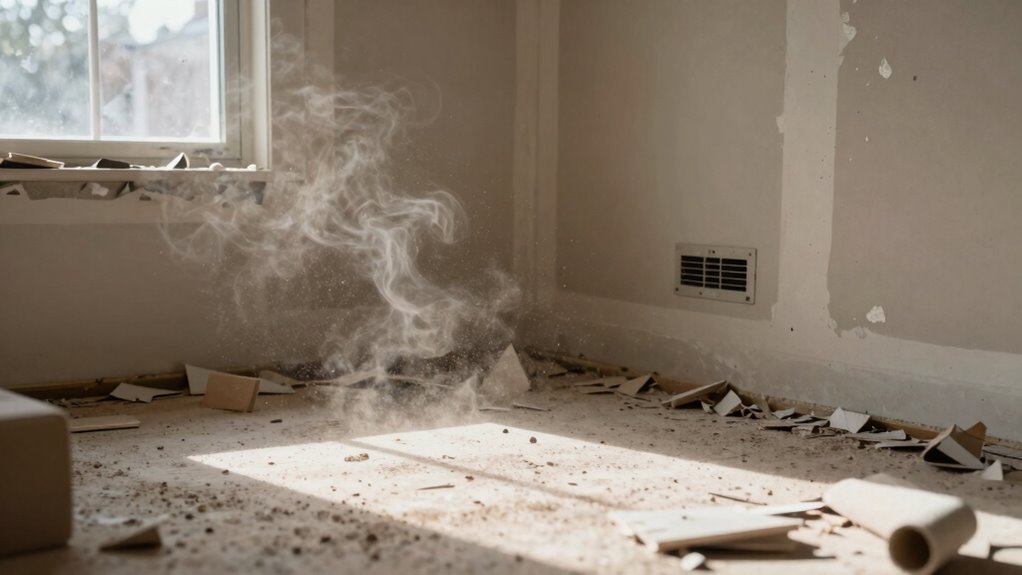
Have you ever wondered how your recent home projects might affect the air you breathe indoors? When you undertake renovations, paint, or even deep cleaning, you might not realize how these activities can introduce pollutants and particles into your indoor environment. Many home projects involve materials that release Volatile Organic Compounds (VOCs), dust, and other airborne contaminants. Without proper measures, these substances can linger and degrade your indoor air quality, making it harder to breathe comfortably and potentially affecting your health.
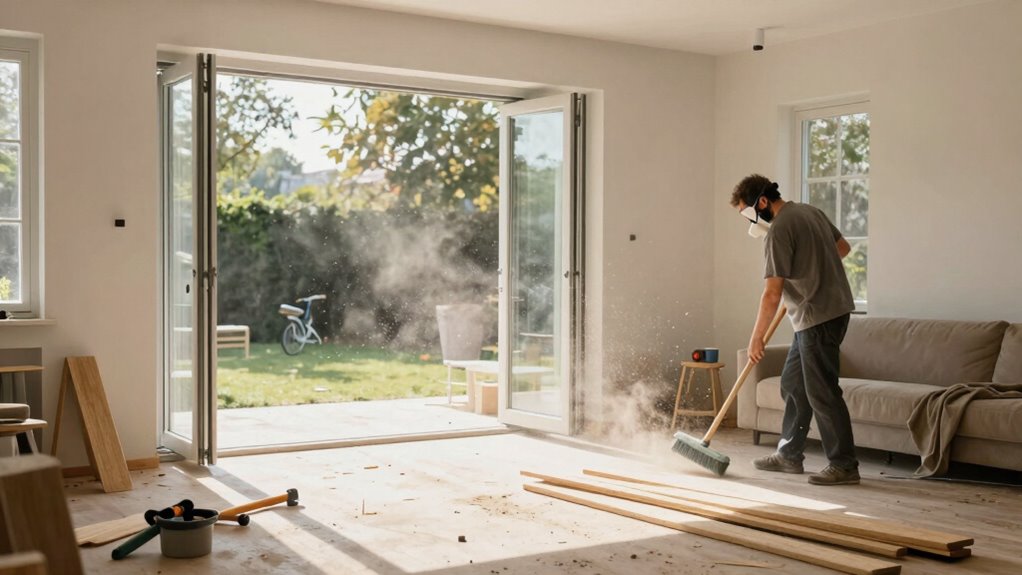
One of the key ways to combat this deterioration is by focusing on effective ventilation strategies. When you’re working on a project, it’s essential to increase the airflow in your space. Opening windows and doors helps dilute indoor pollutants and brings in fresh air from outside. If natural ventilation isn’t enough, consider using exhaust fans or portable air purifying units equipped with HEPA filters. These devices can trap airborne particles, including dust, mold spores, and VOCs, preventing them from circulating in your living space. Proper ventilation not only removes contaminants but also helps control humidity levels, which can prevent mold growth that worsens indoor air quality over time. Additionally, maintaining good indoor humidity levels can reduce dust and other allergens that tend to accumulate after home projects. Incorporating humidity control into your cleaning routine can further improve your indoor air quality.
In addition to ventilation strategies, incorporating air purifying solutions can markedly improve the air you breathe after home projects. Air purifiers with HEPA filters are highly effective at capturing tiny particles that standard filters might miss. When you run these purifiers during and after your projects, you’re actively reducing airborne pollutants. Some advanced units also feature activated carbon filters that absorb chemical fumes and odors from paints, adhesives, or cleaning agents. Using these devices consistently, especially during busy renovation phases, ensures that your indoor air remains cleaner and healthier. Additionally, understanding the importance of air quality management can help you implement better practices to safeguard your indoor environment.
It’s also wise to plan your projects carefully, taking into account the potential impact on indoor air quality. Covering surfaces, sealing off work areas, and using low-emission or VOC-free materials can help minimize the amount of pollutants released into your home. Additionally, understanding indoor air quality and how to improve it can help you make better choices during your renovations. After completing a project, give your space ample time to ventilate and purify the air before reoccupying. Regularly maintaining your air purifying devices and keeping your home well-ventilated can make a notable difference in maintaining a healthier indoor environment. Being aware of the potential for airborne contaminants can motivate you to take extra precautions to protect your indoor air quality in the future.
In the end, understanding how home projects affect indoor air and employing effective ventilation strategies combined with air purifying solutions can help you breathe easier, even during busy renovation periods.
HEPA air purifier for dust and VOC removal
As an affiliate, we earn on qualifying purchases.
As an affiliate, we earn on qualifying purchases.
Frequently Asked Questions
How Long Does Indoor Air Quality Typically Stay Poor After Home Projects?
After home projects, your indoor air quality usually stays poor for a few days to a week, depending on the project’s size and ventilation. During this period, post-project pollution lingers, which can cause headaches or respiratory issues. To speed up recovery, make certain of proper ventilation, use air purifiers, and wait as long as needed before resuming normal activities. Monitoring air quality helps determine when it’s safe to breathe comfortably again.
Are There Specific Home Projects That Cause More Indoor Air Pollution?
Certain home projects, like painting, flooring, or remodeling, release more indoor air pollution due to construction dust and chemical emissions. These activities disturb settled dust and emit volatile organic compounds (VOCs) from paints, adhesives, or finishes. You’ll notice increased indoor air pollution after such projects, especially if you don’t take measures like proper ventilation or air purification. Being aware helps you minimize exposure and improve indoor air quality faster.
Can Indoor Plants Improve Air Quality After Renovations?
Yes, indoor plants can dramatically improve air quality after renovations, transforming your space from a toxic zone to a refreshing change. Plant benefits include filtering out harmful VOCs and boosting humidity, which helps reduce indoor pollutants. While they won’t completely eliminate all pollutants, they substantially enhance air quality, making your home healthier and more comfortable. Just choose the right plants, and you’ll breathe easier in no time.
What Are the Best Air Purifiers for Post-Project Indoor Air?
You should choose air purifiers from top brands like Dyson, Blueair, or Honeywell, which offer advanced filter technologies like HEPA and activated carbon filters. These purifiers effectively remove dust, VOCs, and airborne particles that worsen indoor air quality after home projects. Look for models with high CADR ratings and multi-stage filtration to guarantee your space stays fresh and safe during the post-project cleanup.
How Does Humidity Affect Indoor Air Quality After Home Improvements?
Humidity control plays a vital role in maintaining good indoor air quality after home improvements. If humidity levels are too high, it can lead to mold growth, which worsens air quality and causes health issues. By managing humidity, you prevent mold development and keep the air fresh. Proper ventilation and dehumidifiers help you achieve this, ensuring your indoor environment remains healthy and comfortable after your projects.
Conclusion
After completing home projects, your indoor air quality can take a hit, but being aware helps you take action. Did you know that indoor air can be up to five times more polluted than outdoor air? Ventilation and air purifiers can make a big difference in clearing out harmful fumes and particles. So, next time you finish a project, remember to open windows and use fans—your lungs will thank you for it!