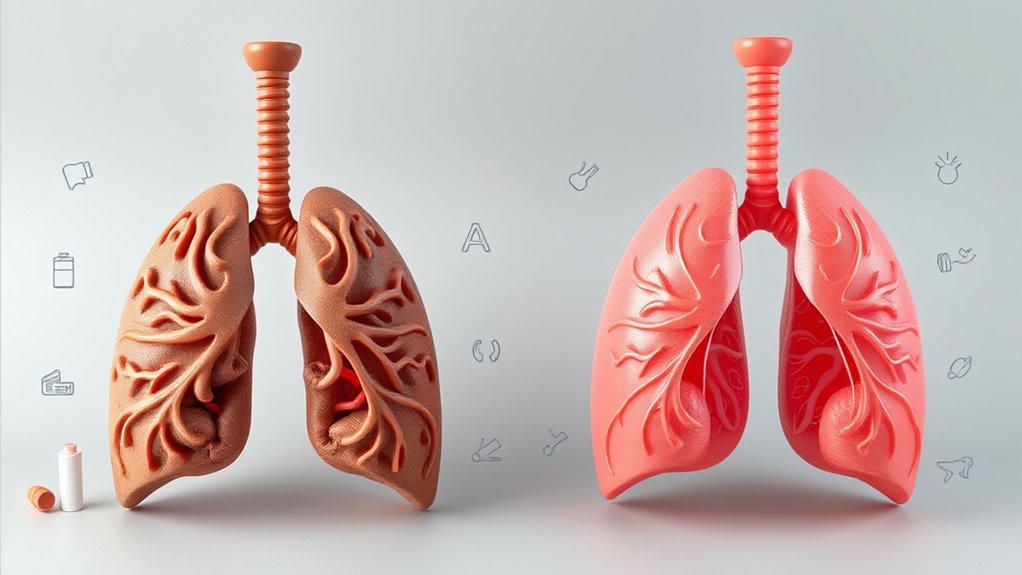

COPD and asthma both affect breathing but have different causes and patterns. COPD, linked to long-term smoking and pollution, worsens gradually, while asthma involves episodic flare-ups triggered by allergens or irritants. Managing both involves lifestyle changes, medication adherence, and recognizing early signs. COPD requires daily inhalers, whereas asthma often needs quick-relief inhalers during attacks. Understanding these differences and tips can help you better control your breathing—something you’ll learn more about if you keep going.

Get oils, diffusers and self-care delivered free — and shop member deals
- Fast, free delivery on millions of items
- Access to Prime Big Deal Days deals on October 6–7
- Prime Video, Amazon Music and more included
Key Takeaways
- COPD develops gradually with long-term smoking or pollution exposure, while asthma is episodic and triggered by allergens or irritants.
- COPD symptoms worsen over time without treatment; asthma episodes are episodic and manageable with trigger avoidance.
- Both conditions require medication management: inhalers with bronchodilators and corticosteroids for COPD; quick-relief inhalers for asthma.
- Lifestyle adjustments like avoiding smoking, pollutants, and known triggers help manage both conditions effectively at home.
- Recognizing early warning signs and having an action plan are essential for preventing severe flare-ups of either disease.

When comparing COPD and asthma, it’s important to understand that though they both affect breathing, they are distinct conditions with different causes, symptoms, and treatment approaches. As someone managing either condition, I’ve learned that understanding these differences is key to making effective lifestyle adjustments and managing medications properly. COPD, often linked to long-term smoking or exposure to pollutants, tends to develop gradually and worsens over time. Asthma, on the other hand, usually involves episodes of narrowing airways triggered by allergens, exercise, or irritants, and can sometimes be controlled more easily with proper management.
COPD and asthma are distinct breathing conditions with different causes and management strategies.
For both conditions, lifestyle adjustments play a critical role in maintaining quality of life. In COPD, avoiding smoking and reducing exposure to air pollution is essential, since these can accelerate lung deterioration. I also found it helpful to maintain a healthy weight and stay physically active within my limits, as this improves overall respiratory function. Using air purifiers and avoiding dust or strong fumes can make a noticeable difference. With asthma, recognizing and avoiding triggers such as pollen, pet dander, or certain foods is indispensable. I keep a diary to track what sets off my symptoms, which helps me plan my activities and avoid flare-ups.
Medication management is equally significant in both cases, but the types of medications differ. For COPD, inhalers containing bronchodilators and corticosteroids help open airways and reduce inflammation, but they’re often used on a regular schedule to prevent symptoms from worsening. I’ve learned to adhere strictly to my prescribed medication routine, and I always carry a rescue inhaler for emergencies. Asthma management often involves quick-relief inhalers for immediate symptom relief during attacks, along with long-term controller medications to reduce inflammation and prevent episodes. Regular check-ins with my healthcare provider ensure my medications are working effectively and allow for adjustments if needed.
Both conditions require vigilance and proactive management. I’ve found that sticking to a routine—whether that’s taking medications on time, avoiding known triggers, or incorporating healthy habits—makes a huge difference. Educating myself about my condition, recognizing early warning signs, and having an action plan helps me stay ahead of potential flare-ups. While COPD and asthma are different, managing them successfully involves a combination of lifestyle adjustments and diligent medication management. Staying informed, making smart choices, and working closely with healthcare providers empower me to breathe easier and maintain a more active, fulfilling life.
COPD inhaler with bronchodilators
As an affiliate, we earn on qualifying purchases.
As an affiliate, we earn on qualifying purchases.
Frequently Asked Questions
Can COPD and Asthma Occur Together in the Same Patient?
Yes, COPD and asthma can occur together in one patient, creating a complex comorbidity management situation. This overlap can pose diagnosis challenges because symptoms often mimic each other. I recommend working closely with your healthcare provider to develop a tailored treatment plan. Accurate diagnosis and ongoing management are key to controlling both conditions effectively and improving your quality of life. Don’t hesitate to ask questions and stay informed about your health.
How Do Lifestyle Changes Impact COPD and Asthma Management?
Did you know that lifestyle changes can improve COPD and asthma symptoms by up to 50%? I’ve found that regular exercise benefits both conditions by strengthening lungs and boosting immunity. Diet modifications, like reducing inflammation through healthy eating, also make a big difference. These changes empower me to breathe better, stay active, and manage my symptoms effectively. You’ll notice improvements too, just by making simple, consistent adjustments to your lifestyle.
What Are the Latest Advances in Home Treatment Options?
Recent advances in home treatment include telemedicine, allowing me to consult with my healthcare provider remotely, which makes managing my condition more convenient. I also use smart inhalers that track my usage and provide feedback, helping me stay on top of my medication. These innovations give me better control, reduce emergencies, and improve my quality of life. Staying updated on these options has truly made a difference in my daily management.
Are There Specific Triggers Unique to Each Condition?
You wouldn’t believe the wild variety of triggers each condition has! For asthma, environmental allergens like pollen and dust are notorious, while exercise triggers can cause sudden wheezing. COPD, on the other hand, is often triggered by pollution and cigarette smoke. I’ve found that avoiding these specific triggers makes a huge difference in managing symptoms, helping me breathe easier and stay active longer!
How Can I Differentiate Between a Flare-Up and a New Infection?
To tell a flare-up from a new infection, I pay close attention to symptom severity and medication effectiveness. A flare-up usually involves gradual worsening of symptoms that respond somewhat to my usual meds. But if I notice sudden, severe symptoms, fever, or no relief with my medications, I suspect a new infection. In that case, I consult my doctor promptly to determine the right treatment.
Conclusion
Understanding the differences and overlaps between COPD and asthma is essential for proper management. Did you know that nearly 16 million Americans have COPD, but many are undiagnosed? Recognizing symptoms early and following home management tips can make a real difference in quality of life. Whether it’s controlling triggers or staying active, taking charge of your health is empowering. Remember, you’re not alone—help is available, and managing these conditions effectively can lead to a healthier, more comfortable life.
Fall Picks
fall essentials
As an affiliate, we earn on qualifying purchases.