
When comparing gas and electric stoves, I find gas stoves release pollutants like nitrogen dioxide and carbon monoxide that can quickly build up without proper ventilation, impacting indoor air quality. Electric stoves produce no combustion emissions, making them cleaner for indoor air, though they still benefit from good ventilation for odors and heat. If you’re interested, you’ll discover more about how ventilation strategies and habits can further improve your home’s air quality.

Get oils, diffusers and self-care delivered free with Prime
- Fast, free delivery on millions of items
- Prime Video, Amazon Music and more included
- Member-only deals all year
Key Takeaways
- Gas stoves emit nitrogen dioxide, carbon monoxide, and particulate matter, impacting indoor air quality without proper ventilation.
- Electric stoves produce no combustion-related emissions, resulting in cleaner indoor air during use.
- Ventilation methods like vented range hoods and open windows are essential for reducing gas stove pollutants.
- Good cooking habits, such as covering pots and lowering heat, help minimize emissions regardless of stove type.
- Advances in AI and monitoring can optimize ventilation and maintain healthier indoor air environments.
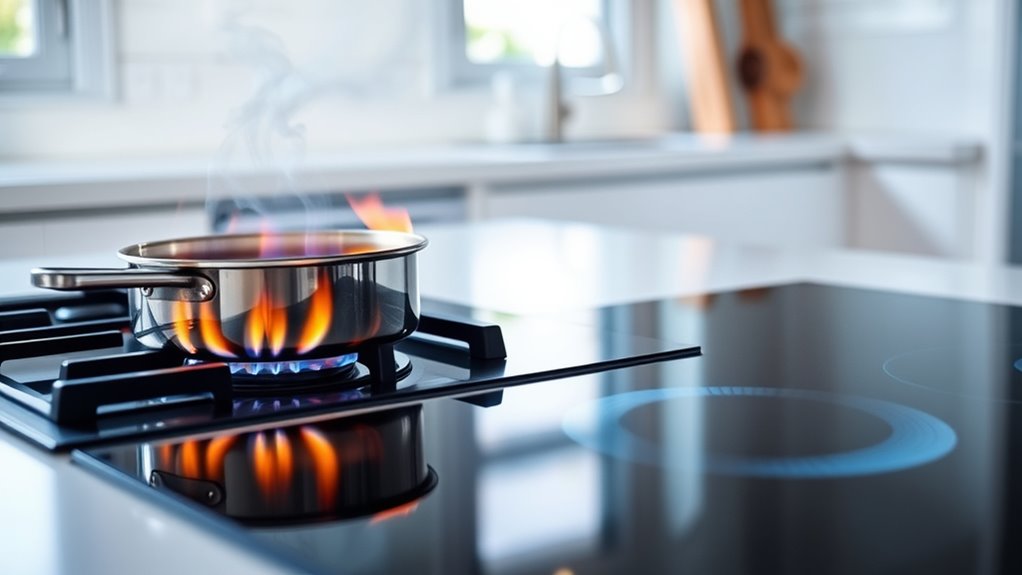
Have you ever wondered how your daily cooking habits impact the air inside your home? It’s a good question, especially when considering the potential health effects of indoor air quality (IAQ). The type of stove you use—gas or electric—can greatly influence emissions and, consequently, how you should approach ventilation strategies and emission mitigation. Gas stoves, for example, release nitrogen dioxide, carbon monoxide, and particulate matter during use. These pollutants can accumulate quickly if your kitchen isn’t properly ventilated, leading to higher indoor pollutant levels. Electric stoves, on the other hand, produce no combustion-related emissions, making them a cleaner choice in terms of indoor air quality. But they still generate heat and sometimes cause other concerns, like increased indoor temperatures or indirect emissions from cookware or electrical components.
When considering ventilation strategies, it’s essential to tailor your approach based on the type of stove you use. For gas stove users, guaranteeing proper ventilation is vital. Range hoods that vent outside are the most effective because they directly remove combustion byproducts from your indoor air. If you don’t have a vented hood, turning on your exhaust fan or opening windows during and after cooking can help mitigate emissions. In fact, continuous or intermittent ventilation acts as a key emission mitigation measure, reducing pollutant buildup and improving IAQ. For electric stove users, while emissions are minimal, good ventilation still helps remove cooking odors and any particulate matter generated from frying or boiling.
Beyond just using ventilation devices, I’ve found that adopting certain habits can dramatically improve indoor air quality. Covering pots while cooking prevents the escape of steam and particles, and using lower heat settings reduces the amount of emissions produced. Regularly cleaning your stove and range hood filters ensures they operate efficiently, which is an often-overlooked emission mitigation tactic. It’s also worth considering the placement of your stove within your home. Installing it in a well-ventilated area or near an exterior wall with easy access to exhaust fans makes a noticeable difference.
Furthermore, advances in AI in Education such as intelligent systems could potentially assist in monitoring indoor air quality in smart homes, providing real-time feedback and automated ventilation adjustments. In the end, understanding the emission profiles of your stove and implementing effective ventilation strategies is key to maintaining healthy indoor air. Whether you prefer gas or electric, being proactive about ventilation ensures you’re not just cooking safely but also protecting your home’s air quality. Good habits combined with proper exhaust systems make a big difference in reducing indoor pollutants and creating a healthier living environment.
As an affiliate, we earn on qualifying purchases.
Frequently Asked Questions
How Do Indoor Air Quality Levels Compare Between Gas and Electric Stoves?
Indoor air quality tends to be worse with gas stoves because their emission levels release more pollutants like nitrogen dioxide and carbon monoxide. I’ve noticed that electric stoves produce fewer harmful emissions, making the air safer to breathe. If you’re concerned about air quality, switching to electric can substantially reduce indoor pollutants. I recommend ventilating well regardless of your stove type to keep emission levels low and maintain better IAQ.
Are There Specific Health Risks Associated With Cooking Emissions From Gas Stoves?
I believe cooking emissions from gas stoves pose real health risks, especially with potential gas leaks that can lead to indoor pollution. Exposure to nitrogen dioxide and carbon monoxide from these emissions can cause respiratory issues, worsen asthma, and increase long-term health problems. It’s vital to guarantee proper ventilation and regular maintenance to minimize these risks and keep indoor air safer for everyone.
What Ventilation Methods Best Reduce Cooking-Related Indoor Pollutants?
I recommend using range hoods with high ventilation effectiveness to reduce indoor pollutants from cooking. Properly venting to the outdoors is essential for effective pollutant removal. If a range hood isn’t available, opening windows and using exhaust fans helps improve air quality. Combining these methods ensures better removal of cooking emissions, minimizing indoor pollutant buildup and protecting your indoor air quality.
Do Electric Stoves Produce Any Harmful Emissions During Operation?
Electric stoves don’t produce indoor combustion emissions during operation, so they don’t emit harmful gases like nitrogen dioxide or carbon monoxide. However, they can still impact indoor air quality indirectly if cooking generates particles or moisture. To guarantee emission mitigation, I recommend good ventilation regardless of stove type. This way, you minimize any potential indoor pollutant buildup, keeping your indoor environment safer and healthier.
How Can Homeowners Measure and Improve Indoor Air Quality Related to Cooking?
Think of indoor air quality as a garden that needs tending. I recommend using air quality monitors to spot pollutant sources, especially around your stove. To improve IAQ, guarantee proper ventilation, like using exhaust fans or opening windows during cooking. Regularly clean your appliances to reduce emissions, and consider air purifiers if needed. Monitoring and controlling these factors help keep your home’s air fresh and healthy.
Conclusion
In the end, choosing between gas and electric stoves is like picking between two paths in a forest—each has its own risks and rewards. While gas stoves might offer instant heat, they also release more pollutants that can cloud your indoor air quality. Electric stoves seem cleaner but have their own emissions to contemplate. Being mindful of your choice is like tending a garden—you’ll want to nurture a healthy, safe environment for everyone under your roof.
Halloween Picks
halloween
As an affiliate, we earn on qualifying purchases.