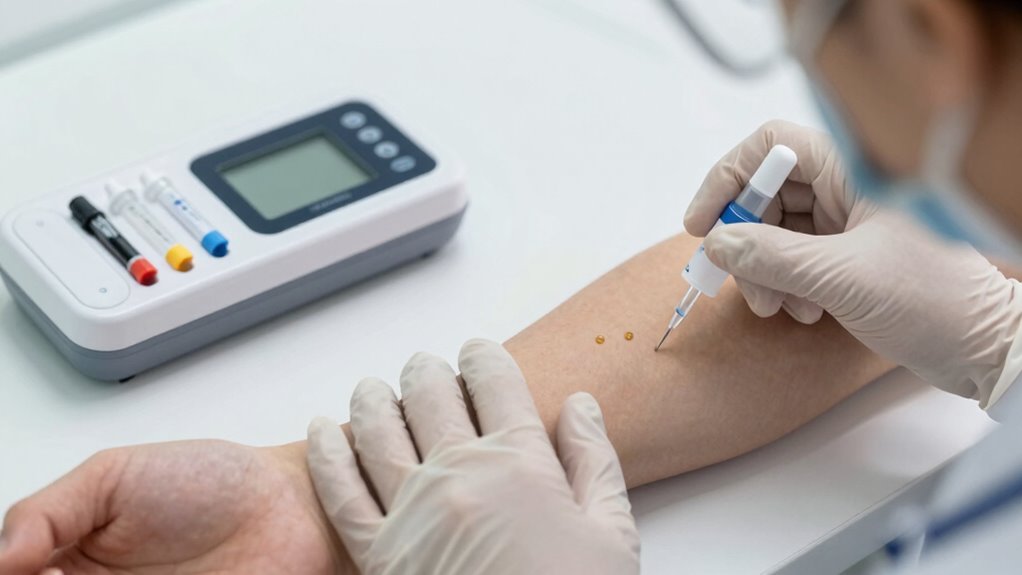
Strep throat testing methods, including rapid antigen and culture, vary in speed and accuracy, and understanding their differences is essential to determine the best approach.
Browsing Category
Medical Conditions & Diagnostic Testing
92 posts
Metabolic Body Odor: When to Consider Genetic Testing
Curious about persistent body odor despite dietary changes? Consider genetic testing to uncover underlying metabolic factors affecting your scent.
Occupational Exposure Monitoring: VOC Badges and Air Sampling
Navigating occupational exposure risks with VOC badges and air sampling reveals essential safety insights that could protect workers—discover how these methods work.
Lactose Breath Test: Preparation, Procedure, and Result Patterns
Keen to understand lactose intolerance? Discover how preparation, procedure, and result patterns can reveal your body’s response.
Urine Culture: How It’s Collected and What It Shows
A urine culture reveals infection details, but understanding how it’s collected and what it shows is essential for accurate diagnosis and treatment.
Sinus Infection Vs Common Cold: Symptoms, Duration, and Testing
Having trouble distinguishing a sinus infection from a cold? Discover the key symptoms, duration, and testing tips to help you decide what’s really going on.
Phantosmia Vs Parosmia: Distorted Smells After Illness
Fascinating differences between phantosmia and parosmia after illness can impact your senses—discover what causes these distorted smells and how to manage them.
Thyroid Function Tests: TSH, T3, T4, and Antibodies
Investigate how thyroid function tests like TSH, T3, T4, and antibodies reveal your health and what factors might influence their accuracy.
Blood Ketone Testing: When and How to Check Ketosis
Learning when and how to check blood ketones can help optimize your ketosis journey—discover the essential tips to get accurate results.
Celiac Disease Testing: TTG-IgA, Endoscopy, and Gluten Challenge
Proactively understanding celiac testing methods like TTG-IgA, endoscopy, and gluten challenge is crucial for accurate diagnosis and effective management.