
Your bad breath can stem from various spots like your mouth, nose, or stomach. Bacteria in your mouth, plaque buildup, or poor hygiene often cause persistent odor. Sinus infections or nasal issues can also contribute, along with stomach problems like acid reflux, or even certain foods and habits like smoking. Understanding these sources helps you find solutions. Keep exploring to discover how each area influences your breath and how to freshen it effectively.

Get oils, diffusers and self-care delivered free — and shop member deals
- Fast, free delivery on millions of items
- Access to Prime Big Deal Days deals on October 6–7
- Prime Video, Amazon Music and more included
Key Takeaways
- Bad breath originates from bacteria in the mouth, including the tongue, gums, and teeth, and can also be influenced by nasal or sinus infections.
- Gastrointestinal issues like acid reflux or stomach infections can cause foul odors that contribute to bad breath.
- External factors such as smoking and poor oral hygiene significantly increase odor-causing bacteria in the mouth and throat.
- Dietary choices, including consumption of garlic, onions, alcohol, or fasting, release compounds that impact breath odor beyond the mouth.
- Medical conditions like sinus infections or respiratory issues can affect nasal passages and contribute to persistent bad breath.
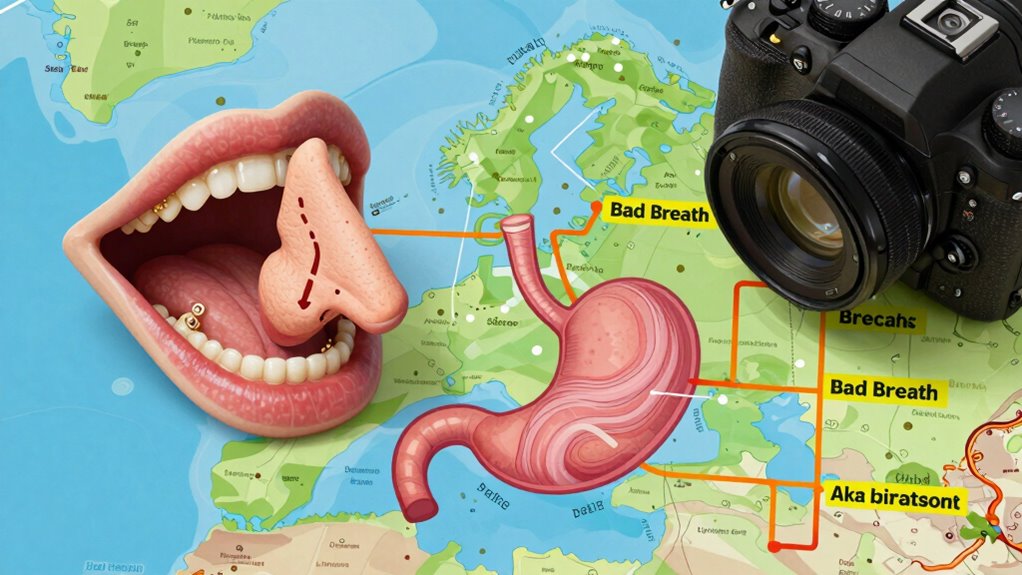
Have you ever wondered what causes bad breath? It’s a question many people ask, and the answer often starts with your oral hygiene and dietary habits. Poor oral hygiene allows bacteria to thrive in your mouth, especially on your tongue, gums, and between your teeth. When these bacteria break down food particles and dead cells, they produce sulfur compounds, which lead to that unpleasant odor. If you don’t brush regularly, floss, or clean your tongue, these bacteria multiply, making bad breath more persistent. Similarly, what you eat influences your breath. Foods like garlic, onions, and spicy dishes contain compounds that are absorbed into your bloodstream and exhaled through your lungs, contributing to bad breath. Drinking alcohol or caffeinated beverages can also dry out your mouth, reducing saliva production. Since saliva helps wash away bacteria and food particles, a dry mouth becomes a breeding ground for odor-causing bacteria, intensifying bad breath.
Beyond oral hygiene and diet, your dietary habits can have a significant impact. Skipping meals or fasting causes your body to break down fat for energy, releasing ketones that can cause a distinct, foul smell on your breath. Consuming sugary snacks or drinks feeds the bacteria in your mouth, increasing their activity and odor production. Poor hydration, often tied to dietary choices, results in less saliva flow, which hampers your mouth’s natural cleaning process. This creates an environment where bacteria flourish, leading to persistent bad breath. Additionally, certain diets that restrict specific food groups may alter your oral environment, sometimes leading to a buildup of bacteria or dry mouth, both of which worsen odor.
Furthermore, digital health awareness is increasingly important, as some medical conditions contributing to bad breath may go unnoticed without proper knowledge. While oral hygiene and dietary habits are primary factors, keep in mind that other causes also contribute to bad breath. For example, smoking introduces tar and chemicals that cling to your mouth and throat, creating persistent odors. Poor dental health, such as cavities or gum disease, can harbor bacteria and debris that generate foul smells. Even some medical conditions, like sinus infections or acid reflux, can influence bad breath by introducing odors from your nose or stomach into your mouth. But addressing the basics—maintaining good oral hygiene and being mindful of your dietary choices—can go a long way in preventing and managing bad breath. Regular brushing, flossing, and tongue cleaning, combined with a balanced diet and adequate hydration, form the foundation of fresh breath and overall oral health.
best tongue scrapers for bad breath
As an affiliate, we earn on qualifying purchases.
As an affiliate, we earn on qualifying purchases.
Frequently Asked Questions
Can Dry Mouth Cause Bad Breath Even Without Dental Issues?
Yes, dry mouth can cause bad breath even without dental issues. When your salivary gland function decreases, saliva production drops, leading to a dry oral environment. This dryness affects your oral mucosa health, allowing bacteria to grow more easily. Without enough saliva to wash away bacteria and food particles, foul odors develop. So, maintaining adequate saliva flow is essential to prevent bad breath caused by dry mouth.
Do Certain Foods Permanently Contribute to Bad Breath?
Like a shadow that lingers, certain foods can leave a lasting mark on your breath. Food additives and your dietary habits may contribute to persistent bad odor, even after washing away the initial taste. While they might not permanently change your breath, frequent consumption of strongly aromatic foods, processed snacks, or sugary treats can make it harder to maintain fresh breath over time. Moderation and good oral hygiene are your best defenses.
How Does Sinus Infection Influence Bad Breath?
A sinus infection can cause bad breath because nasal congestion traps mucus, which bacteria break down, producing foul odors. When your sinuses are inflamed, post-nasal drip occurs, allowing bacteria to build up in your mouth and throat, worsening bad breath. You might also notice a sour or stale smell due to the infection. To improve this, stay hydrated, use saline sprays, and seek treatment to clear the infection.
Can Bad Breath Be a Sign of a Serious Underlying Disease?
Yes, bad breath can signal serious underlying health issues. Studies show that up to 85% of halitosis causes stem from health problems beyond oral hygiene. Persistent bad breath could indicate conditions like diabetes, infections, or liver disease. If your halitosis doesn’t improve with regular brushing, it’s a sign to consult a healthcare professional, as your underlying health might be at risk. Don’t ignore it—early detection is key.
Are There Effective Home Remedies for Chronic Bad Breath?
Yes, there are effective home remedies and natural treatments for chronic bad breath. You can try brushing your teeth and tongue regularly, using a saltwater rinse, and staying well-hydrated to reduce bacteria. Chewing fresh parsley or mint leaves can freshen your breath naturally. Additionally, maintaining good oral hygiene and avoiding strong-smelling foods help. These simple home remedies often improve breath, but see a dentist if it persists.
Conclusion
So, next time your breath could clear a room, remember: it’s not just your mouth’s fault. Maybe your nose, stomach, or some mysterious “beyond” is throwing a party you didn’t RSVP for. But hey, don’t worry—just blame it on the map! After all, who needs fresh air when you can have a fragrant tour of your body’s less glamorous areas? Keep brushing, keep guessing, and maybe invest in some minty diplomacy.
Fall Picks
fall essentials
As an affiliate, we earn on qualifying purchases.