TL;DR

Get oils, diffusers and self-care delivered free — and shop member deals
- Fast, free delivery on millions of items
- Access to Prime Big Deal Days deals on October 6–7
- Prime Video, Amazon Music and more included
A personal essay published by Tiny Buddha recounts how its author began responding to anxiety differently after a period of major life changes. The author credits self-care, meditation and ideas from Morita therapy with helping them accept difficult feelings and act despite them, while saying anxiety still occurs.
Tiny Buddha has published a first-person account of how its author changed their response to anxiety after a difficult period in 2019, describing acceptance, meditation and small acts of self-care as part of that process. The author says anxiety has not disappeared, but they no longer treat feeling calm as a prerequisite for carrying out everyday tasks.
The writer describes waking around 3 a.m. on most nights for more than a year, worrying about work, income and relationships. They say anxiety intensified in 2019 after the end of a 15-year relationship, a move and the start of a new job. The essay also recounts disrupted sleep, low energy and reduced interest in activities. These are the author’s personal descriptions, not an independently assessed account of a diagnosis or treatment outcome.
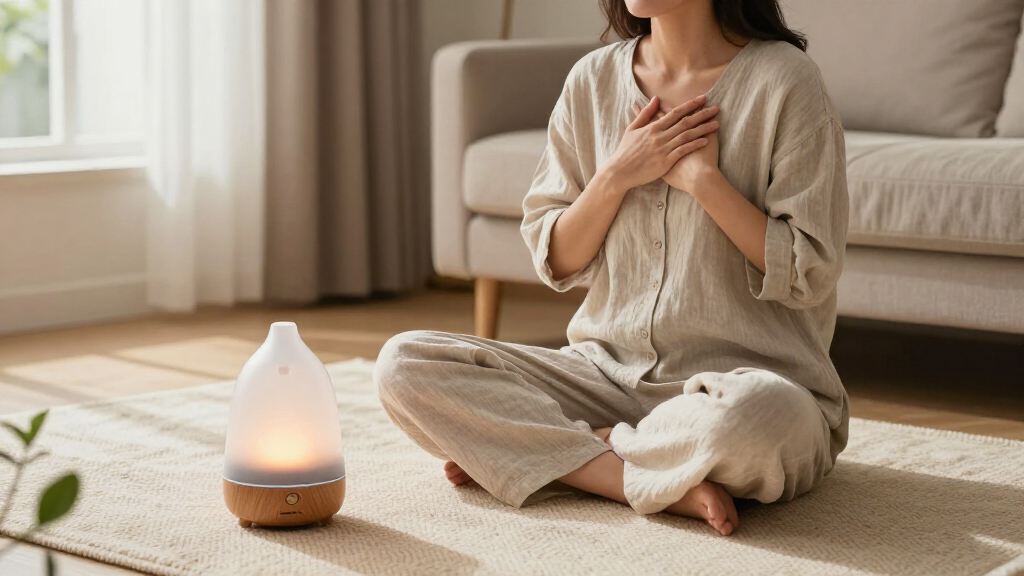
The writer says their approach began to change when they stopped treating recovery as a project that had to happen quickly. They describe buying themselves small things, eating alone and gradually taking up meditation. At first, sitting quietly felt uncomfortable; over time, the author practiced for longer periods, usually three to five times a week, without expecting a dramatic breakthrough.
About a year into meditating, the author says they noticed anxiety as a feeling they could observe rather than an identity that defined them. They later read about Morita therapy, a psychotherapy approach associated in the essay with Japanese psychiatrist Shoma Morita. The writer interprets its central idea as accepting feelings that cannot simply be willed away while choosing actions that remain within one’s control.
Acting Without Waiting for Calm
The essay offers a personal account of a distinction that may matter to readers dealing with persistent worry: accepting a feeling is not the same as endorsing it, and it does not require abandoning ordinary responsibilities. In the author’s telling, the practical change was moving from waiting for anxiety to vanish toward doing manageable tasks while anxiety was present.
That framing also keeps the account’s limits visible. It is a report of one person’s experience, not evidence that acceptance or meditation will work the same way for everyone, or a substitute for mental-health care. The author does not claim to have become anxiety-free. They say the feeling remains at times, including occasional early-morning waking, but their response has changed.
As an affiliate, we earn on qualifying purchases.
From Life Upheaval to Morita Therapy
The author traces their anxiety to a longer history of sensitivity and concern about other people’s opinions, then describes a sharper increase in distress amid several changes in 2019. The relationship ending, move and new job occurred within the same period, disrupting parts of life the writer had previously relied on. The essay presents this sequence as personal background rather than a tested explanation for anxiety.
Morita therapy is described in the source as an approach developed by Shoma Morita more than a century ago. The writer’s account emphasizes arugamama, a term they use for accepting circumstances and feelings as they are, alongside taking the next practical action. Their example is not to wait for anxiety to lift before sending an email, going to work or doing household tasks. The article gives the author’s interpretation and experience; it does not provide clinical evidence or a treatment recommendation.
““I stopped treating healing like a project with a deadline.””
— The essay’s author
Limits of One Personal Account
The essay does not give a publication date, identify the author beyond the first-person account, or say whether the writer received professional care during the period described. It also does not report a formal diagnosis, measured symptom changes or a clinical evaluation. The author’s experience cannot establish that meditation or Morita therapy caused the changes, or predict how another person might respond.
The supplied material ends partway through a section about what helps the author in practice. It therefore does not provide the complete list of strategies or any further explanation of how the writer’s approach has changed over time. No independent expert comment or research findings are included.
What the Essay Leaves Open
The source describes no planned follow-up, new treatment, study or announcement. The immediate next step for readers interested in the approach is to distinguish the author’s account from clinical guidance and consult a qualified mental-health professional about persistent or disruptive anxiety. The essay’s own closing point is limited: the writer still experiences anxiety, but says they try to continue with daily life while it is present.
Key Questions
What is the news in this story?
Tiny Buddha published a first-person essay about the author’s experience responding to anxiety through self-care, meditation and ideas drawn from Morita therapy.
Does the author say their anxiety went away?
No. The author says they remain highly sensitive, still sometimes wake at 3 a.m. and continue to experience anxiety. They describe a change in how they respond to it, not its complete disappearance.
What does acceptance mean in the essay?
The writer describes acceptance as allowing a feeling to be present without making its removal a condition for acting. In their interpretation of Morita therapy, a person can experience anxiety and still take a manageable next step.
Does the essay show that meditation treats anxiety?
No. It reports one person’s experience and does not include clinical evidence establishing meditation as a treatment. Readers with ongoing or severe anxiety can seek guidance from a qualified health professional.
Source: rss
Fall Picks
fall essentials
As an affiliate, we earn on qualifying purchases.