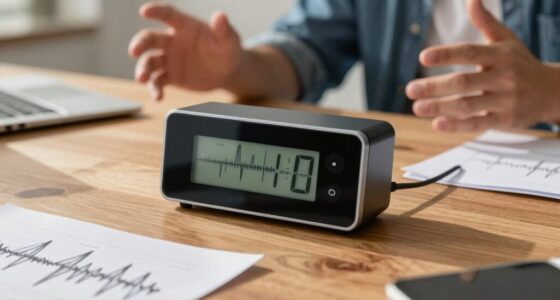

Even with good hearing, you may find restaurants challenging because background sounds like chatter and dishes mask conversations. Your brain has to work harder to filter out distractions and interpret speech, which increases mental effort and causes fatigue. This auditory masking makes it tougher to focus and understand, especially in noisy environments. If you’re curious about how these factors affect your listening experience and what you can do, there’s more to discover below.

Get oils, diffusers and self-care delivered free with Prime
- Fast, free delivery on millions of items
- Prime Video, Amazon Music and more included
- Member-only deals all year
Key Takeaways
- Background noise in restaurants creates auditory masking, making speech harder to distinguish despite good hearing.
- Multiple competing sounds increase cognitive load, requiring extra mental effort to focus on conversations.
- Loud environments overwhelm the auditory system, causing fatigue and reducing listening comprehension.
- Good hearing alone doesn’t eliminate difficulty; the brain also processes sounds, which is challenged in noisy settings.
- Using quieter venues or noise-canceling devices can improve speech understanding in noisy environments.

Have you ever struggled to understand speech in a noisy environment? If so, you’re not alone. Even people with good hearing often find themselves overwhelmed in busy places like restaurants. The reason for this largely comes down to how our brains process sound amid background noise. When you’re in a crowded setting, multiple sounds compete for your attention, making it difficult to focus on the conversation you want to follow. This is where auditory masking comes into play. Auditory masking happens when louder background sounds, like chatter or clattering dishes, drown out or obscure the speech you’re trying to hear. The louder noise effectively masks the softer speech signals, making it harder for your auditory system to pick out the relevant sounds. As a result, your brain has to work harder to decipher what’s being said, which increases your cognitive load. Cognitive load refers to the mental effort required to process and understand information. When you’re in a noisy restaurant, your brain is constantly filtering out irrelevant sounds and trying to focus on one voice, stretching your mental resources thin. Even if your hearing is technically ‘good,’ this extra effort can lead to fatigue and frustration. You may find yourself asking people to repeat themselves or simply tuning out conversations altogether. This mental strain is why a seemingly simple social outing can feel exhausting. It’s not just about hearing; it’s about actively making sense of sounds amid chaos. Your auditory system is designed to process speech in quiet environments easily, but in noisy settings, it struggles to separate speech from background noise. This struggle is compounded because your brain is constantly trying to fill in missing information, making assumptions about what you hear. The more background noise there is, the more your brain has to work, increasing cognitive load and reducing your ability to enjoy conversations. Recognizing that auditory processing plays a crucial role can help you understand why noise-heavy environments drain you so quickly and why strategies like choosing quieter restaurants or using noise-canceling devices can make a difference. Ultimately, understanding auditory masking and cognitive load reveals that hearing isn’t just about ears—it’s about how your brain manages and interprets sound in complex environments.
noise cancelling headphones for conversations
As an affiliate, we earn on qualifying purchases.
As an affiliate, we earn on qualifying purchases.
Frequently Asked Questions
How Do Background Music Levels Affect Speech Perception?
Higher background music levels can make it harder for you to understand speech because the ambient noise from loud music masks the words you’re trying to hear. When the music volume increases, it competes with speech sounds, reducing clarity. To improve communication, restaurants should keep the ambient noise and music volume at a comfortable level, allowing your ears to focus on conversations without straining.
Can Hearing Aids Improve Understanding in Noisy Restaurants?
Hearing aids can considerably improve your understanding in noisy restaurants, acting like a helpful lighthouse in a foggy sea. Advanced hearing aid technology, especially acoustic customization, tailors the sound to your specific needs, reducing background noise and highlighting speech. This personalized approach helps you focus on conversations more easily, making dining out a more enjoyable experience rather than a frustrating challenge.
Why Do Some People Struggle More Than Others in Noisy Environments?
You struggle more in noisy environments because your auditory system faces increased fatigue and cognitive load. When there’s a lot of background noise, your brain works harder to distinguish speech, leading to auditory fatigue. This extra effort can drain your mental resources, making it harder to focus and understand conversations. Factors like hearing ability, attention, and listening experience also play roles, so individual differences affect how well you cope.
What Role Does Visual Cues Play in Understanding Speech Amidst Noise?
Imagine trying to decipher a secret code in a noisy room—visual cues like lip reading and facial expressions are your secret weapons. They help you fill in the gaps when sound alone isn’t enough. By watching lip movements and facial cues, you can better understand speech amidst chaos. These visual signals act like a social cheat sheet, making conversations clearer and less overwhelming even when noise tries to drown out your hearing.
Are Certain Restaurant Layouts Better for Clear Communication?
Certain restaurant layouts are better for clear communication because they optimize restaurant acoustics and seating arrangements. Look for spaces with sound-absorbing materials, like carpets and curtains, which reduce noise levels. Opt for seating away from kitchens, bar areas, or high-traffic zones, as these tend to be noisier. Smaller or divided sections can also help minimize background noise, making conversations easier even in busy environments.
Conclusion
So, next time you’re struggling to catch every word in a busy restaurant, remember, it’s not just about hearing—it’s about the chaos of noise that clouds understanding. Like a whisper lost in a storm, even good hearing can’t always pierce through the din. Recognize this challenge, and don’t hesitate to seek quieter spaces or assistive solutions. After all, clarity shouldn’t be a privilege in a world enthusiastic to drown out the quiet voice of comprehension.
Columbus Day / Indigenous Peoples' Day Picks
long weekend sales
As an affiliate, we earn on qualifying purchases.