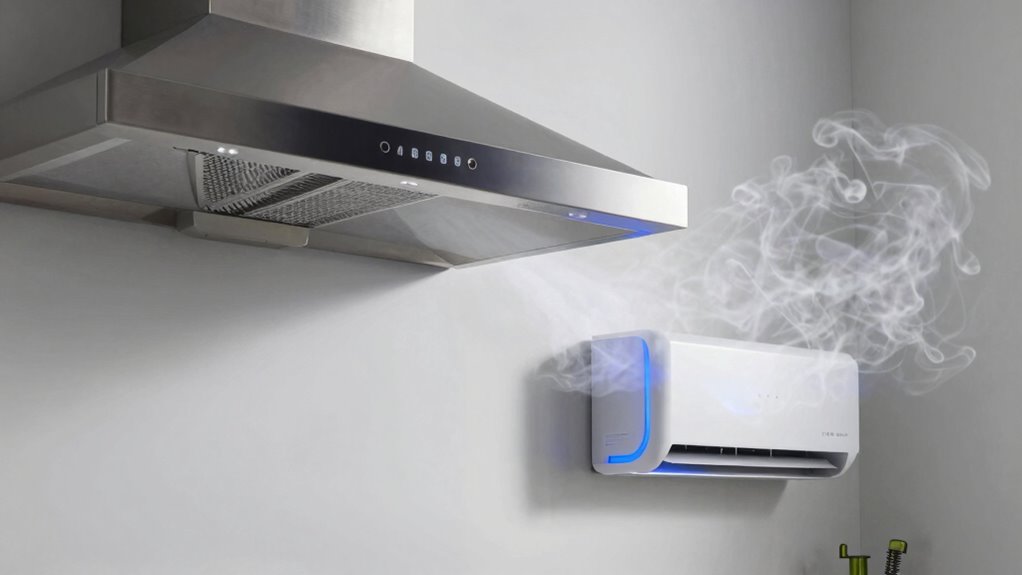

Removing smoke focuses on trapping tiny particles and chemicals suspended in the air, often using HEPA filters, to improve clarity and protect your respiratory health. Odor removal targets chemical compounds embedded in surfaces or lingering in the air, using neutralizers, charcoal, or ozone generators. While smoke removal clears airborne particles, odor control treats smells on surfaces. Understanding these differences helps you choose the right methods for a fresher, healthier space—more details are coming up.

Get oils, diffusers and self-care delivered free with Prime
- Fast, free delivery on millions of items
- Prime Video, Amazon Music and more included
- Member-only deals all year
Key Takeaways
- Smoke removal targets tiny airborne particles using HEPA filters, while odor removal focuses on chemical compounds causing smells.
- Smoke removal clears visible haze and reduces respiratory hazards, whereas odor neutralization eliminates persistent smells embedded in surfaces.
- Air filtration effectively traps smoke particles, but odor neutralizers chemically react with odor molecules for neutralization.
- Surface cleaning is often necessary for odor removal, but smoke removal primarily addresses airborne particles.
- Combining both methods ensures comprehensive indoor air quality improvement, addressing both particles and odors simultaneously.
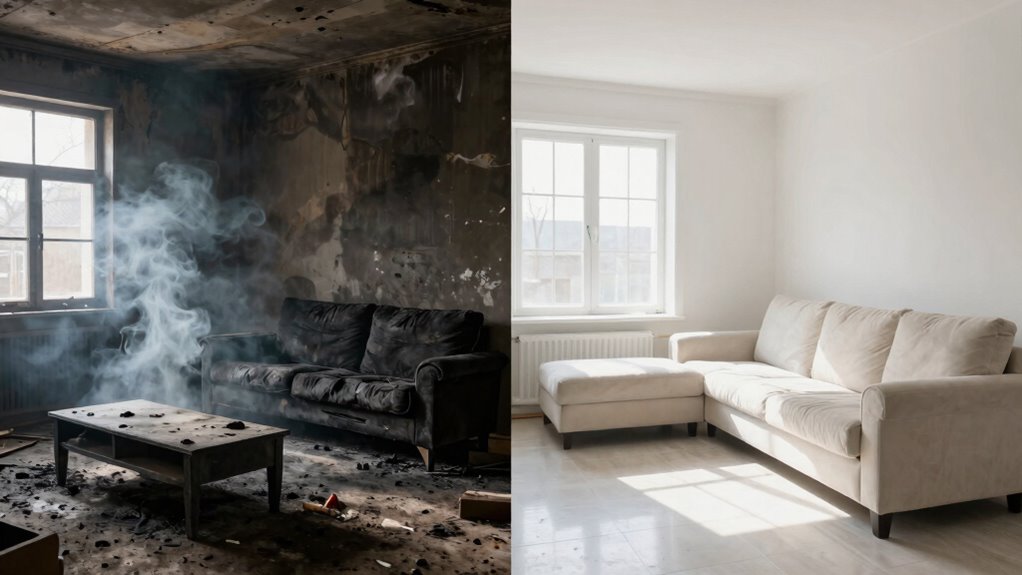
When it comes to improving indoor air quality, many people assume that removing smoke and eliminating odors are the same process, but they actually require different approaches. Smoke removal focuses on eliminating tiny particles and chemicals suspended in the air, which can be harmful and cause lingering haze or discoloration. Air filtration systems are your best allies here. High-efficiency particulate air (HEPA) filters, for example, trap smoke particles effectively, reducing their presence in the environment. These filters pull in contaminated air and trap the smoke particles, preventing them from recirculating. If you’re dealing with cigarette smoke, wildfire smoke, or cooking fumes, investing in a dedicated air filtration system is essential. It can dramatically improve air clarity and protect your respiratory health.
Effective smoke removal uses HEPA filters to trap harmful particles and improve air clarity.
On the other hand, odor neutralization tackles the molecules responsible for smells, which are often more complex and stubborn. Unlike smoke particles, odors are chemical compounds that can settle into fabrics, carpets, and other porous surfaces, making them difficult to remove with simple filtration. For odors, chemical neutralizers or ozone generators are often effective. Odor neutralization works by chemically reacting with odor molecules, rendering them odorless or significantly less noticeable. You might also use activated charcoal or specific odor-absorbing sprays designed to absorb and neutralize smells at their source. These methods are particularly useful for eliminating persistent odors from pets, cooking, mold, or smoke damage that has already settled into your home’s surfaces. Additionally, understanding the role of surface materials can help in choosing the most effective odor removal strategies, as some materials absorb smells more than others. Proper ventilation can also enhance odor removal efforts by dispersing residual smells and bringing in fresh air. Incorporating odor control products can significantly enhance the effectiveness of your odor removal efforts. Furthermore, applying appropriate cleaning techniques can help remove odors embedded deep within surfaces, making the process more effective. Employing advanced odor neutralization methods can further improve results for deeply ingrained smells.
While air filtration is excellent for catching airborne smoke particles, it may not fully eliminate embedded odors. Conversely, odor neutralization can be highly effective at removing smells but may not significantly reduce the presence of harmful particles in the air. For the best results, combining both approaches is often necessary. Use air filtration to clear the air of smoke particles and other airborne contaminants, and apply odor neutralizers to treat lingering smells that stubbornly cling to surfaces. Understanding the difference helps you choose the right tools for each job, ensuring cleaner, fresher indoor air.
In essence, tackling smoke and odors requires tailored strategies. Air filtration is your first line of defense against airborne smoke particles, while odor neutralization takes care of the chemical smells that settle into your home. By knowing the distinction and using the right methods, you can create a healthier, more pleasant environment.
HEPA air purifier for smoke removal
As an affiliate, we earn on qualifying purchases.
As an affiliate, we earn on qualifying purchases.
Frequently Asked Questions
Can Smoke Removal Methods Also Eliminate All Types of Odors?
Smoke removal methods can often eliminate many odors, but not all. Techniques like odor absorption and smoke neutralization target specific smells, especially those caused by smoke particles. Odor absorption traps odors in special materials, while smoke neutralization chemically breaks down smoke molecules. However, some stubborn or deeply embedded odors may require additional treatments, such as deep cleaning or specialized odor removal services, to fully eliminate the smell.
How Long Does It Typically Take to Fully Remove Smoke From a Space?
It usually takes several hours to days to fully remove smoke from a space, depending on the extent of the damage. You should prioritize air purification and ventilation techniques, like using HEPA filters and exhaust fans, to speed up the process. Consistent airflow helps eliminate lingering particles and odors. In severe cases, professional smoke remediation might be necessary, ensuring your space is thoroughly cleaned and safe to use again.
Are There Eco-Friendly Options for Smoke and Smell Removal?
Think of air purification like a garden, where natural remedies act as nurturing tools. Yes, eco-friendly options exist for smoke and smell removal. You can use natural remedies like activated charcoal, baking soda, and essential oils to absorb and neutralize odors. These methods are safe for the environment, effective, and help you maintain a healthier space without harsh chemicals. Embracing natural remedies guarantees you’re nurturing your home and the planet simultaneously.
What Are the Costs Associated With Professional Smoke Versus Smell Removal?
The cost comparison between professional smoke and smell removal varies based on service packages and the extent of contamination. Smoke removal typically costs more due to specialized equipment and extensive cleaning, while smell removal may be more affordable, especially with eco-friendly options. Expect to pay anywhere from a few hundred to over a thousand dollars, depending on the home’s size and severity. Always ask for detailed quotes to understand what’s included in each service package.
Can Personal DIY Methods Effectively Remove Persistent Smoke Smells?
A stitch in time saves nine, and with persistent smoke smells, DIY techniques can help if you act quickly. You can try odor absorption methods like baking soda, activated charcoal, or vinegar to neutralize odors. While these methods may reduce smoke smells temporarily, they often aren’t enough for deep-seated odors. For lasting results, consider professional cleaning, but for surface odors, DIY can be surprisingly effective.
Conclusion
Remember, removing smoke and removing smells are separate struggles, so don’t settle for superficial solutions. Smokes often seep into surfaces, demanding specific strategies, while smells might simply linger, needing freshening. By understanding these distinctions, you’ll confidently conquer contaminants and create a clean, fresh space. Stay attentive, be intentional, and don’t shy away from seeking specialized solutions. Ultimately, your efforts will guarantee a healthier, happier home—free from foul fumes and funky odors!
Halloween Picks
halloween
As an affiliate, we earn on qualifying purchases.