Wildfire smoke affects indoor air longer than you might think because tiny PM2.5 particles can easily infiltrate sealed homes, settling onto surfaces and staying suspended in the air for hours or even days. Without proper filtration or ventilation, these particles can linger and re-release into the air when disturbed. Sealing your home and using HEPA filters helps, but you’ll find more ways to improve your indoor air quality if you keep exploring how wildfire smoke can persist inside.
Key Takeaways
- Tiny PM2.5 particles easily infiltrate well-sealed homes and settle on surfaces, prolonging indoor contamination.
- Smoke particles can remain suspended indoors for hours or days without proper filtration or ventilation.
- Disturbing dust or surfaces can re-release settled particles into indoor air, extending exposure.
- Standard filters may not capture all small particles, requiring high-efficiency filters like HEPA for effective removal.
- Continuous sealing, cleaning, and filtration are necessary to reduce lingering smoke effects indoors.
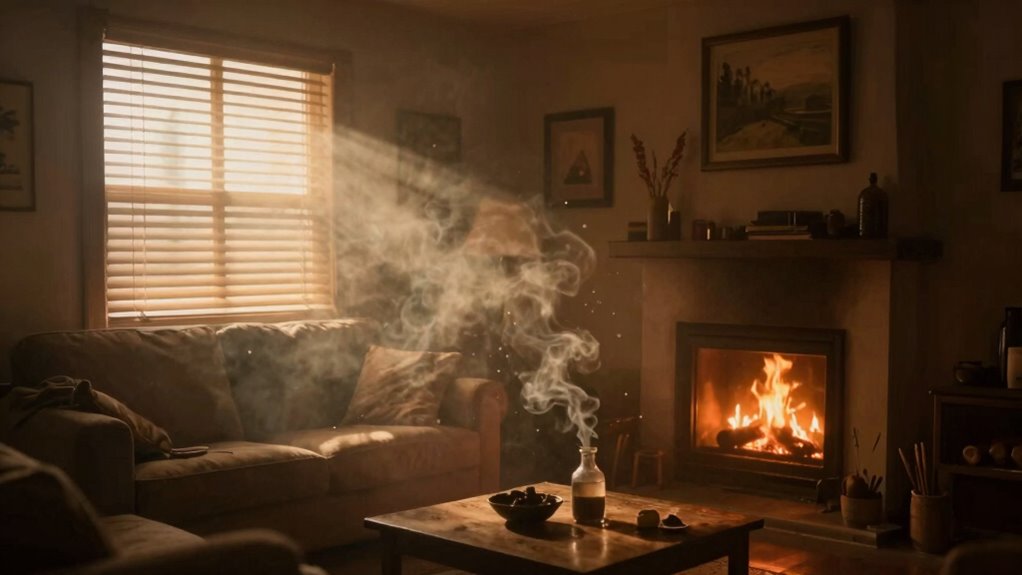
When wildfire smoke drifts into your area, it doesn’t just stay outside; it can also seep indoors, impacting the air you breathe. You might think closing windows and doors will keep the smoke out, but in reality, the particles can linger inside long after the skies clear. This is because wildfire smoke contains tiny particles called PM2.5, which are small enough to infiltrate even well-sealed homes. These particles can settle on surfaces, contaminate your indoor air, and cause health issues, especially for sensitive individuals. That’s why understanding how wildfire mitigation influences indoor air quality is essential to protect yourself and your family.
The challenge is that wildfire smoke is persistent. Once it enters your home, it doesn’t simply vanish when the sky turns blue again. The particles can remain suspended in the air for hours or even days, especially if your indoor environment isn’t ventilated properly. Ventilation strategies that aren’t carefully managed can actually introduce more smoke into your living space. This is why investing in proper filtration and air purification methods is crucial—these tools can help clear the air of harmful particles and improve your indoor air quality more efficiently. Proper air filtration can make a significant difference in reducing health risks during wildfire events.
You might also underestimate how much smoke can settle into the surfaces of your home. Dust, furniture, and fabrics can trap particles, which then get re-released into the air when disturbed. Regular cleaning and the use of high-efficiency air filters can help reduce this recontamination. Additionally, sealing cracks and gaps around windows and doors becomes a key part of wildfire mitigation, preventing smoke from sneaking inside during future events. It’s not just about keeping smoke out temporarily; it’s about creating a safer indoor environment that resists infiltration over time. Recognizing that wildfire smoke contains tiny particles like PM2.5 emphasizes the importance of indoor air quality management.
The ongoing presence of wildfire smoke indoors highlights the importance of strategic planning. Installing high-quality air purifiers with HEPA filters can greatly improve indoor air quality, especially during wildfire season. These devices capture small particles that standard filters might miss, making your home safer to breathe in. Moreover, maintaining good indoor air quality isn’t a one-time effort—it’s an ongoing process that involves regular cleaning, proper ventilation, and weatherproofing your home. Understanding the role of indoor air filtration is key to reducing health risks associated with wildfire smoke.
Ultimately, understanding why wildfire smoke lingers longer indoors than expected helps you take proactive steps for wildfire mitigation. You can protect your indoor environment by improving filtration, sealing entry points, and being mindful of how smoke particles settle and re-enter the air. Staying ahead of these issues means you’re better prepared to handle smoky conditions, ensuring the air you breathe inside remains as healthy as possible, even during wildfire season.

KNKA Air Purifiers for Home Bedroom Up to 1,695 Ft² in 1 Hr, APH4000, White
- AHAM Certified Performance: Reliable air purification with high CADR ratings
- Large Room Coverage: Purifies up to 1695 ft² in 1 hour
- Efficient Airflow Design: Maximized circulation with dual intakes and outlets
As an affiliate, we earn on qualifying purchases.
As an affiliate, we earn on qualifying purchases.
Frequently Asked Questions
How Long Does Wildfire Smoke Typically Linger Indoors?
Wildfire smoke can linger indoors for several days, especially if your space isn’t well-ventilated. You can reduce this duration with effective indoor air filtration and by sealing leaks to prevent smoke absorption. Using HEPA filters helps capture fine particles, while opening windows briefly after smoke clears allows fresh air in. Keep in mind, the lingering smoke depends on your home’s ventilation and filtration, so stay vigilant to maintain clean indoor air.
Can Wildfire Smoke Affect Indoor Air Quality Even After the Fire Is Out?
A little knowledge is a dangerous thing, so yes, wildfire smoke can affect indoor air quality even after the fire’s out. Smoke particles can linger, settling into your home’s surfaces and ventilation systems. To clear the air, use air filtration devices and improve ventilation strategies, like opening windows when outdoor air is cleaner. Regularly replace filters and keep indoor air fresh to guarantee your space stays safe and healthy.
Are Certain Indoor Spaces More Vulnerable to Wildfire Smoke?
Yes, some indoor spaces are more vulnerable to wildfire smoke. If your space has poor indoor ventilation, smoke can linger longer, making the air quality worse. Air filtration systems, like HEPA filters, help reduce smoke particles, but rooms without proper filtration are more exposed. To protect yourself, make sure to have good ventilation and use effective air filtration, especially in enclosed or poorly ventilated areas.
Does the Type of Building Material Influence Smoke Retention Indoors?
Did you know that some building materials can trap wildfire smoke for days? Yes, the type of building material influences smoke absorption inside your home. Porous materials like wood and drywall tend to absorb and retain smoke longer, while sealed surfaces like metal and glass resist it better. So, choosing less absorbent building materials can help reduce indoor smoke retention and improve air quality after wildfires.
How Can I Tell if My Indoor Air Is Contaminated by Wildfire Smoke?
You can tell if your indoor air is contaminated by wildfire smoke by noticing persistent smoke smells, eye irritation, or respiratory discomfort. Use an air purifier with high-efficiency filters to improve air quality, and make certain it runs continuously. Additionally, enhance ventilation strategies by opening windows during low pollution periods or using exhaust fans to help clear indoor smoke, reducing health risks and restoring cleaner indoor air.
Conclusion
Remember, wildfire smoke is like a stubborn guest that refuses to leave your home. Even after the skies clear, the particles can linger, sneaking into your indoor air and making you breathe it in longer than you’d expect. To keep your air fresh and healthy, use air purifiers, ventilate wisely, and check your indoor air quality. Don’t let this invisible invader settle in—fight back and reclaim your space, so your lungs can breathe easy again.