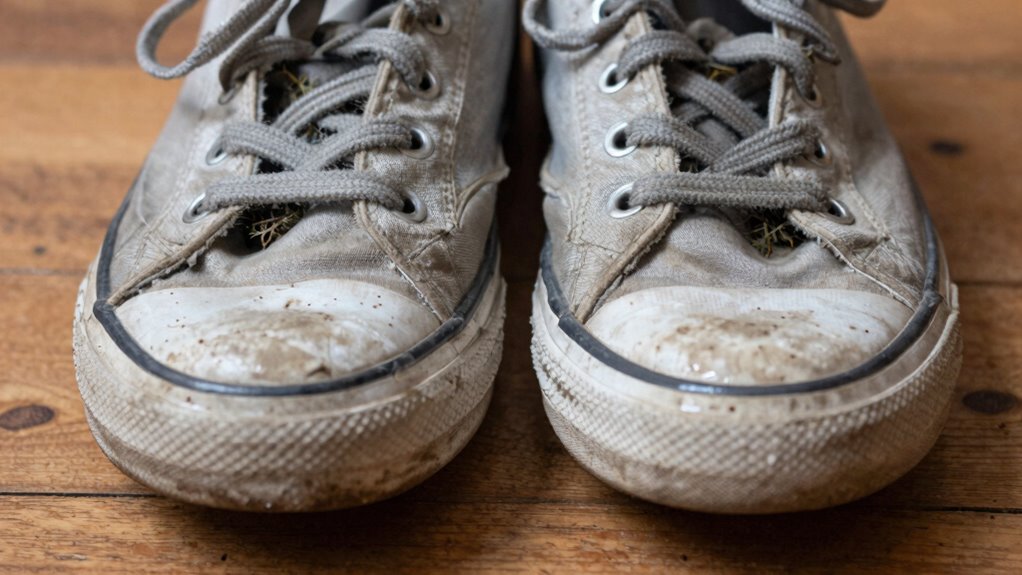

Even if your feet look fine, shoes can still smell because bacteria and fungi thrive in the warm, moist environment inside them. Sweat from your feet gets trapped and doesn’t fully dry, providing food for odor-causing bacteria. Wearing the same shoes daily without allowing them to dry promotes bacterial growth, which causes unpleasant odors. To keep shoes fresh, it’s important to focus on reducing moisture and bacteria—there’s more to uncover if you keep exploring this topic.

Get oils, diffusers and self-care delivered free with Prime
- Fast, free delivery on millions of items
- Prime Video, Amazon Music and more included
- Member-only deals all year
Key Takeaways
- Bacteria and fungi thrive in moist, enclosed environments inside shoes, regardless of foot appearance.
- Sweat can accumulate in shoes over time, creating damp conditions that promote odor-causing bacteria.
- Shoes can retain bacteria and fungi even if feet appear clean and dry.
- Persistent moisture inside shoes fosters bacterial growth, leading to odor despite healthy-looking feet.
- Wearing the same shoes daily without proper drying allows bacteria to multiply and produce odor.
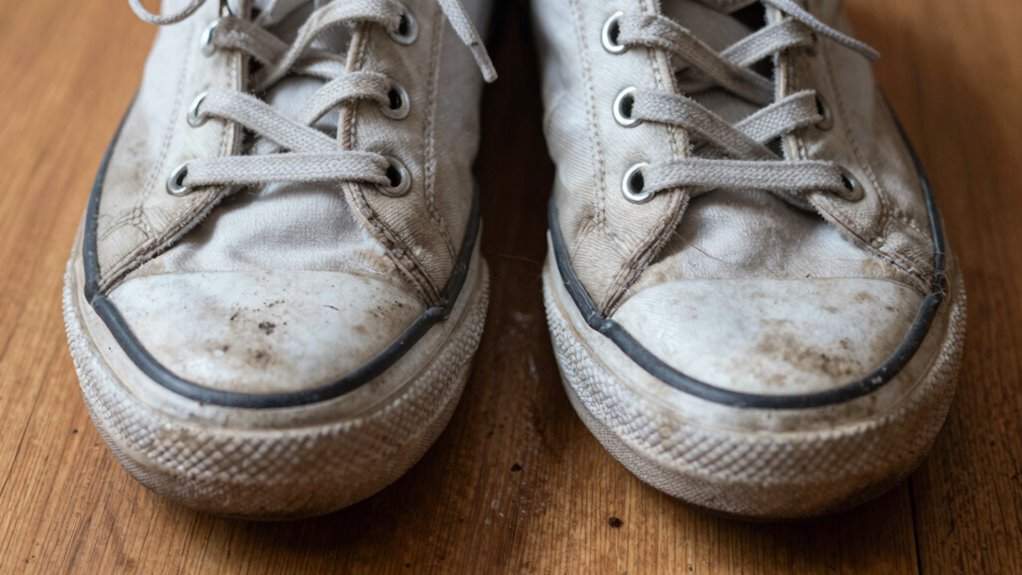
Even if your feet look and feel fine, your shoes can still develop a foul odor. This happens because shoes are a perfect environment for odor-causing bacteria to thrive. These bacteria feed on the sweat that accumulates inside your shoes, producing unpleasant smells as they break down sweat and dead skin cells. You might not notice any issues with your feet directly, but that doesn’t mean your shoes are free from odor. The bacteria can multiply quickly in the warm, moist environment your shoes provide, especially if you wear them daily without giving them proper time to air out.
Sweat accumulation is a main culprit behind smelly shoes. When you wear shoes for extended periods, sweat from your feet gets trapped inside, creating a damp environment. This moisture isn’t just uncomfortable; it also provides the perfect breeding ground for bacteria and fungi. Even if your feet aren’t sweaty enough to cause discomfort or visible wetness, microscopic amounts of sweat can still build up over time. Shoes absorb this moisture, and since most footwear doesn’t dry out completely between wears, bacteria have an ongoing supply of nourishment, which leads to persistent odor. Additionally, proper shoe drying techniques can help prevent bacteria from thriving inside your footwear.
In addition, the environment inside shoes can harbor bacteria and fungi that contribute to odor formation, especially if shoes are kept in humid or enclosed spaces. You might think that keeping your feet clean and dry is enough to prevent smelly shoes, but it’s only part of the solution. The real issue lies in the interior of your shoes, where sweat and bacteria accumulate unnoticed. If you don’t regularly clean or air out your shoes, the bacteria settle into the fabric or insoles, intensifying the smell over time. Wearing the same pair every day without letting them dry out creates a cycle where bacteria constantly grow, making odors more persistent.
To combat this, you can take simple steps such as rotating your shoes, allowing each pair to dry thoroughly between wears. Using moisture-wicking socks helps reduce sweat buildup and keeps your feet drier. Applying antiperspirant or foot powder can also minimize sweating. For the shoes themselves, regularly cleaning and deodorizing with sprays or inserts designed to fight bacteria can make a big difference. Remember, the key is minimizing moisture and bacteria buildup, not just focusing on foot hygiene. Even if your feet seem fine, paying attention to your shoes’ environment will help keep odors at bay, ensuring your footwear stays fresh and odor-free longer.
As an affiliate, we earn on qualifying purchases.
Frequently Asked Questions
Can Wearing the Same Shoes Every Day Cause Odor?
Yes, wearing the same shoes every day can cause odor. Shoe material, especially if it’s non-breathable, traps moisture and bacteria, leading to smells. Your foot hygiene also plays a role; if you don’t wash your feet regularly, bacteria can build up inside your shoes. To prevent odor, alternate shoes daily, let them air out, and choose breathable materials. Proper foot hygiene and shoe care are key to staying fresh.
Do Certain Materials Trap More Odor Than Others?
Certain materials do trap more odor than others, especially those with poor breathability. Synthetic fabrics like polyester or rubber are less breathable and tend to hold moisture, increasing odor. Natural materials like leather or mesh offer better breathability, allowing sweat to evaporate and reducing odor buildup. So, choosing shoes with durable, breathable materials helps prevent smelly shoes, even if your feet look fine.
How Does Humidity Affect Shoe Smell?
Humidity considerably influences shoe smell by promoting moisture buildup inside your shoes. When your shoes stay damp, it creates an ideal environment for bacterial growth, which causes unpleasant odors. You might notice that your shoes smell worse after humid days or if you don’t dry them properly. To prevent this, make sure your shoes dry completely and store them in a dry, well-ventilated area to minimize bacterial growth and odor.
Are Insoles Responsible for Shoe Odor?
Insays are responsible for shoe odor because they absorb sweat, trap moisture, and harbor bacteria. The shoe material and odor absorption properties of insoles influence how quickly odors develop. When insoles trap sweat and bacteria, they create a breeding ground for smell. Choosing insoles made of breathable, odor-resistant materials and replacing them regularly helps reduce shoe odor, keeping your shoes fresher longer and preventing unpleasant smells from lingering.
Can Shoe Odor Be Completely Eliminated?
Yes, you can completely eliminate shoe odor, but it takes consistent effort. Odor-causing bacteria thrive in damp, warm environments, so thoroughly cleaning your shoes and using antibacterial sprays help. The type of shoe material impacts odor retention—leather shoes dry faster than synthetic ones. Regularly airing out your shoes, changing insoles, and using odor-absorbing powders also prevent bacteria buildup, ensuring your shoes stay fresh and odor-free.
Conclusion
So, next time your shoes turn foul despite your feet looking spotless, remember—you’re not alone. There’s more lurking beneath the surface than meets the eye. The real reason might surprise you, and uncovering it could change everything about how you handle those stubborn odors. Are you ready to discover what’s really causing this mystery? Keep reading—you might just find the secret to finally keeping your shoes fresh, forever.
Evergreen bestsellers Picks
bestsellers
As an affiliate, we earn on qualifying purchases.