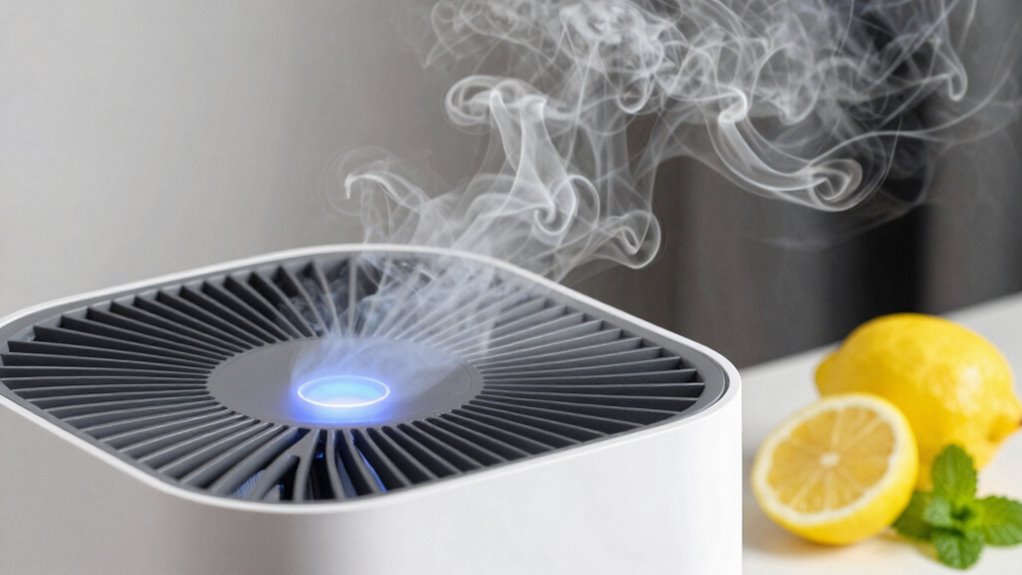
When you mask odors, you add a pleasant scent to cover up unpleasant smells temporarily, but the original source remains. Removing odors, on the other hand, targets and neutralizes the source itself, preventing the smell from coming back. Relying solely on air fresheners can give a false sense of cleanliness, while effective odor removal involves cleaning, ventilation, or using specific products. If you’re curious about more ways to guarantee a truly fresh environment, keep exploring.

Get oils, diffusers and self-care delivered free with Prime
- Fast, free delivery on millions of items
- Prime Video, Amazon Music and more included
- Member-only deals all year
Key Takeaways
- Masking odors covers unpleasant smells with a pleasant scent, while removal targets and neutralizes the odor source.
- Air fresheners provide temporary masking, whereas odor removal offers long-lasting solutions.
- Masking can create a false sense of cleanliness, but proper removal prevents odor recurrence.
- Removing odors involves cleaning, ventilation, or chemical treatments, unlike masking which only hides odors temporarily.
- Relying solely on masking may ignore underlying issues like mold or spills, leading to persistent odors.

When it comes to dealing with unpleasant odors, understanding the difference between masking and removing them is essential. You might think that a quick spray of air freshener is enough to tackle bad smells, but in reality, it’s just covering them up temporarily. This is where air freshener techniques come into play—they’re designed to make a space smell better instantly, but they don’t eliminate the source of the odor. Instead, they add a pleasant scent to mask the unpleasant one, which can be effective in the short term but doesn’t resolve the underlying issue. If you’re serious about odor control, you need to explore odor elimination methods that target the root cause. These methods involve cleaning, ventilating, or using specific products that neutralize or break down odor molecules, offering a more lasting solution.
Using air fresheners alone can sometimes lead to a false sense of cleanliness. You might spray a deodorizer, and the room smells fresh for a few hours, but if the source of the smell isn’t addressed—like mold, pet accidents, or spoiled food—the odor will return. That’s why understanding the difference between masking and removing odors is crucial. Masking techniques can be useful for quick fixes or temporary relief, but they shouldn’t be your only approach. Instead, you should implement odor elimination methods that actually eliminate the smell, such as cleaning surfaces thoroughly, using activated charcoal, or employing enzymatic cleaners. These methods attack the odor molecules at their source, preventing them from lingering or returning. Recognizing the importance of odor neutralization can significantly improve your ability to maintain a fresh environment. Incorporating ventilation techniques can further enhance odor removal by dispersing and diluting airborne contaminants effectively. Additionally, understanding the role of air quality improvement strategies can help maintain a healthier indoor environment over time.
In addition, choosing the right tools and products designed for odor removal is essential for achieving long-lasting results. It’s also important to be aware that some air freshener techniques can sometimes mask odors without neutralizing them, which can be misleading. For example, a strong scent might overpower a bad smell temporarily, but once the scent fades, the original odor could become more noticeable. True odor removal involves more comprehensive strategies—ventilating the space by opening windows, using HEPA filters, or applying odor-neutralizing sprays that chemically bind to odor molecules. By doing so, you’re not just hiding the smell; you’re eliminating it at its core, which leads to a cleaner, fresher environment.
As an affiliate, we earn on qualifying purchases.
Frequently Asked Questions
How Long Does Masking Odor Typically Last?
Masking odor typically lasts anywhere from a few hours to a day, depending on the fragrance’s duration and the environment. You’ll find that masking effectiveness varies with the strength and type of scent used, as well as how persistent the original odor is. To maintain freshness longer, reapply or choose stronger scents. Keep in mind, masking just covers the smell temporarily, so for lasting results, consider odor removal methods.
Can Masking Odors Cause Health Issues?
Masking odors can cause health issues if the masking agents contain strong chemicals, which may impact your air quality and lead to respiratory problems or allergies. Prolonged or high-level chemical exposure might irritate your lungs or skin, especially if you’re sensitive. To protect your health, opt for natural or low-toxicity masking products and verify good ventilation. Always read labels carefully and avoid inhaling fumes for extended periods.
What Are Common Methods to Remove Odors Completely?
You can remove odors completely through methods like odor absorption, which uses activated charcoal or baking soda to trap smells, and scent masking, which temporarily covers odors with pleasant scents. While some worry masking only hides odors, absorption actually eliminates them. Ventilation also helps by replacing stale air. Combining these techniques guarantees a thorough approach, giving you fresh, odor-free spaces without relying solely on masking.
Is Masking Odor Effective for Strong or Persistent Smells?
Masking odors isn’t very effective for strong or persistent smells, especially if they’re deeply embedded. Many believe air freshener myths, thinking they eliminate odors, but they often only cover them temporarily. For real odor neutralization, you need products designed to break down odor molecules and remove the smell completely. Relying solely on masking methods can leave you still dealing with stubborn odors, making proper removal essential for lasting freshness.
How Do I Choose Between Masking and Removing Odors?
You should choose removing odors if you want to eliminate stubborn smells and improve odor perception. Masking might work temporarily, but it only creates sensory adaptation, where your nose becomes less sensitive, and the odor seems less intense. For persistent or strong odors, removal is more effective, ensuring long-term freshness. Use masking for less severe smells or quick fixes, but prioritize removal for lasting odor control.
Conclusion
In the end, understanding the difference between masking odor and removing it is like choosing between a temporary patch and a permanent fix. Masking might hide the smell temporarily, but removing it tackles the root cause for good. Think of masking as a band-aid—quick but fleeting—while removal is like healing the wound completely. Make sure you’re addressing odors properly, so you can enjoy fresh air that truly lasts.
Halloween Picks
halloween
As an affiliate, we earn on qualifying purchases.