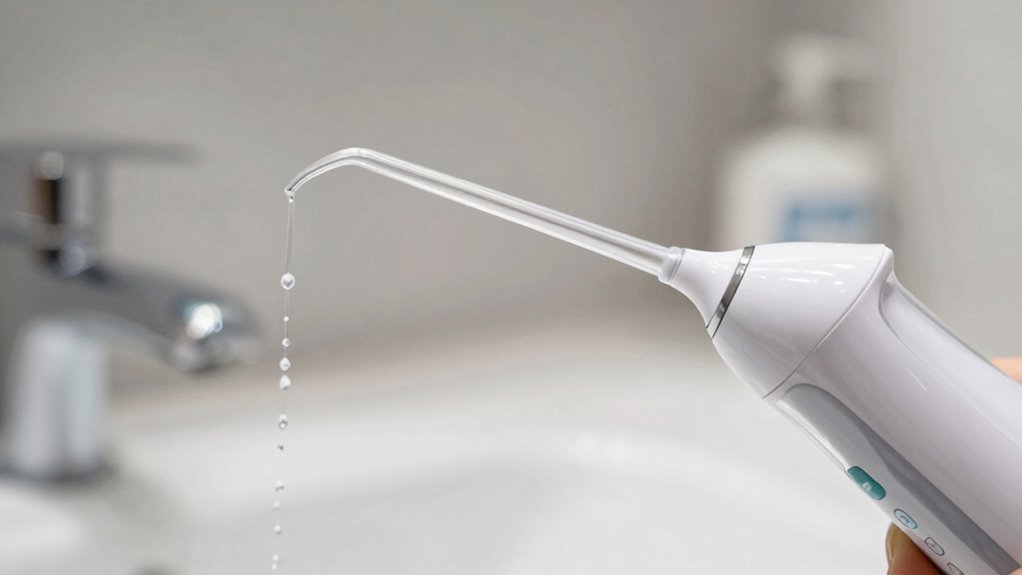

Water flossers aren’t about power washing your mouth with intense force. Instead, they deliver a gentle, pulsating water stream that dislodges plaque and bacteria from hard-to-reach spots without damaging gums or enamel. Proper pressure and technique are key to effective cleaning and comfort. If you want to understand how water flossers work to improve your oral health without the harshness of power washing, keep exploring how they can fit into your routine.

Get oils, diffusers and self-care delivered free — and shop member deals
- Fast, free delivery on millions of items
- Access to Prime Big Deal Days deals on October 6–7
- Prime Video, Amazon Music and more included
Key Takeaways
- Water flossers use gentle pulsating streams, not high-pressure jets, to clean effectively without damaging gums or enamel.
- Proper water pressure settings are crucial for effective cleaning and preventing discomfort during use.
- The goal is dislodging plaque and bacteria, not blasting food, emphasizing a gentle, targeted approach.
- Overly forceful water pressure can harm soft tissues; optimal pressure enhances safety and benefits.
- Water flossers improve oral health by stimulating gums and reaching tight spaces, not by power washing the mouth.
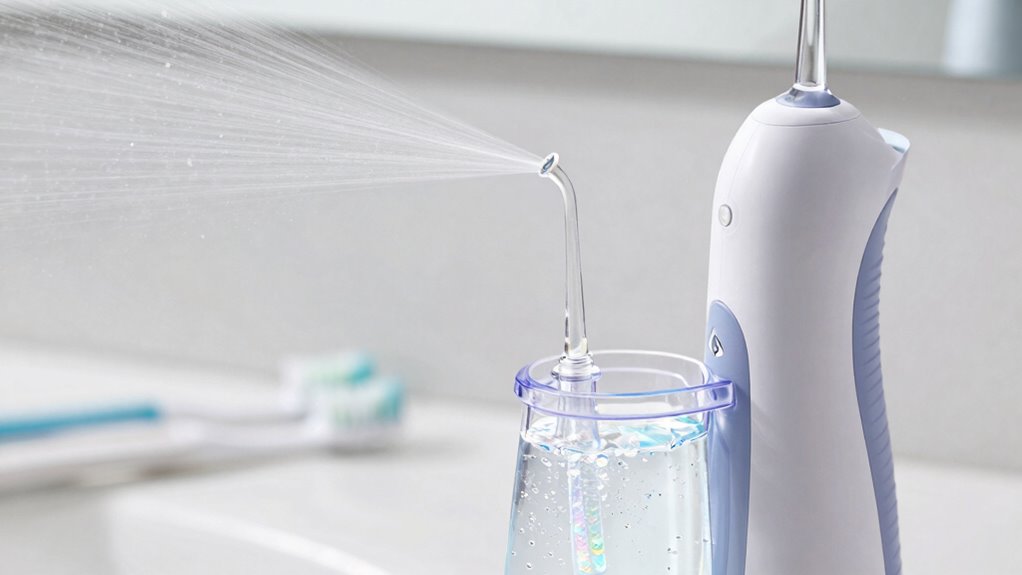
Have you ever wondered if there’s a more effective way to clean between your teeth than traditional floss? If so, you might have heard about water flossers—those devices that use a stream of water to remove plaque and debris. While they’re often called “power washers for your mouth,” that’s a bit of a misnomer. The goal isn’t to blast away every speck of food with intense water pressure but to improve your dental health by gently and effectively cleaning areas that brushing and manual flossing might miss.
Water flossers work by delivering a pulsating stream of water to your gums and between your teeth. The water pressure isn’t meant to be forceful in the way a pressure washer cleans concrete; instead, it’s calibrated to be gentle yet effective at dislodging plaque and bacteria. This gentle action can reach into the tight spaces and gum pockets where traditional floss might struggle, especially for people with braces, implants, or sensitive gums. It’s the water pressure that makes this possible without causing discomfort or damage, making water flossers an excellent addition to your dental routine.
Water flossers gently dislodge plaque in tight spaces, making them ideal for braces, implants, and sensitive gums.
When it comes to dental health, maintaining a clean mouth means more than just brushing twice a day. Flossing is essential because it removes plaque and food particles from between your teeth and along your gum line—areas your toothbrush can’t reach effectively. Water flossers enhance this process by flushing out these hard-to-reach spots with a steady, focused stream of water. The pulsating action not only cleans but also stimulates your gums, promoting healthier tissue and reducing inflammation. Unlike traditional floss, which can sometimes be difficult to maneuver or cause bleeding if done improperly, water flossers simplify the process and often encourage more consistent use.
It’s important to understand that water pressure isn’t about sheer force. Instead, it’s about the right amount of pressure that effectively cleans without harming your gums or enamel. Most water flossers have adjustable settings, allowing you to customize the pressure to your comfort level. This ensures you’re not just rinsing but actively improving your dental health. Regular use of a water flosser can also help prevent gum disease, which is a common concern for many people. Using a water flosser with the proper technique can significantly enhance your overall oral hygiene routine and results.
In essence, water flossers aren’t about turning your mouth into a power washing zone—they’re about providing a gentle, effective way to enhance your dental hygiene. By focusing on the right water pressure and proper technique, you can make a significant difference in your oral health without the risks or discomfort associated with overly aggressive cleaning methods. Incorporating proper technique and consistent use into your routine can optimize the benefits of water flossing and support long-term oral health.
water flosser with adjustable pressure
As an affiliate, we earn on qualifying purchases.
As an affiliate, we earn on qualifying purchases.
Frequently Asked Questions
Are Water Flossers Suitable for People With Braces?
Yes, water flossers are suitable for people with braces, offering excellent braces compatibility. They help remove food particles and plaque around brackets and wires, making oral hygiene integration easier. You can comfortably use a water flosser daily to maintain healthy gums and reduce the risk of decay. Just make sure you adjust the pressure settings to avoid damaging delicate areas. Water flossers are a practical addition to your braces care routine.
How Often Should I Replace Water Flosser Tips?
Did you know that replacing water flosser tips every three to six months can greatly reduce bacteria buildup? For ideal water flosser maintenance, follow the tip replacement schedule recommended by the manufacturer. Regularly swapping out tips ensures effective cleaning and prevents potential infections. Keep your device in top shape by adhering to this schedule, especially if you share it with others or notice signs of wear, like cracks or discoloration.
Can Water Flossers Replace Traditional Floss Completely?
Water flossers can’t fully replace traditional floss because they mainly remove debris between teeth, while floss also targets plaque along the gum line. Although water flossers are a great alternative cleaning method, relying solely on them might perpetuate oral hygiene myths that brushing and flossing are unnecessary. For ideal oral health, combine water flossing with regular flossing and brushing to guarantee thorough cleaning.
Are Water Flossers Effective for Gum Disease Prevention?
Like a modern-day Hercules battling plaque, you’ll find water flossers effective for gum disease prevention. They excel in plaque removal and bacterial control, helping to keep your gums healthy. While they shouldn’t replace traditional floss entirely, using a water flosser daily can considerably reduce the risk of gum disease. Combine it with regular brushing and dental checkups for ideal oral health, just as heroes combine strength with strategy.
Do Water Flossers Work Well With Sensitive Teeth?
Yes, water flossers work well with sensitive teeth when you use gentle flossing techniques. They help clean without irritating your tooth sensitivity, making flossing more comfortable. To avoid discomfort, start with a low-pressure setting and gradually increase it as your gums get used to it. Proper flossing techniques, like aiming at a 90-degree angle and moving slowly, also reduce sensitivity and improve overall oral health.
Conclusion
Think of water flossers as a gentle rainstorm for your teeth, washing away debris without the force of a hurricane. They’re not about power washing your mouth but about giving your gums and teeth a soothing, thorough clean. When used correctly, they’re a helpful tool in your oral care routine, making your teeth feel fresh and healthy. Embrace the gentle rain, and your smile will thank you for it.
Evergreen bestsellers Picks
bestsellers
As an affiliate, we earn on qualifying purchases.