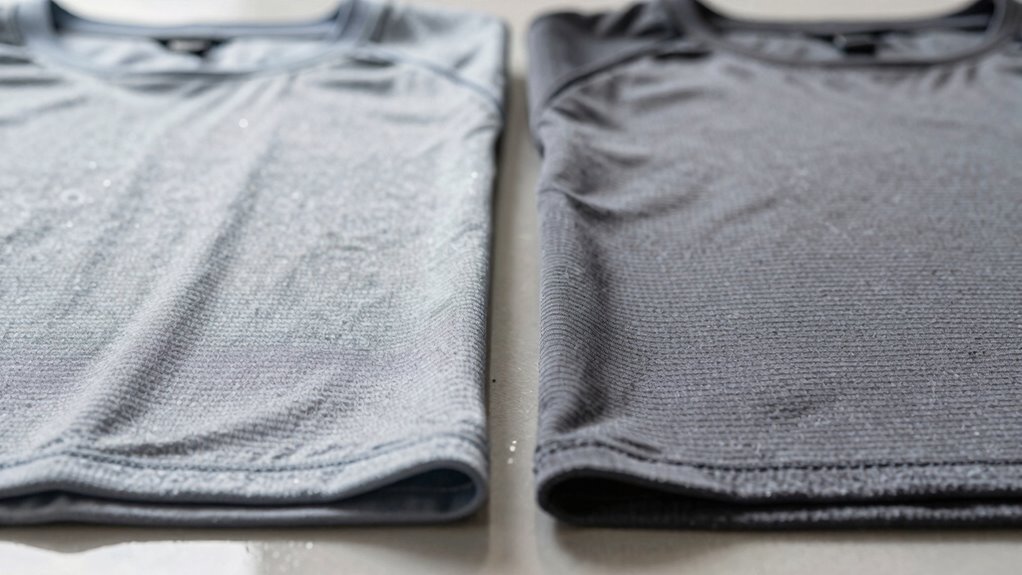

Synthetic fabrics, like polyester and nylon, trap moisture and sweat inside their fibers, making it harder for water and detergents to wash them out completely. Their chemical makeup also retains oils and bacteria even after washing, creating an environment where odors thrive. Proper cleaning and drying are essential to prevent lingering smells. If you want to understand how these materials hold onto sweat differently and ways to combat it, keep exploring this topic further.
Listen free for 30 days with Audible
Thousands of audiobooks and originals — cancel anytime.
As an affiliate, we earn on qualifying purchases.
Key Takeaways
- Synthetic fabrics trap moisture within fibers, creating an environment conducive to bacterial growth and odor development.
- Their chemical structure makes it difficult for water, detergents, and cleaning agents to fully penetrate and eliminate odors.
- Residual oils and bacteria can remain embedded in synthetic fibers even after washing, causing persistent smells.
- Synthetic fibers often retain trapped sweat and bacteria longer, especially if not properly dried or maintained.
- Proper maintenance, such as using odor-eliminating detergents and sunlight drying, helps reduce synthetic fabric odors.

Synthetic fabrics are known for their durability and affordability, but they often come with an unwanted side effect: a persistent sweat smell. This odor isn’t just about hygiene practices; it’s rooted in the fabric’s very structure. When you wear synthetic materials like polyester or nylon, sweat doesn’t easily wash away or evaporate like it does with natural fibers. Instead, the moisture gets trapped within the fibers, creating a perfect environment for bacteria to thrive. These bacteria feed on sweat residues, producing the foul smell that lingers long after you’ve taken off your clothes. That’s why fabric odor from synthetic fabrics tends to be more stubborn and persistent compared to natural fabrics like cotton or wool.
Synthetic fabrics trap moisture, creating a perfect environment for bacteria and persistent odors.
You might notice that even after washing, synthetic clothes sometimes retain that unpleasant smell. This happens because the chemical makeup of these fabrics makes it difficult for water and detergents to fully penetrate and remove the odor-causing bacteria and residual oils. Regular washing helps, but it’s often not enough on its own. To truly combat sweat smell, you need to adopt specific hygiene practices tailored to synthetic fabrics. For example, using specialized odor-eliminating detergents or adding vinegar or baking soda during the wash cycle can help neutralize odors at their source. Additionally, air drying your clothes in sunlight can help reduce bacteria and bacteria-generated odors, since UV rays have natural antibacterial properties. Proper fabric maintenance is essential to keep odors at bay.
The design of synthetic fabrics also plays a role in how they hold onto sweat odor. Many of these textiles are engineered with moisture-wicking technology, which pulls sweat away from your skin to keep you dry. However, if not properly maintained, this moisture-wicking process can actually trap sweat in the fabric’s fibers, making it harder to remove odors. That’s why good hygiene practices are essential. You should wash synthetic workout gear promptly after use, avoid sharing clothing, and consider using specialized washing cycles or odor-removal products. Proper storage also matters; keeping your clothes dry and well-ventilated prevents bacteria buildup, reducing the chance of lingering odors. An understanding of fabric structure can help you choose the right cleaning methods and prolong the freshness of your clothes. Recognizing how fiber properties influence odor retention can further improve your cleaning routine.
In the end, understanding why synthetic fabrics hold sweat smell differently helps you develop better hygiene practices. It’s not just about how often you wash your clothes, but also about using the right techniques and products designed to combat fabric odor. An awareness of fabric composition can guide you in selecting the most effective cleaning methods. With a little extra effort, you can enjoy the benefits of synthetic fabrics without the downside of persistent sweat smell.
odor-eliminating detergent for synthetic fabrics
As an affiliate, we earn on qualifying purchases.
As an affiliate, we earn on qualifying purchases.
Frequently Asked Questions
Can Washing Methods Completely Remove Synthetic Fabric Odors?
Washing methods can considerably reduce synthetic fabric odors, but they might not completely remove them. To improve results, avoid fabric softeners, which can trap odors, and instead use odor neutralizers designed for synthetic fibers. Wash your clothes in hot water if care labels permit, and consider adding a cup of white vinegar or baking soda to break down odor-causing residues. Multiple washes may be necessary for stubborn smells.
Do Different Synthetic Fibers Smell Differently When Sweaty?
Yes, different synthetic fibers smell differently when sweaty due to their unique fiber structures and odor absorption properties. Some fibers, like polyester, trap odor molecules more effectively, leading to stronger smells. Others, like nylon, resist odor absorption better, keeping sweat smells less pronounced. You notice these differences because the fiber structure influences how odors cling and how easily they can be washed out, affecting your overall freshness after workouts.
How Long Does Synthetic Sweat Smell Typically Last?
Synthetic sweat smell usually lasts from a few hours to a couple of days, depending on fabric longevity and odor absorption. You might notice the scent lingering longer if the fabric isn’t washed promptly or if it’s made of materials that absorb odors deeply. To reduce the smell’s duration, wash your synthetic clothes regularly with odor-fighting detergents, and consider air-drying or using a fabric refresher.
Are Some Synthetic Fabrics More Resistant to Odor Buildup?
Some synthetic fabrics are more resistant to odor buildup due to advanced fabric treatments and odor-resistant technologies. When you choose fabrics with these features, you’re less likely to experience lingering sweat smells. Look for clothing labeled with antimicrobial or odor-control finishes, as they actively combat bacteria that cause odors. These innovations help keep your synthetic outfits fresher longer, making your workout or daily wear more comfortable and odor-free.
Do Natural Fabrics Inherently Prevent Sweat Smell Better Than Synthetics?
You’ll find that natural fabrics, like cotton and wool, generally prevent sweat smell better than synthetics because they’re more breathable and absorbent. Studies show natural fibers can reduce odor-causing bacteria by up to 30%, thanks to their natural antimicrobial properties. While synthetic fabrics often have better synthetic odor resistance, natural fiber benefits include better airflow and moisture-wicking, making them a smarter choice for controlling sweat smell naturally.
Conclusion
So, next time you notice that stubborn sweat smell lingering on your synthetic clothes, remember—there’s more at play than just odor. Scientists are still uncovering what makes these fabrics hold onto smells differently, and new solutions are on the horizon. Will your favorite workout gear ever stay fresh longer? Stay tuned, because the fight against stubborn sweat odors is far from over, and the answers might surprise you. The truth about synthetic fabrics is just beginning to unfold.
Fall Picks
fall essentials
As an affiliate, we earn on qualifying purchases.