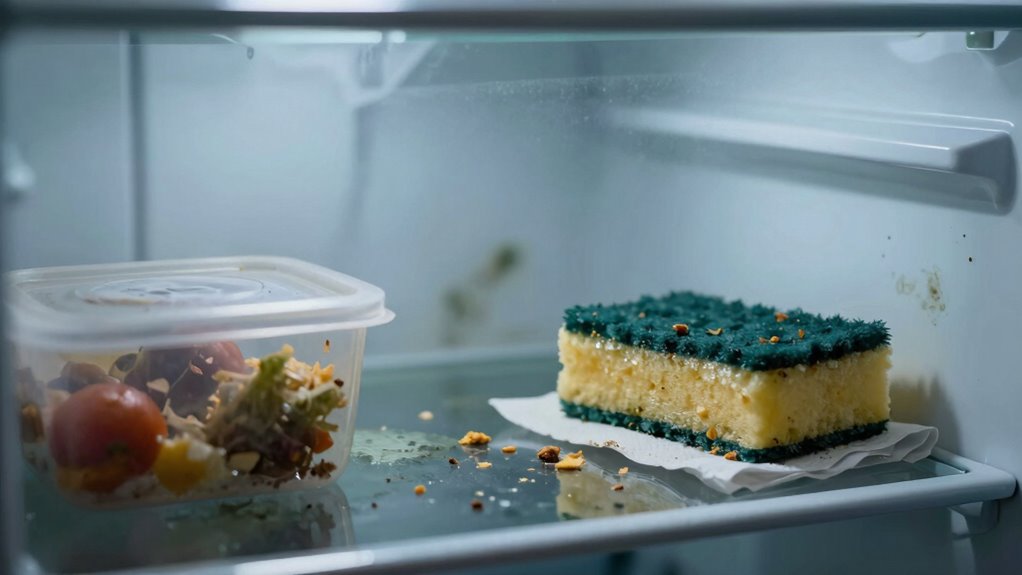

Refrigerator odors are tough to eliminate because spoiled food and mold leave behind microscopic residues and volatile compounds that cling to surfaces, shelves, and seals. Even after cleaning, hidden mold colonies and tiny odor molecules can persist in hard-to-reach areas, causing smells to return. Ongoing spoilage and mold growth make it a continuous challenge to fully eliminate odors. Keep exploring to discover more effective ways to keep your fridge fresh and odor-free.

Get oils, diffusers and self-care delivered free with Prime
- Fast, free delivery on millions of items
- Prime Video, Amazon Music and more included
- Member-only deals all year
Key Takeaways
- Residual particles cling to surfaces, making odors difficult to fully remove with standard cleaning.
- Mold spores and hidden colonies continuously produce musty smells in damp, dark areas.
- Small, sticky odor molecules embed in plastic, rubber seals, and crevices, resisting cleaning efforts.
- Ongoing spoilage and mold growth generate persistent odors even after cleaning.
- Microscopic spores and debris can persist undetected, causing odors to recur over time.
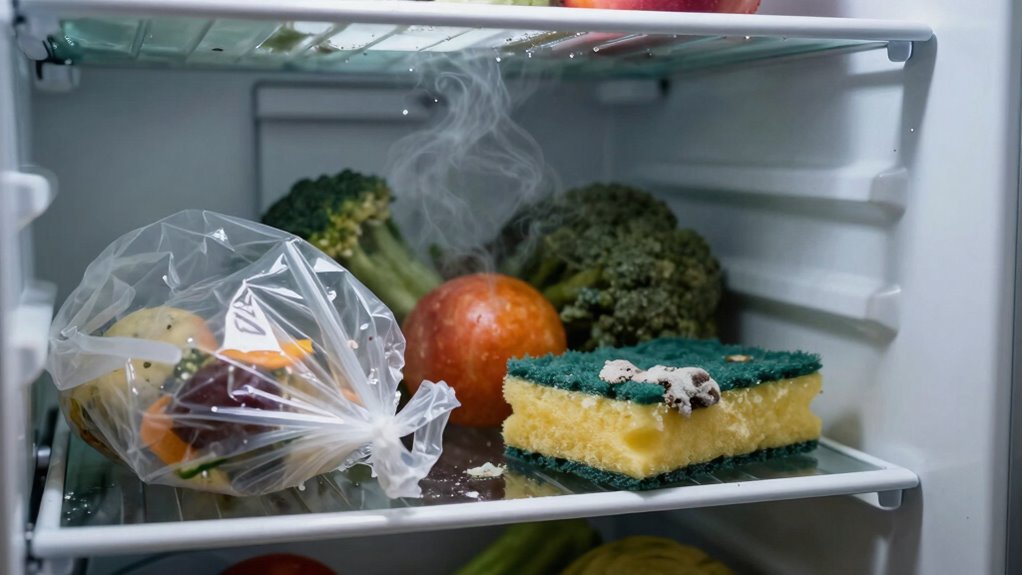
Have you ever opened your refrigerator only to be hit by an unpleasant odor? It’s a frustrating experience that can linger long after you’ve shut the door. The reason those smells are so tough to eliminate often comes down to the ongoing processes happening inside your fridge. Food spoilage is a primary culprit, especially when perishable items like dairy, produce, or leftovers aren’t stored properly or are left in the fridge too long. As food decomposes, it releases compounds that can seep into shelves, drawers, and crevices, creating a persistent, sour smell that’s hard to banish. Even after cleaning, some of these odor-causing particles may cling to surfaces, making the smell seem to linger indefinitely.
Food spoilage releases compounds that cause persistent, sour odors in your fridge.
Another key factor that contributes to stubborn refrigerator odors is mold growth. Mold thrives in the damp, dark environment of a fridge, particularly when spills aren’t cleaned immediately or when moisture accumulates around improperly stored produce. Mold spores release volatile compounds into the air, which can cause a musty, earthy smell that’s difficult to eliminate. Once mold takes hold, it can grow on food remnants, spilled liquids, or even on the surfaces inside your fridge, sometimes hidden behind drawers or underneath shelves. These hidden colonies are often the unseen source of persistent odors, and without a thorough cleaning, they continue to produce smells over time. Regularly inspecting your fridge for signs of mold growth can help prevent these issues from becoming severe.
The challenge in eliminating refrigerator odors lies in the fact that both food spoilage and mold growth are ongoing processes. Even if you remove the visibly spoiled items, microscopic spores and residual particles can remain behind, gradually releasing foul odors. Regular cleaning helps, but it’s not enough if you don’t address the root causes. For example, if you don’t wipe down spills immediately or if you neglect to check for hidden mold, those odors can come back quickly. Plus, some odor molecules are small and sticky, meaning they can cling to plastic, rubber seals, and other surfaces, making it tough for traditional cleaning methods to fully eradicate them. Using proper cleaning techniques that target these small particles and residues can significantly improve odor elimination.
To truly eliminate refrigerator odors, you need a combination of proper cleaning, thorough inspection, and good storage habits. Removing spoiled food promptly, cleaning all surfaces with a mild disinfectant, and ensuring proper air circulation inside the fridge can notably reduce odors. But the key is to stay vigilant—regular maintenance prevents mold growth and food spoilage from taking hold, making your fridge smell fresh and clean rather than stubbornly foul. Paying attention to refrigerator maintenance and implementing routine checks can make a significant difference in managing odors long-term. Incorporating adequate ventilation can also help keep the air inside your fridge fresh and prevent the buildup of unwanted smells.
As an affiliate, we earn on qualifying purchases.
Frequently Asked Questions
Can Certain Foods Cause More Persistent Refrigerator Odors?
Yes, certain foods can cause more persistent refrigerator odors. Foods with strong food smells, like garlic, onions, or aged cheese, emit odor absorption particles that cling to nearby surfaces and other foods. These odors can be tricky to eliminate because they seep into plastic containers and shelves. To combat this, store strong-smelling foods tightly sealed, and regularly clean your fridge to prevent long-lasting odor absorption that lingers.
How Long Does It Take to Completely Eliminate Fridge Odors?
You can usually eliminate fridge odors within 24 to 48 hours if you use effective deodorizers. Odor absorption happens quickly, but deodorizer effectiveness varies, and stubborn smells might take up to a week. Did you know that a well-maintained fridge can reduce odor absorption by 80%? Regular cleaning, proper sealing of foods, and natural deodorizers can speed up the process, making your fridge smell fresh faster.
Are There Specific Cleaning Products Best for Odor Removal?
You should use natural remedies like baking soda or activated charcoal, which absorb odors effectively and are gentle. Commercial cleaners specially formulated for refrigerators can also work well, breaking down stubborn smells. Avoid harsh chemicals that might leave lingering scents. Regular cleaning with these products, combined with proper food storage, helps prevent odors from building up and makes elimination easier over time.
Does the Type of Refrigerator Influence Odor Retention?
Think of your fridge as a ship sailing through the sea of your kitchen; its materials and air circulation shape how well it fights odors. A stainless steel interior reflects smells, while plastic can trap them like hidden coves. Good air circulation acts as a steady wind, pushing out stale scents. So, the type of refrigerator impacts odor retention—better materials and ventilation mean fresher, cleaner smells sailing smoothly.
Can Improper Door Sealing Contribute to Lingering Smells?
Yes, improper door sealing can contribute to lingering smells. When the gasket deteriorates, it doesn’t seal tightly, allowing odors to escape and new ones to enter. Poor air circulation caused by a faulty door seal can trap and intensify odors inside. Regularly check and replace worn gaskets to guarantee a proper seal, which helps maintain fresh air inside and prevents lingering smells from developing.
Conclusion
Dealing with refrigerator odors can feel like fighting a never-ending battle, but with the right methods, you can conquer even the most stubborn smells. Regular cleaning, proper storage, and natural deodorizers are your secret weapons. Keep at it, and you’ll transform your fridge from a stinky chaos into a fresh sanctuary. Remember, a clean fridge isn’t just a small task — it’s the fortress that keeps your food safe and your kitchen smelling like a gust of fresh air every day.
Halloween Picks
halloween
As an affiliate, we earn on qualifying purchases.