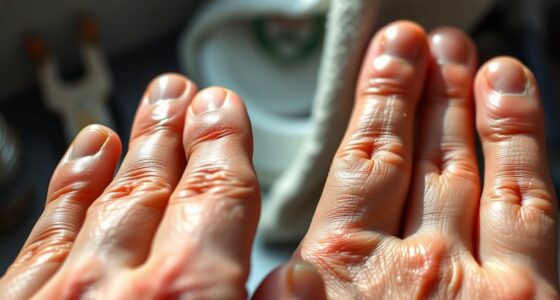

Your skin bacteria decide what body odor smells like by breaking down sweat and producing specific scent compounds through chemical communication. They send signals to coordinate enzyme production, which converts sweat into odors such as acids or sulfur compounds. Factors like your microbiome makeup, environment, and hygiene influence which bacteria dominate and how they communicate. This complex interaction shapes your unique scent profile. Keep exploring to discover how you can influence this process and better understand your personal scent.

Get oils, diffusers and self-care delivered free with Prime
- Fast, free delivery on millions of items
- Prime Video, Amazon Music and more included
- Member-only deals all year
Key Takeaways
- Bacteria break down sweat components into odor molecules through enzyme activity influenced by their communication signals.
- The bacterial community composition determines which enzymes are produced, shaping the specific scent profile.
- Environmental factors like temperature, humidity, and hygiene habits modulate bacterial activity and odor production.
- Bacterial signals regulate gene expression related to odor compound synthesis, affecting personal scent signatures.
- Variations in microbiome diversity lead to different dominant bacteria, resulting in unique individual body odors.

Your body odor is largely shaped by the bacteria living on your skin, which break down sweat and produce the smell we recognize as body odor. These tiny microorganisms don’t act randomly; instead, they communicate through a process called microbial communication. This means they send and receive chemical signals, coordinating their activities based on their population density and the environment. When bacteria detect enough neighboring cells, they can activate genes responsible for producing enzymes that break down sweat into specific odor compounds. This communication allows bacteria to work together, optimizing the production of molecules that contribute to your unique scent.
Bacteria on your skin communicate to produce the unique scent of your body odor.
The process of odor compound synthesis is complex. Sweat itself is mostly odorless, composed mainly of water, salts, and some organic compounds. It’s the bacteria on your skin that transform these substances into fragrant or, more often, pungent-smelling molecules. When bacteria engage in microbial communication, they can regulate the enzymes involved in breaking down sweat components like fatty acids and amino acids. These enzymes then produce volatile compounds, such as thioalcohols and acids, which are responsible for the smell associated with body odor. The specific types and amounts of these odor compounds depend on the bacterial species present, their communication signals, and how they respond to environmental factors like temperature, humidity, and personal hygiene. Additionally, the microbiome’s composition can shift over time due to factors like diet, antibiotics, and hygiene habits, influencing the types of bacteria present and their communicative patterns. This dynamic microbial community is influenced by microbial diversity, which can alter the scent profile significantly.
Your skin’s microbiome isn’t static; it adapts and changes over time, influencing how bacteria communicate and what odor compounds they synthesize. Environmental factors such as climate and lifestyle choices can also significantly impact the composition and behavior of skin bacteria. Some bacteria may dominate certain areas, producing distinct scents. For example, bacteria that produce more sulfur-containing compounds create a stronger, more offensive smell, while others produce milder odors. This variation results in the personal scent signature you carry. The bacteria’s ability to regulate odor compound synthesis through microbial communication is a finely tuned process, ensuring they efficiently exploit the nutrients available while creating the odors that may attract or repel other microorganisms or even potential mates. Moreover, the presence of antimicrobial substances on the skin can inhibit bacterial growth and alter communication patterns, further influencing body odor.
Furthermore, understanding how these microbial interactions work can help in developing targeted deodorants that modify bacteria communication to manage body odor more naturally. Ultimately, your body odor is not just a simple byproduct of sweat but a complex outcome of microbial communication and odor compound synthesis. Each bacterial community on your skin acts as a tiny, chemical factory, responding to signals and environmental cues to produce a scent that’s uniquely yours. Understanding this process reveals how your microbiome shapes your personal scent profile, influenced by microbial conversations and the precise synthesis of odor molecules.
antibacterial body wash for odor control
As an affiliate, we earn on qualifying purchases.
As an affiliate, we earn on qualifying purchases.
Frequently Asked Questions
Can Skin Bacteria Change Over a Person’s Lifetime?
Yes, your skin bacteria can change over your lifetime. As you age, microbial diversity on your skin shifts, influenced by factors like hormones, diet, hygiene, and environment. These changes affect your personal scent, making it unique and evolving. Your body’s chemistry and lifestyle choices continually alter your skin’s microbial community, which in turn influences how your body odor develops and changes over time.
Do Different Climates Affect Skin Bacteria and Body Odor?
Climate variation drastically influences your skin bacteria and body odor. As temperatures and humidity shift, bacteria adapt rapidly, almost like they’ve got superpowers. In hot, humid climates, bacteria thrive and produce stronger odors, while cooler, dry environments lessen their activity. This bacterial adaptation means your body odor can change noticeably with the seasons or travel, making your scent a living, breathing reflection of the climate you’re in.
How Do Diet and Lifestyle Influence Skin Bacteria?
Your diet and lifestyle shape your skin bacteria by affecting microbial diversity and sweat composition. Eating diverse, nutrient-rich foods boosts microbial diversity, promoting healthy bacteria, while processed foods and stress can reduce it. Lifestyles involving regular exercise or hygiene routines influence sweat composition, which in turn affects bacteria growth. This dynamic interaction determines your body odor, making your choices impactful on your skin’s microbial ecosystem and scent.
Can Skin Bacteria Be Intentionally Altered?
Think of your skin bacteria as a garden in need of care. You can intentionally alter them through scent modulation strategies, like probiotics or targeted hygiene. By increasing microbial diversity, you encourage a balanced ecosystem that influences your body odor naturally. This approach allows you to shape your scent profile, turning the invisible garden into a personalized aroma landscape—an act of mindful cultivation for your body’s unique scent signature.
Is Body Odor Influenced More by Genetics or Environment?
Body odor is influenced by both genetic factors and environmental factors. Your genetics determine how your sweat glands and skin bacteria interact, affecting the smell’s strength and character. Meanwhile, environmental factors like diet, hygiene, and climate also play a significant role. You can notice differences based on these influences, as your body odor may change with your lifestyle, surroundings, and even your genetics, making it a complex interplay.
Conclusion
So, next time you worry about your sweaty smell, remember—your skin bacteria are the tiny, wild artists crafting your unique scent masterpiece. They’re like microscopic chefs, cooking up a storm of odor that’s totally your own. Without them, you’d be just another bland, odorless robot! Embrace these microscopic magicians because they turn your sweat into an unforgettable, one-of-a-kind fragrance that’s all you. Your body odor? It’s basically your personal, scent-sational signature!
Columbus Day / Indigenous Peoples' Day Picks
long weekend sales
As an affiliate, we earn on qualifying purchases.