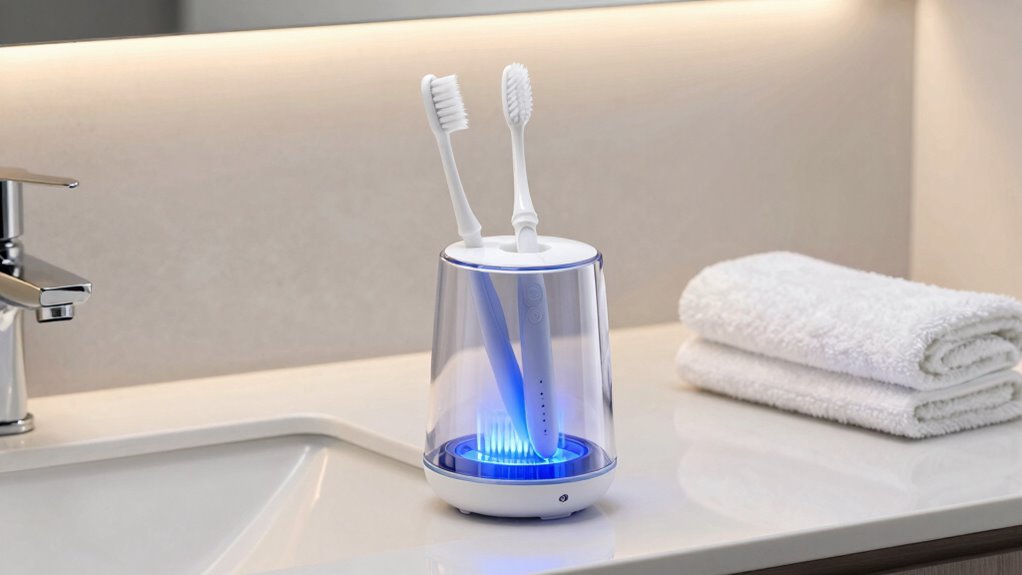

Toothbrush sanitizers can add extra hygiene by reducing bacteria and viruses on your brush, especially if you share a bathroom or have health concerns. They use UV light or heat to kill germs, which is helpful but not essential if you practice good oral hygiene habits like rinsing and air-drying your toothbrush. Though they offer peace of mind, your overall dental health relies more on consistent brushing and proper cleaning. Keep exploring to discover how these gadgets fit into your routine.

Get oils, diffusers and self-care delivered free with Prime
- Fast, free delivery on millions of items
- Prime Video, Amazon Music and more included
- Member-only deals all year
Key Takeaways
- Toothbrush sanitizers can effectively reduce bacteria, offering added hygiene benefits, especially for immunocompromised individuals or shared households.
- Regular rinsing and air-drying can be sufficient for maintaining toothbrush cleanliness without additional gadgets.
- The overall impact on dental health may be minimal if good brushing and flossing habits are already practiced.
- Cost and convenience should be weighed against the actual hygiene benefits when considering a sanitizer.
- Maintaining proper oral hygiene and a clean bathroom environment are more crucial than relying solely on sanitizers.

If you’re looking to improve your oral hygiene routine, toothbrush sanitizers offer a simple yet effective solution. They’re marketed as devices that can help you maintain better dental hygiene by reducing bacteria and germs on your toothbrush. Since your toothbrush is one of the primary tools for oral care, it makes sense to keep it as clean as possible. Toothbrush sanitizers claim to eliminate germs that can accumulate from everyday use, especially from exposure to bathroom surfaces and airborne bacteria. This germ elimination process is designed to make your brushing routine safer and more hygienic, giving you peace of mind that you’re not reintroducing bacteria into your mouth.
While many people see toothbrush sanitizers as a helpful addition to their dental hygiene efforts, others wonder if they’re just a nice-to-have extra. The truth is, these devices can indeed provide benefits, but they aren’t strictly necessary for everyone. If you’re generally healthy and practice good dental hygiene—brushing twice a day, flossing, and visiting your dentist regularly—you might not find a huge difference. These sanitizers are particularly appealing if you’re immunocompromised, have a compromised immune system, or simply want to minimize bacterial buildup on your toothbrush. In such cases, germ elimination becomes even more important, and a toothbrush sanitizer can serve as a valuable tool to lower the risk of infections caused by bacteria or viruses lingering on your brush. Regularly cleaning and drying your toothbrush properly can also help reduce bacteria without additional gadgets.
Most toothbrush sanitizers utilize UV light or heat to kill germs. UV sanitizers work by exposing your toothbrush to ultraviolet light, destroying bacteria, viruses, and mold. Heat-based models use high temperatures to achieve similar germ elimination. These processes are generally effective against common bacteria like E. coli and staphylococcus, which can sometimes be found on toothbrush bristles. However, it’s worth noting that the overall impact on your dental health may be minimal if you’re already practicing good hygiene habits. Regular rinsing and air-drying your toothbrush can remove most bacteria without the need for sanitizers. Additionally, understanding the effectiveness of germ-killing methods can help you make better decisions about whether a sanitizer is a worthwhile investment. Incorporating proper cleaning techniques into your routine can often be just as effective as using a device, especially when combined with good hygiene habits. Furthermore, it’s important to consider cost and convenience when deciding whether to invest in such a device. Research also suggests that consistent oral hygiene habits are more impactful than relying solely on sanitizers, emphasizing the importance of routine care. Finally, maintaining a clean bathroom environment can also help minimize bacterial transfer to your toothbrush, adding an extra layer of protection.
In the end, whether a toothbrush sanitizer is a helpful tool or just an extra depends on your personal health needs and preferences. They’re easy to use and can add an extra layer of cleanliness, especially in shared bathrooms or households with vulnerable individuals. But they aren’t a substitute for good brushing, flossing, and regular dental visits. If you’re considering one, weigh the cost and convenience against your specific needs. For some, it’s a worthwhile investment in germ elimination and peace of mind; for others, it’s an unnecessary gadget. Either way, maintaining good dental hygiene is ultimately about consistent habits and proper oral care.
As an affiliate, we earn on qualifying purchases.
Frequently Asked Questions
Are Toothbrush Sanitizers Effective Against All Bacteria and Viruses?
Toothbrush sanitizers aren’t effective against all bacteria and viruses. They can help with bacterial elimination and virus removal from your toothbrush’s surface, reducing some germs. However, no sanitizer guarantees complete sterilization, especially against certain resilient pathogens. For better protection, regularly replace your toothbrush and practice good hygiene. Use sanitizers as a supplementary step, not a sole method, to keep your toothbrush as clean as possible.
How Often Should I Use a Toothbrush Sanitizer?
Think of your toothbrush sanitizer as a daily shield for your dental hygiene. You should use it regularly—ideally after each use—to keep germs at bay and guarantee ideal germ control. Consistent use helps prevent bacteria buildup and maintains a fresh brush. For best results, incorporate it into your routine, especially if you’re sick or sharing the toothbrush. Staying diligent with sanitization keeps your dental hygiene routine safe and effective.
Can Toothbrush Sanitizers Damage My Toothbrush?
Toothbrush sanitizers generally don’t damage your toothbrush if used properly, supporting good dental hygiene and product safety. Most sanitize with UV light or heat, which are safe for toothbrush materials. However, overexposure or using low-quality devices might weaken bristles or plastic parts. To keep your toothbrush in top shape, follow the manufacturer’s instructions carefully and avoid excessive sanitizing, ensuring both effective dental hygiene and product safety.
Are Electric Toothbrush Sanitizers Different From Manual Ones?
Electric toothbrush sanitizers differ from manual ones mainly in design and features. Electric sanitizer units often use UV light or heat, making them more effective at killing germs quickly. Manual sanitizers typically involve soaking or sprays. When comparing sanitizers, consider the sanitizer comparison regarding speed, effectiveness, and convenience. Electric models tend to be more advanced, offering a higher level of cleanliness, but manual options can still do a good job if used correctly.
Do Toothbrush Sanitizers Require Special Cleaning or Maintenance?
Think of your toothbrush sanitizer as a small appliance that needs regular care. You should clean it weekly with a damp cloth and check for any buildup to maintain its effectiveness. Proper cleaning frequency helps guarantee the device functions well and extends its lifespan. For example, neglecting maintenance could cause it to malfunction sooner, costing you more in replacements. Regular upkeep keeps your sanitizer working efficiently and prolongs its usability.
Conclusion
While toothbrush sanitizers might seem like a small luxury, they can offer peace of mind and added protection. Yet, think of them as the cherry on top rather than the core of your oral hygiene routine. Just as a car needs regular maintenance without fancy accessories, your teeth depend on consistent brushing and flossing. In the end, sanitizer is helpful but not essential—it’s the daily habits that truly keep your smile healthy.
Columbus Day / Indigenous Peoples' Day Picks
long weekend sales
As an affiliate, we earn on qualifying purchases.