
Hearing aids and amplifiers both boost sound, but only hearing aids use advanced technology to improve clarity and adapt to your specific needs. Amplifiers simply increase volume without considering background noise or speech, which can be overwhelming. Hearing aids process sounds digitally, filtering out unwanted noise and customizing settings for natural hearing. If you’re curious about how these distinctions can impact your listening experience, keep exploring to understand what truly makes a difference.

Get oils, diffusers and self-care delivered free with Prime
- Fast, free delivery on millions of items
- Prime Video, Amazon Music and more included
- Member-only deals all year
Key Takeaways
- Hearing aids process sounds intelligently, filtering noise for clearer speech, unlike amplifiers that only boost volume without discrimination.
- Hearing aids are customized to individual hearing loss profiles, while amplifiers are generally one-size-fits-all.
- Advanced digital technology in hearing aids enhances sound quality and adapts to different listening environments.
- Hearing aids focus on improving speech comprehension, whereas amplifiers primarily increase overall sound volume.
- Modern hearing aids provide a natural listening experience through personalized and adaptive sound processing.
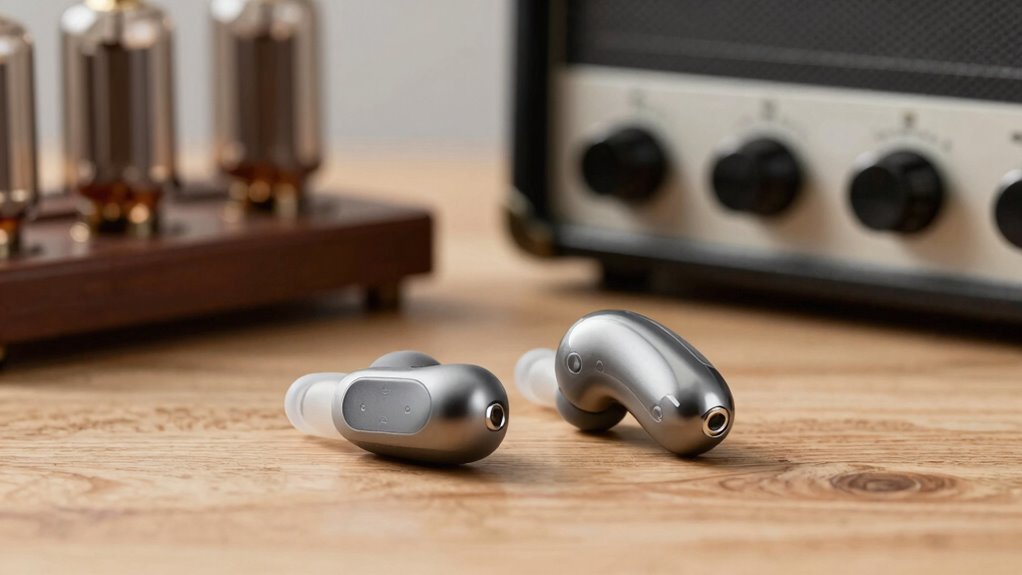
Are hearing aids and amplifiers truly interchangeable when it comes to improving your hearing? Not quite. While both devices aim to boost sound, they serve very different purposes, especially when it comes to sound clarity and device customization. Amplifiers are simple devices that make sounds louder, but they don’t distinguish between speech and background noise. They lack the sophistication to enhance the clarity of specific sounds, which can leave you overwhelmed or frustrated in noisy environments. Hearing aids, on the other hand, are designed with advanced technology that focuses on improving sound clarity. They process sounds more intelligently, filtering out background noise and emphasizing speech, so you can follow conversations more easily. Additionally, hearing aids incorporate digital signal processing that adapts to various listening environments, providing a more tailored experience. This adaptive technology is crucial for users who encounter diverse acoustic settings daily. Device customization plays a vital role in the effectiveness of hearing devices. Hearing aids are tailored to match your specific hearing loss profile. This personalized approach ensures that frequencies you struggle to hear are amplified appropriately, giving you a more natural listening experience. Modern hearing aids come with adjustable settings that can be fine-tuned by audiologists to suit your individual needs. This customization not only improves sound clarity but also makes the device more comfortable and less intrusive. Amplifiers lack this level of personalization. They are generally one-size-fits-all, which means they can’t adapt to your unique hearing challenges or environment. As a result, they might amplify all sounds equally, leading to distorted or muffled audio that can be hard to interpret. The technology used in hearing aids also allows for real-time adjustments, enhancing user experience significantly. It’s important to recognize that hearing technology continues to evolve rapidly, offering even more precise solutions for users. Advances in digital processing further enable hearing aids to deliver clearer and more natural sound quality, making a significant difference in daily communication.
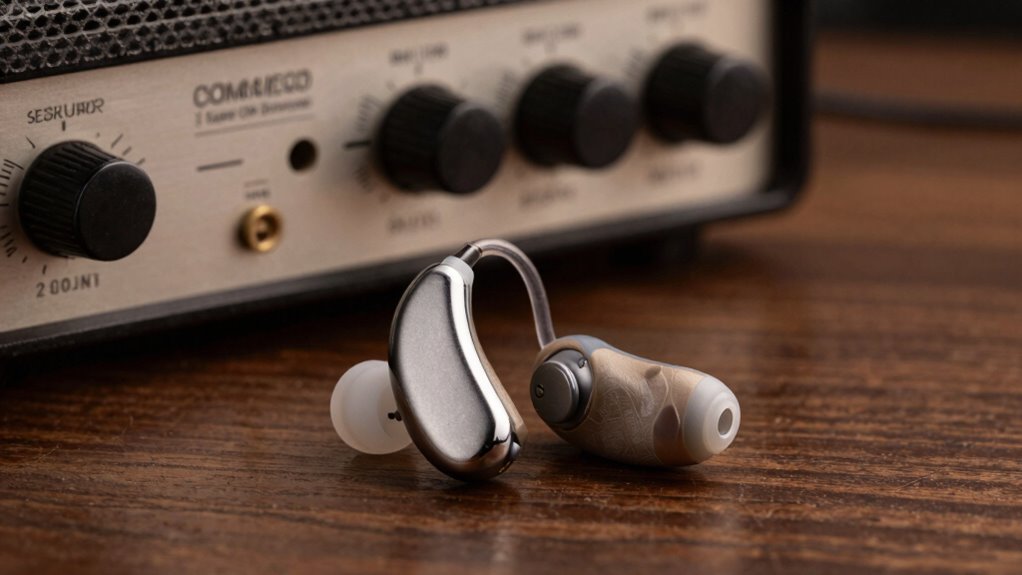
digital hearing aids with noise filtering
As an affiliate, we earn on qualifying purchases.
As an affiliate, we earn on qualifying purchases.
Frequently Asked Questions
Can Hearing Aids Be Used as Amplifiers?
Hearing aids aren’t designed to be used as amplifiers, so they don’t function the same way. They focus on optimizing sound quality and fitting device compatibility to your specific hearing needs. If you want to boost sound in certain situations, specialized amplifiers can help, but your hearing aid is tailored for natural hearing support. Using a hearing aid as an amplifier may compromise sound quality and device compatibility.
Are Hearing Aids Suitable for Mild Hearing Loss?
Like a gentle breeze guiding your senses, hearing aids are well-suited for mild hearing loss. They delicately refine sound quality, transforming muffled whispers into crisp conversations. You’ll experience improved hearing comfort, allowing you to reconnect with the world around you. These devices adapt seamlessly to your needs, ensuring that subtle sounds aren’t lost, and your daily life feels natural and effortless. So yes, hearing aids can be a perfect fit for your mild hearing challenges.
Do Hearing Aids Require a Prescription?
Yes, hearing aids typically require a prescription due to hearing aid regulations that guarantee proper fitting and function. You should see an audiologist who can assess your hearing needs. Amplifier safety isn’t as tightly regulated, so buying over-the-counter amplifiers might pose risks like inadequate amplification or damage. To avoid issues, get a professional evaluation, and always follow your audiologist’s recommendations for safe and effective hearing support.
How Long Do Hearing Aids Typically Last?
Hearing aids typically last between 3 to 7 years, depending on battery lifespan and maintenance routines. You should change the batteries regularly and clean your devices to prolong their life. Proper care, like avoiding moisture and storing them correctly, helps prevent damage. Over time, components may wear out, requiring professional servicing or replacement. Staying consistent with maintenance ensures your hearing aids perform well for as long as possible.
Are Amplifiers Legal for Everyday Use?
Amplifiers are generally legal for everyday use, but you should scrutinize local laws before you start. While hearing aid technology is carefully regulated, amplifier safety isn’t always guaranteed, so misuse could cause harm or worsen hearing issues. Always consult a healthcare professional or audiologist before using any device, ensuring you’re compliant with laws and prioritizing your hearing health. Proper use guarantees safety, sound, and satisfaction.
Conclusion
Just like Icarus soared too close to the sun, relying on cheap amplifiers might seem tempting, but it’s a risky flight. True hearing aids are crafted with precision, offering tailored support that amplifiers simply can’t match. Remember, in this journey of sound, selecting wisdom over shortcuts ensures you don’t fall into the trap of illusion. Embrace the real deal, and let your hearing soar like Icarus—carefully, and with purpose.
Halloween Picks
halloween
As an affiliate, we earn on qualifying purchases.