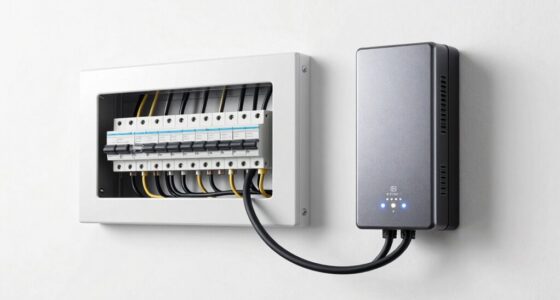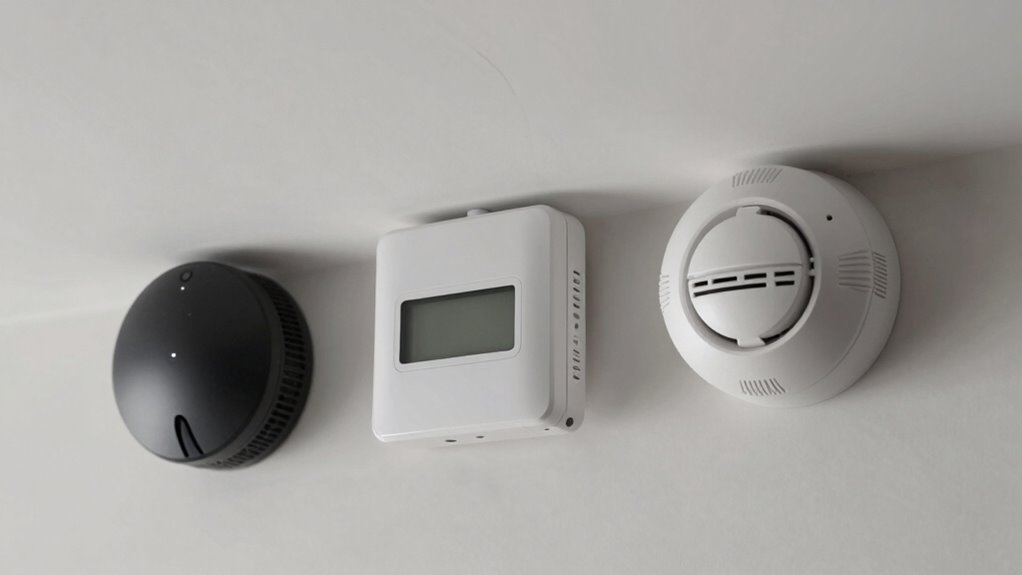

There are two main types of smoke alarms: wireless and wired. Wireless alarms connect to your Wi-Fi or each other, making them easy to install and giving you alerts on your phone. Wired alarms are hardwired into your home’s electrical system for reliability but need a professional to set up. Both types have batteries and alerts, so you stay safe even if the power goes out. Keep exploring to discover which one fits your home best.

Get oils, diffusers and self-care delivered free with Prime
- Fast, free delivery on millions of items
- Prime Video, Amazon Music and more included
- Member-only deals all year
Key Takeaways
- Wireless smoke alarms connect via Wi-Fi or communicate with each other without wires, making installation easier.
- Wired alarms are connected directly to your home’s electrical system and require professional setup.
- Both types use batteries, with some including low-battery alerts to ensure continuous protection.
- Wireless alarms can send notifications to your phone and alert the whole house at once.
- Choosing between wired and wireless depends on your home’s needs and preferred installation process.

When it comes to protecting your home from fire hazards, understanding the different types of smoke alarms is essential. One of the first decisions you’ll need to make is whether you want a wired or a wireless model. Wireless smoke alarms are popular because they connect to your home Wi-Fi or communicate with each other through a wireless network, allowing for easy installation without complicated wiring. This connectivity means that if one alarm detects smoke, all alarms can sound off simultaneously, giving you quicker alerts no matter where you are in the house. Wireless alarms also often come with smartphone notifications, so you can stay informed even when you’re away. On the other hand, wired alarms are hardwired into your home’s electrical system, which can provide a more reliable power source, but they’re usually harder to install and may require professional help. Additionally, many modern smoke alarms come with a low-battery warning alert, so you’ll know when it’s time for a new one. Choosing a model with a longer battery lifespan reduces the hassle of frequent maintenance and ensures your home stays protected without gaps. Remember, even a wireless or smart alarm with Wi-Fi connectivity still relies on batteries, so don’t ignore that aspect when selecting the right device. Furthermore, opting for long-lasting batteries can significantly decrease the frequency of maintenance and enhance your safety assurance. Being aware of fire safety and how different alarms function can help you make more informed choices for your home’s protection. Proper installation and regular testing are vital to ensure your smoke alarm remains effective over time. Regular maintenance, including battery checks, is essential to keep your alarms operational and reliable. Informed decision-making about these features can ultimately improve your overall home safety.
wireless smoke alarm with smartphone notifications
As an affiliate, we earn on qualifying purchases.
As an affiliate, we earn on qualifying purchases.
Frequently Asked Questions
How Often Should I Test My Smoke Alarm?
You should test your smoke alarm once a month to guarantee it’s working properly. During testing, press the test button until you hear the alarm sound. Keep in mind, battery life can affect performance, so replace batteries at least once a year or when the low-battery warning sounds. Regular testing and timely battery replacements keep your smoke alarm reliable and help protect you and your family from fire hazards.
Can Smoke Alarms Be Installed Outdoors?
Think of your safety as a fortress—can it stand outside unprotected? No, smoke alarms aren’t designed for outdoor placement. They lack weather resistance, meaning rain, wind, and humidity can trigger false alarms or damage them. For outdoor safety, you need alarms specifically built to resist the elements. So, keep your smoke alarms indoors, and consider weatherproof detectors if you want outdoor safety, ensuring your fortress remains secure.
Are Smart Smoke Alarms Worth the Extra Cost?
Yes, smart smoke alarms are worth the extra cost if you value smart integration and added safety features. They connect to your home Wi-Fi, send alerts to your phone, and can even differentiate between smoke and steam. When doing a cost comparison, consider the benefits of real-time notifications and remote monitoring. While pricier, many find the enhanced safety and convenience justify the investment, especially for tech-savvy or busy households.
Do Smoke Alarms Require Regular Battery Replacements?
Changing batteries in your smoke alarm is like refueling a car — essential for ongoing safety. Yes, smoke alarms do require regular battery replacements to guarantee fire alarm maintenance remains effective. The battery lifespan varies, but most need changing annually or when they beep. Staying on top of these replacements keeps your fire detection system reliable, giving you peace of mind and quick alerts during emergencies.
What Should I Do if My Smoke Alarm Keeps Chirping?
If your smoke alarm keeps chirping, start by checking the battery maintenance; replace the batteries if they’re old or weak. Verify the alarm is properly placed, away from humidity and vents, to prevent false alerts. Sometimes, chirping is due to dust or debris, so clean the alarm gently. Confirm the alarm’s placement is correct, and if it still chirps after these steps, consider replacing the unit for continued safety.
Conclusion
Now that you know the different smoke alarm types, you’re practically a superhero ready to save the day (or at least your home). With this knowledge, you can dodge the chaos of fires like a ninja, avoiding the chaos and destruction that would make even the most epic disaster movies look tame. So, arm yourself with the right alarm, and turn your home into an impenetrable fortress of safety—your peace of mind will thank you!
Halloween Picks
halloween
As an affiliate, we earn on qualifying purchases.