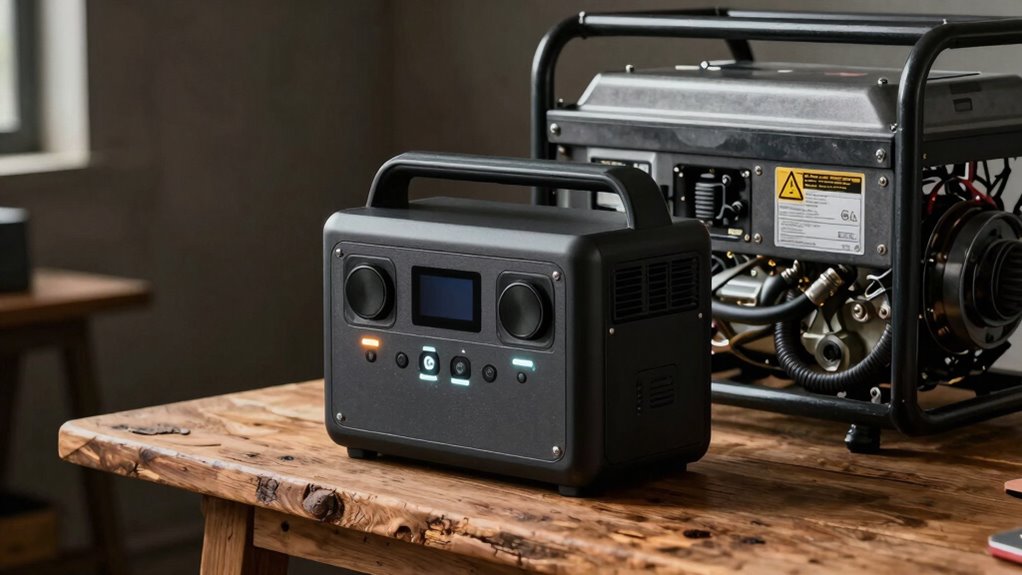

When choosing between portable power stations and generators, safety tradeoffs mainly come down to emissions, noise, and convenience. Power stations are emission-free and operate quietly, making them safer for indoor or enclosed spaces. Generators produce exhaust fumes and are loud, requiring outdoor use and proper ventilation to avoid health risks. While generators offer longer run times and higher power, power stations are safer for short-term, indoor, or sensitive environments. Learn more about these options to find what fits your safety needs best.

Get oils, diffusers and self-care delivered free with Prime
- Fast, free delivery on millions of items
- Prime Video, Amazon Music and more included
- Member-only deals all year
Key Takeaways
- Power stations are emission-free and safer indoors, while generators produce harmful exhaust fumes requiring outdoor use.
- Power stations operate quietly, reducing noise-related safety risks; generators are loud, potentially causing panic or alerting intruders.
- Battery-based power stations have limited runtime, whereas fuel-powered generators support longer operation with increased safety precautions for emissions.
- Safety features like surge protection are common in power stations, while generators demand careful placement and ventilation for safe operation.
- Quick deployment and portability of power stations enhance safety during emergencies, unlike generators that need proper setup and ventilation.
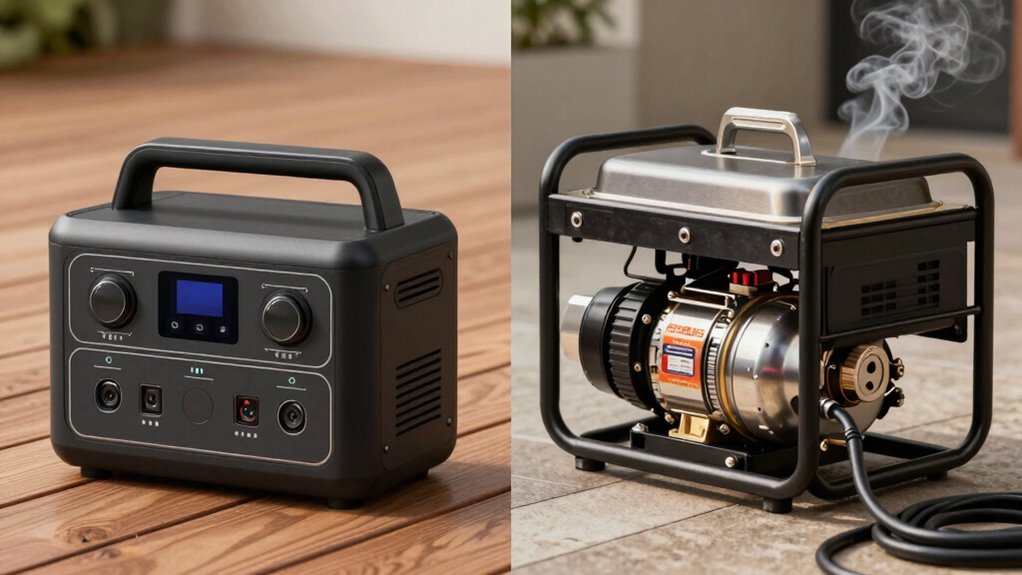
Are portable power stations or generators better suited for your needs? When deciding, you need to take into account several factors, including battery capacity and noise levels, both of which impact safety and convenience. Portable power stations typically have a limited battery capacity, which means they can only supply power for a certain amount of time before needing a recharge. This makes them ideal for short-term use or powering smaller devices like smartphones, laptops, or small appliances. Because they rely on batteries, they don’t produce exhaust fumes, reducing the risk of carbon monoxide poisoning, a significant safety concern with traditional generators. Noise levels are also substantially lower with power stations, often operating quietly enough to avoid disturbing neighbors or drawing unwanted attention during emergencies. This quiet operation enhances safety, especially in enclosed or residential settings where loud noise could cause panic or alert intruders. Additionally, portable power stations often incorporate safety features such as surge protection and temperature regulation, further reducing risks during use. Moreover, their portability allows for quick deployment in various locations, enhancing overall safety and convenience.
On the other hand, generators generally offer higher power output and longer run times due to their fuel-based operation, making them suitable for larger appliances or extended outages. However, their larger fuel tanks mean they produce exhaust gases, including carbon monoxide, which can be deadly if proper ventilation isn’t maintained. You must be cautious about where and how you operate a generator, ensuring it’s placed outdoors and far from windows or vents to prevent dangerous fumes from entering indoor spaces. Noise levels are also a safety consideration; generators tend to be loud, which could hinder communication during emergencies or attract unwanted attention. This increased noise can be a safety risk, especially in situations where stealth or quiet operation matters. As such, understanding the safety implications of fuel emissions and noise levels is essential when choosing between these power sources. Moreover, being aware of battery capacity can help you better plan for your power needs and safety precautions. Considering safety features in your choice can further minimize risks and ensure more secure operation. Understanding the noise level in decibels can also help you select a device that won’t compromise safety in sensitive environments.
The decision ultimately hinges on your specific needs and environment. If safety and ease of use are top priorities, a portable power station’s lower noise levels and emission-free operation make it a safer choice, especially for small-scale or emergency use. If you require longer-lasting power and can manage the safety precautions associated with fuel-powered devices, a generator might be better suited. Regardless of your choice, understanding the battery capacity and noise levels helps you weigh the safety tradeoffs involved. Keep in mind that while power stations excel in safety and convenience, generators provide more power for prolonged use—just with added safety considerations. Choosing the right option involves balancing your power needs with safety precautions to ensure you’re adequately prepared without risking harm.
portable power station for camping
As an affiliate, we earn on qualifying purchases.
As an affiliate, we earn on qualifying purchases.
Frequently Asked Questions
Are Portable Power Stations Environmentally Friendly?
Yes, portable power stations are generally more environmentally friendly than generators. They produce no noise pollution and emit no fumes during operation, making them safer for your surroundings. Plus, when you’re done with their batteries, proper recycling helps reduce environmental impact. Unlike traditional generators, which often rely on fossil fuels, power stations help lower your carbon footprint, making them a cleaner, greener energy option.
How Long Do Portable Power Stations Typically Last?
You can typically expect a portable power station to last between 3 to 10 years. On average, they endure around 300 to 500 charging cycles before their battery lifespan diminishes considerably. If you use it daily, that equates to roughly 1 to 2 years of reliable power. Proper maintenance, like avoiding deep discharges, can extend their lifespan, ensuring you get the most out of your investment.
Can Portable Power Stations Be Used Outdoors in Rain?
You shouldn’t use portable power stations outdoors in rain, as most lack full weather resistance and water protection. While some models offer limited water resistance, they aren’t designed for heavy rain or wet conditions. To guarantee safety, keep your power station dry and protected from moisture. If you need power outdoors, choose a model specifically built with weather-resistant features or use a waterproof enclosure for added water protection.
Do Generators Produce Harmful Emissions During Operation?
Imagine a roaring lion—generators produce harmful emissions and noise levels that can be disruptive, especially outdoors. Yes, generators do emit pollutants like carbon monoxide and nitrogen oxides during operation, making them less eco-friendly. Their fuel efficiency varies, but the emissions pose safety concerns, especially in enclosed spaces. You should always operate generators in well-ventilated areas, keeping in mind their noise levels and environmental impact.
Are Portable Power Stations Safer for Children and Pets?
Yes, portable power stations are generally safer for children and pets because they feature childproof designs and pet safety features. You won’t need to worry about harmful emissions or fuel leaks, reducing risks of poisoning or fire. These stations are quiet, making them less startling, and their built-in safety measures help prevent accidental shocks or injuries. Overall, they’re a safer, more convenient option for protecting your loved ones during emergencies.
Conclusion
As you weigh the safety tradeoffs, imagine yourself in a blackout, flickering lights casting shadows. Will you trust the silent, clean power of a portable station or face the roaring, risky generator? Each choice holds promise and peril, shaping your experience in unpredictable ways. The decision lingers—what’s your next move? The power is in your hands, but the ultimate safety balance is a secret still waiting to be revealed.
Halloween Picks
halloween
As an affiliate, we earn on qualifying purchases.