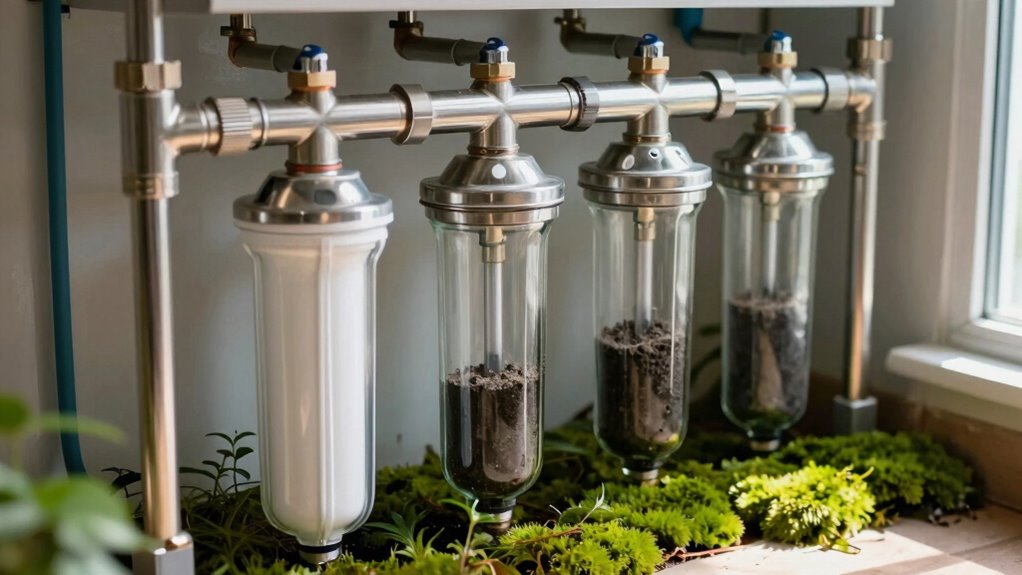

Your well water’s unique mix of contaminants, minerals, and bacteria means a one-size-fits-all filtration system won’t work effectively. You need a tailored approach that considers your specific water profile, which can change over time due to underground shifts or seasonal variations. Proper testing and professional guidance are key to designing a system that addresses your home’s exact needs. Keep exploring to discover how personalized solutions can keep your water safe and clean.
Key Takeaways
- Well water quality varies greatly, requiring tailored filtration solutions based on specific contaminants detected through testing.
- Different homes may have unique well conditions, making a one-size-fits-all filtration system ineffective.
- Seasonal and underground shifts can alter water composition, necessitating adjustments to filtration setups over time.
- The presence of specific contaminants like bacteria, minerals, or chemicals influences the choice of filtration methods.
- Professional guidance ensures customized solutions that address each well’s distinct profile for optimal water safety.
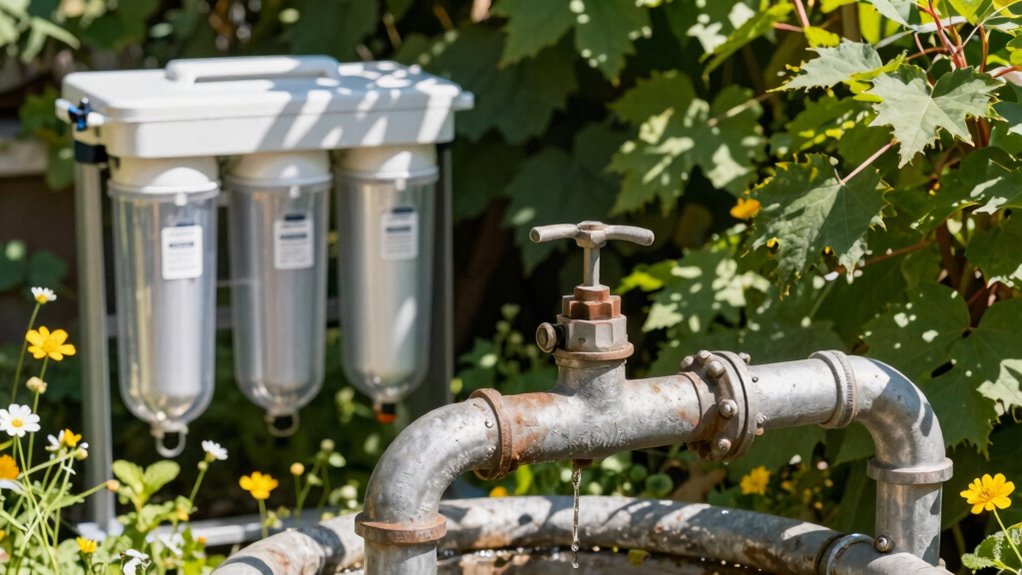
Have you ever wondered if your well water is truly safe to drink? It’s a common concern for homeowners relying on well water, and the answer often depends on how well you understand your water’s quality. The first step is water testing. You need to determine what contaminants, bacteria, or minerals are present in your water before deciding on the right filtration systems. Water testing is essential because each well is unique, and what works for one home might not be effective for another. Some wells have high levels of iron, manganese, or sulfur, while others might be contaminated with bacteria or pesticides. Without testing, you’re simply guessing which filtration methods to use, which can leave you with unsafe water or an unnecessary expense.
Once you’ve identified what’s in your water, choosing the right filtration system becomes clearer. Not all filtration systems are created equal, and what removes contaminants in one situation may be ineffective in another. For example, activated carbon filters are excellent for removing chlorine, odors, and organic compounds, but they won’t do much against bacteria or heavy metals. Reverse osmosis units can eliminate many dissolved solids and contaminants, but they can be costly and require regular maintenance. In contrast, UV purification systems are highly effective against bacteria and viruses but don’t remove chemicals or minerals. Your choice depends on your water test results, your budget, and your household needs.
Choosing the right water filtration depends on test results, budget, and household needs.
It’s tempting to think that one fix will solve all your water quality issues. However, every well’s condition is different, and a single filtration system might not be enough. Some homes need a multi-stage approach, combining different filtration methods to address multiple contaminants. For example, you might need a sediment filter to remove dirt and debris, a carbon filter for chemicals and odors, and UV treatment for microbial safety. This layered approach ensures your water is safe and tastes good, but it also highlights why one home’s fix won’t match another’s. You must tailor your system based on your well’s specific profile.
Regular water testing is imperative, even after installing filtration systems. Well water can change over time due to seasonal variations, new construction nearby, or natural shifts underground. Continuous monitoring helps you stay ahead of potential problems and adjust your filtration setup as needed. Additionally, understanding your well’s unique characteristics can help prevent costly mistakes and ensure the safety of your water supply. Proper knowledge about water quality can guide you in selecting the most effective filtration options. It’s also important to be aware that natural shifts in underground conditions can cause water quality to fluctuate, emphasizing the need for ongoing testing. Changes in underground conditions can impact your water’s composition, highlighting the importance of regular testing and system adjustments. Awareness of natural shifts in underground conditions can help you anticipate potential changes in water quality before they become serious issues. Remember, what’s effective today might not be enough tomorrow. Your well’s specific profile demands a personalized approach, and trusting professional advice can make all the difference. In the end, investing in proper water testing and a tailored filtration plan guarantees you get safe, clean water that meets your household’s needs—something a generic fix simply can’t assure.

Bestprod All-New 21 in 1 Drinking Water Testing Kit Strips, Home Tap and Well Water Test Kit for Hardness, Lead, Iron, Copper, Chlorine, Fluoride
- Clear, Easy-to-Read Results: Provides clear results and acceptable ranges for all substances
- Simple to Use: Add water, set timer, and read results easily
- User-Friendly Guide: Includes clear instructions for interpreting test strips
As an affiliate, we earn on qualifying purchases.
As an affiliate, we earn on qualifying purchases.
Frequently Asked Questions
How Often Should I Replace My Well Water Filter?
You should replace your well water filter every 6 to 12 months, but this depends on your water testing results and filter maintenance. Regular testing helps identify contaminants and when filters become less effective. Keep an eye on water flow and taste, as these can signal it’s time for a change. Consistently maintaining and replacing your filter guarantees clean, safe water and peak filtration performance.
Can Well Water Filtration Remove All Contaminants?
Well water filtration can’t remove all contaminants because of its filtration limitations. It effectively tackles common contaminant types like bacteria, pesticides, and sediments, but some chemicals, viruses, or heavy metals may slip through depending on your system. To guarantee safety, you might need specialized filters or additional treatment methods. Regular testing helps identify remaining contaminants, so you can upgrade your filtration system accordingly.
What Are the Signs My Well Water Needs Filtering?
You’ll notice your well water needs filtering if it has a strange smell, earthy taste, or discoloration. Water that appears cloudy or causes skin irritation also signals poor well water quality. Low water pressure or sediment in your tap water are signs too. These issues indicate your current filtration isn’t effective enough, so testing your water and upgrading your system can improve filtration effectiveness and guarantee safer, cleaner water for your home.
Is Professional Installation Necessary for Well Water Filters?
You should consider professional installation for your well water filters to guarantee everything works correctly and safely. DIY installation might seem tempting, but experts understand the intricacies of your system and can avoid mistakes. Proper installation also makes filter maintenance easier, helping your system run efficiently and last longer. Investing in professional help gives you peace of mind, knowing your well water is filtered properly and your system is maintained correctly.
How Much Does Well Water Filtration Typically Cost?
Well water filtration costs vary, typically ranging from $500 to over $5,000, depending on your system’s size and complexity. You’ll need regular well water testing to identify contaminants, which influences filtration choices. Keep in mind that filtration maintenance adds ongoing expenses. Investing in professional installation guarantees your system works effectively, especially since costs can differ based on your specific water quality and home needs.
Conclusion
Just like no two fingerprints are alike, no two well water situations are identical. When I helped my neighbor install a filtration system, her water’s unique mineral content meant we had to customize her setup — it wasn’t a one-size-fits-all fix. Remember, your well’s quirks demand a tailored approach. Think of it as fitting a key to a latch — the right solution unlocks clean, safe water, but only if it’s precisely what your well needs.