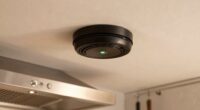
Air quality monitors are helpful, but only if you understand what the data means. You need to place them properly, away from sources of pollution or drafts, and keep them well-maintained through regular calibration. Recognize the signals of pollutants like spikes in particulate matter or VOCs, and use established thresholds to decide when to ventilate or purify the air. Staying informed about how to interpret these numbers guarantees you create a healthier indoor space. Keep going to learn more about making the most of your monitor’s insights.
Key Takeaways
- Properly interpret sensor readings by understanding pollutant types and health thresholds to make effective decisions.
- Regularly calibrate and maintain monitors to ensure accurate, reliable data over time.
- Place monitors in central, well-ventilated locations away from sources of pollution or drafts.
- Recognize and respond to sudden spikes indicating potential indoor pollution issues.
- Log readings and calibration activities to track sensor performance and ensure ongoing accuracy.
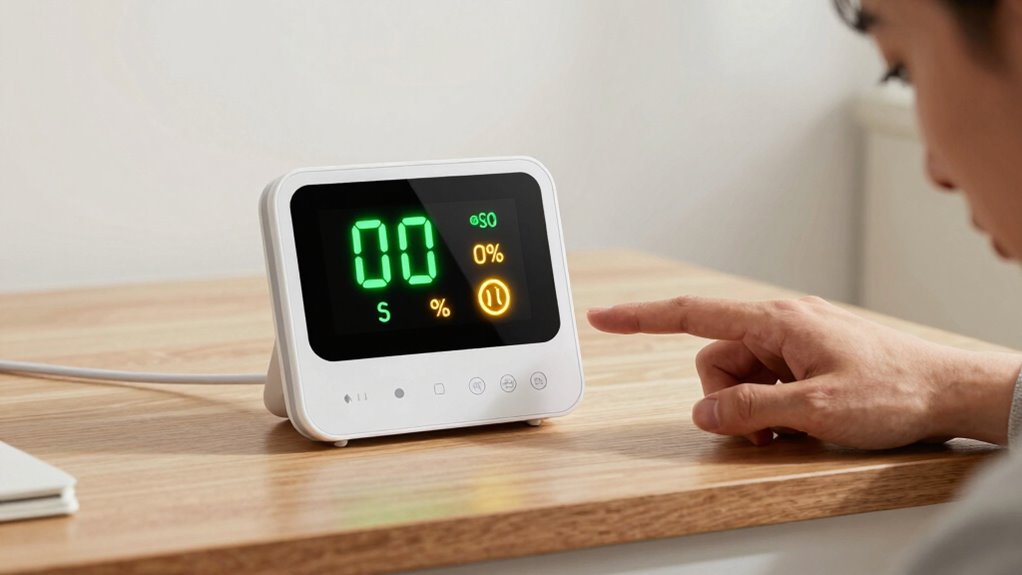
Air quality monitors are essential tools for anyone looking to improve their environment and protect their health. They help you understand the levels of indoor pollution, which can often be invisible but harmful. However, simply having a monitor isn’t enough—you need to know how to read and interpret the data correctly. Otherwise, you might overlook dangerous levels of pollutants or become falsely reassured. Properly understanding your monitor’s readings allows you to take meaningful action to create a safer indoor space.
One critical aspect of using air quality monitors effectively is guaranteeing sensor calibration. Over time, sensors can drift from their original settings, leading to inaccurate readings. Regular sensor calibration is necessary to maintain precision, especially if you rely on the monitor for ongoing health decisions. Many monitors come with instructions for calibration, but in some cases, you might need to use calibration gases or seek professional help. Ignoring calibration can result in readings that either underestimate or overestimate pollution levels, which might cause you to ignore real hazards or waste effort on unnecessary measures. Sensor accuracy is crucial for making reliable health decisions based on your monitor’s data. Additionally, keeping a log of calibration and readings can help you track sensor performance over time and ensure ongoing reliability.
When you read your monitor, pay close attention to the specific pollutants it measures. Common indoor pollution sources—like cooking, cleaning products, or pets—can raise particulate matter or volatile organic compounds (VOCs). Your monitor should display real-time data, alerting you when levels spike. If the device has multiple sensors, understand what each one measures and how to interpret their readings. For instance, a sudden increase in particulate matter might indicate your HVAC system isn’t filtering properly or that someone just smoked indoors. Being familiar with the pollutants your monitor detects can help you better respond to potential health risks.
Don’t forget to factor in the placement of your air quality monitor. To get accurate readings, position it in a central location away from direct sources of pollution, drafts, or windows. This ensures you’re capturing an overall picture of the indoor air quality rather than localized or skewed data. Also, keep in mind that readings can fluctuate based on time of day, activities, or even weather conditions outside. Proper placement and awareness of environmental influences can significantly improve the accuracy of your readings.
Finally, reading the monitor correctly isn’t just about glancing at numbers. Take the time to understand what those numbers mean in relation to health guidelines. Some monitors provide recommended thresholds, which can help you decide when to ventilate, use air purifiers, or take other actions. Additionally, understanding sensor calibration and its importance can significantly improve your monitor’s effectiveness. By staying vigilant and maintaining your sensors properly, you can use your air quality monitor as an effective tool for creating a healthier indoor environment. It’s not just about having the device—it’s about knowing how to interpret and act on what it tells you.

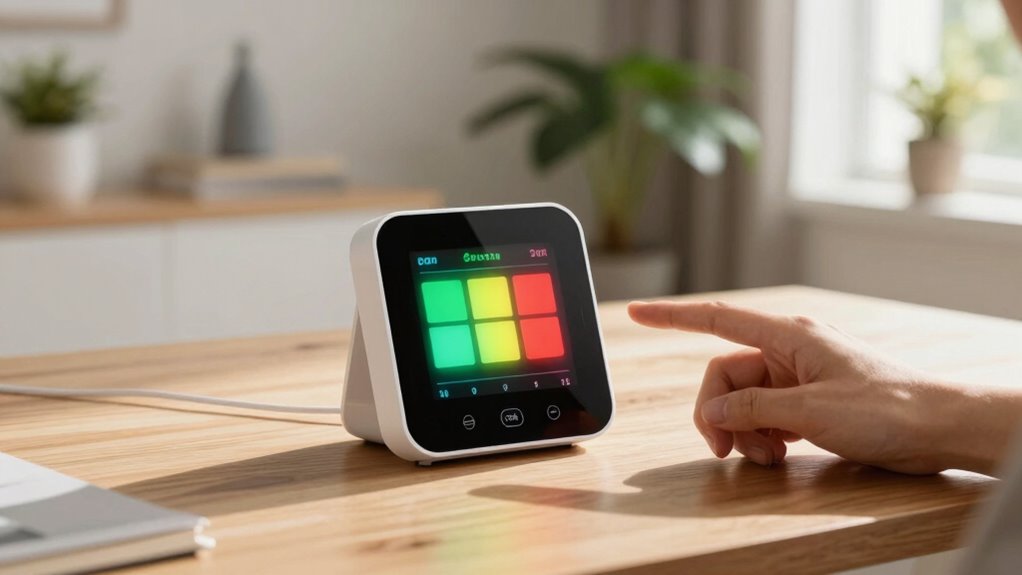
ZEMEOLLO Air Quality Monitor Indoor, 10-in 1 Smart Air Quality Tester
- 10-in-1 Multi-Gas Detection: Monitors CO₂, HCHO, TVOC, benzene, PM2.5, PM10
- HD Color Display Screen: Shows real-time data with visual alerts
- Intelligent Data Visualization: Automatically generates environmental reports
As an affiliate, we earn on qualifying purchases.
As an affiliate, we earn on qualifying purchases.
Frequently Asked Questions
How Often Should I Calibrate My Air Quality Monitor?
You should calibrate your air quality monitor regularly, typically every 6 to 12 months, depending on your device’s sensor maintenance needs. Calibration frequency guarantees accurate readings and prolongs sensor life. Always follow the manufacturer’s instructions for calibration, and consider performing it more often if you notice inconsistent data. Proper calibration keeps your monitor functioning correctly, so you can trust the air quality information it provides.
Do All Air Quality Monitors Measure the Same Pollutants?
Not all air quality monitors measure the same pollutants, and sensor accuracy varies. Some devices focus on common pollutants like PM2.5, VOCs, or CO2, while others offer broader pollutant diversity. If you want detailed data, choose a monitor that tracks multiple pollutants with high sensor accuracy. Keep in mind, the more pollutants it measures, the more reliable your understanding of your air quality will be.
Can Weather Conditions Affect Air Quality Readings?
Weather conditions definitely affect air quality readings. High humidity interference can skew sensor sensitivity, making pollutants seem more or less concentrated than they truly are. Rain can clear pollutants, temporarily improving readings, while wind can carry pollutants from other areas, impacting local measurements. Temperature fluctuations also influence sensor accuracy. So, you should consider these weather factors when interpreting your air quality monitor’s data to get the most accurate picture.
Are Portable Monitors as Accurate as Fixed Systems?
Think of portable monitors as a nimble scout and fixed systems as the watchtower. Portable accuracy can match fixed precision, but it depends on quality and calibration. While portable devices offer flexibility, they may not always provide the same consistent readings as fixed systems. You should weigh convenience against the need for reliability, especially in critical environments, to guarantee your air quality insights are both timely and trustworthy.
What Is the Best Location to Place an Air Quality Monitor?
You should place your air quality monitor in a central spot where indoor airflow is good, away from pollution hotspots like kitchens or busy entrances. Prevent placing it near windows, vents, or direct sunlight, as these can skew readings. Positioning it at breathing level ensures accurate detection of pollutants, helping you better understand your home’s air quality and identify areas needing improvement.
Conclusion
Now that you know how to read your air quality monitor, imagine it as a lighthouse guiding you through foggy, polluted waters. When you interpret its signals correctly, you steer clear of hidden dangers lurking in the air, safeguarding your health and home. Think of it as a silent guardian, illuminating the unseen, so you can breathe easier and live safer. Trust your monitor, and let it be your steady beacon in a clouded world.