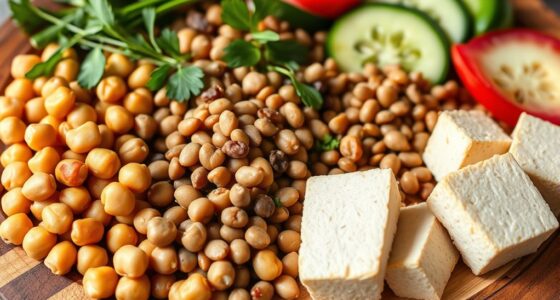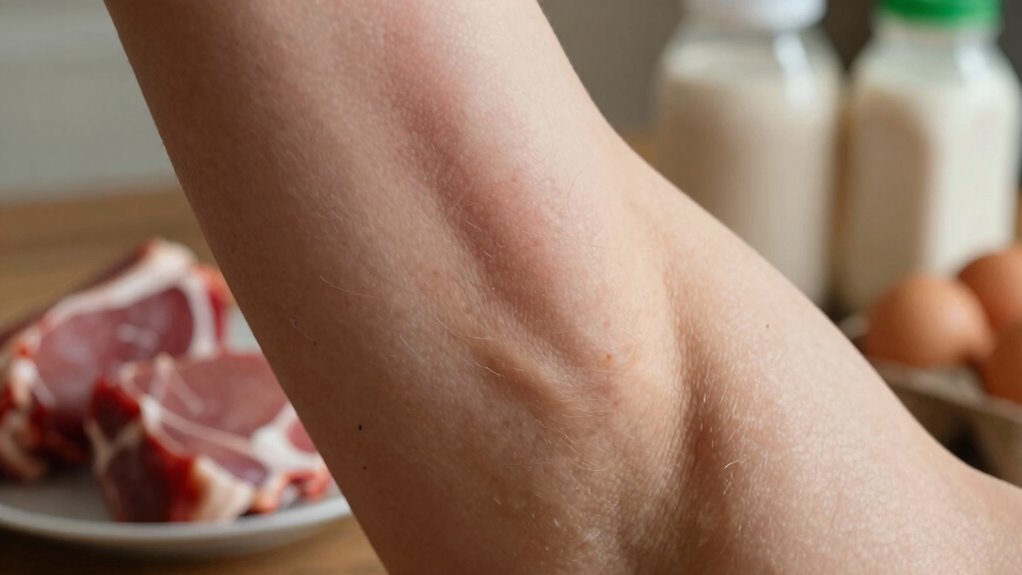

When you follow a high-protein diet, your body breaks down more amino acids, releasing compounds like ammonia and nitrogen-rich substances. These byproducts can lead to stronger body odors as they’re expelled through sweat and breath. Additionally, the increased protein alters your sweat and encourages certain bacteria on your skin to grow, which produce odorous sulfur compounds and fatty acids. If you’re curious about how your body adapts and what you can do, keep exploring.
Key Takeaways
- Increased protein intake produces nitrogen-rich byproducts like ammonia, which can be expelled through sweat and breath, affecting odor.
- Proteins alter sweat composition, creating an environment that promotes bacteria growth responsible for stronger smells.
- Bacterial metabolism of amino acids and nitrogen compounds releases odorous sulfur compounds and fatty acids.
- Individual genetics and skin microbiome influence the extent and nature of body odor changes.
- Improved hygiene and dietary adjustments can help manage or reduce increased body odor from high-protein diets.
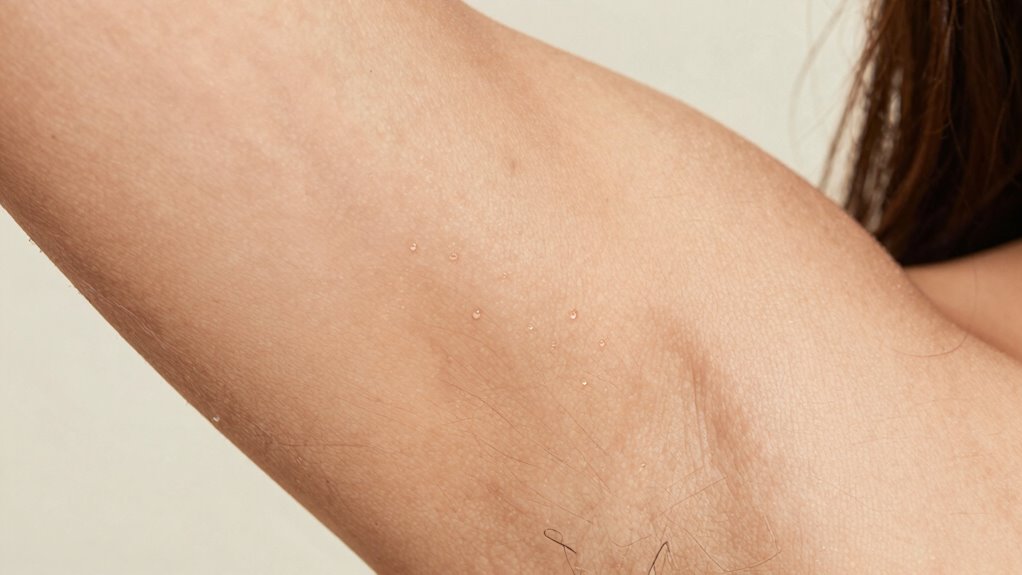
If you’re following a high-protein diet, you might notice an unexpected change: a stronger or more distinct body odor. This shift happens because your body processes increased protein intake differently, leading to the production of various metabolic byproducts. When your body breaks down proteins, it releases compounds like ammonia and other nitrogen-rich substances. These byproducts are often expelled through sweat and breath, contributing to a more noticeable scent. The more protein you consume, the more these metabolic byproducts accumulate, which can intensify body odor.
Another key factor is bacterial interactions on your skin. Your skin hosts a diverse community of bacteria that thrive on sweat and dead skin cells. When metabolic byproducts are secreted through sweat, they create an environment that favors certain bacteria over others. These bacteria metabolize compounds like amino acids and other nitrogen compounds, producing odorous substances such as sulfur compounds and fatty acids. This process amplifies body odor because the bacterial interactions with sweat magnify the smell, especially in areas where sweat is concentrated, like the armpits or feet. Understanding these bacterial interactions can help in developing better odor management strategies.
Bacteria on your skin metabolize sweat, producing sulfur compounds and fatty acids that intensify body odor.
The increase in metabolic byproducts from a high-protein diet also influences the composition of your sweat. Higher protein intake can lead to more sweat production or changes in sweat composition, which in turn alters bacterial growth patterns. As bacteria break down these new substances, they generate stronger-smelling compounds. This cycle explains why some people notice a more pungent scent or a change in the overall character of their body odor after shifting to a high-protein regimen. Additionally, individual factors such as metabolic processes and genetics play a significant role in how your body reacts to increased protein consumption. Certain bacterial interactions are more likely to produce odorous compounds based on your unique skin microbiome. Recognizing how metabolic byproducts influence odor can help you adopt targeted strategies to minimize unpleasant smells.
Understanding how bacterial metabolism influences body odor can help you better manage these changes, especially if you are concerned about odor intensity. It’s important to understand that not everyone reacts the same way. Your genetics, hygiene habits, and the specific types of bacteria on your skin determine how noticeable these changes are. Some people may experience only a slight difference, while others might find their body odor becomes quite prominent. Maintaining good hygiene, using antiperspirants, or adjusting your diet slightly can help manage these changes if they become bothersome.

DR. LIFT Antibacterial Body Wash, Refreshing Scent, Hydrating Shower or Bath Cleanser With Citric Acid, Spirulina, and Lemon, Clean Moisturizing Formula, Vegan, Paraben and Phthalate Free, 8 Fl Oz
Perfect for post procedure cleaning
As an affiliate, we earn on qualifying purchases.
As an affiliate, we earn on qualifying purchases.
Frequently Asked Questions
Can High-Protein Diets Cause Persistent Body Odor Even After Adjusting Intake?
Yes, high-protein diets can cause persistent body odor even after adjusting intake. When you increase protein, your body processes it differently, sometimes leading to stronger odors. Poor dietary fiber intake can worsen this, as fiber helps detoxify your body. Additionally, maintaining proper hydration levels is essential; dehydration can intensify body odor. Keep a balanced diet, stay hydrated, and include fiber-rich foods to help reduce persistent odor.
Do Specific Protein Sources Influence the Type of Body Odor Produced?
Yes, specific protein sources influence your body odor by affecting protein metabolism and sweat composition. For example, red meats contain sulfur-rich amino acids, leading to stronger odors, while plant-based proteins produce milder scents. As your body breaks down different proteins, it releases distinct compounds through sweat. So, choosing varied protein sources can alter the scent you emit, making some odors more noticeable than others.
How Quickly Can Body Odor Change After Starting a High-Protein Diet?
You might notice body odor changes within a few days of starting a high-protein diet. As your body processes protein, dietary enzymes break down amino acids, altering sweat composition. This shift can lead to stronger or different odors. The change happens quickly because sweat contains metabolic byproducts directly linked to your diet. Keep in mind, individual factors like hydration and gut health also influence how fast your body odor evolves.
Are There Individual Differences in Body Odor Response to Protein Intake?
Yes, there are individual differences in how your body odor responds to increased protein intake. Genetic variations influence how your body processes amino acids, while metabolic differences affect how efficiently you break down protein. These factors determine the types and amounts of odor-causing compounds your body produces. So, your unique genetics and metabolism play a significant role in how your body odor changes when you follow a high-protein diet.
Can Supplements or Probiotics Mitigate Odor Issues From High-Protein Diets?
Supplements and probiotics can help mitigate odor issues from high-protein diets. While supplement efficacy varies, probiotics promote healthy gut bacteria, which may reduce foul body odor caused by protein breakdown. You might find that incorporating probiotics supports digestion and decreases odor, creating a balance that counters the strong smells associated with increased protein intake. So, combining targeted supplements with a balanced diet could help you manage body odor effectively.

Mitchum Women’s Antiperspirant Deodorant Gel Stick, Shower Fresh Scent, 48HR Sweat & Odor Protection, Triple Odor Defense, Alcohol-Free, 3.4 oz (Pack of 2)
Triple Odor Defense: Fights odor caused by heat, motion, and stress with Mitchum’s most advanced gel stick formula…
As an affiliate, we earn on qualifying purchases.
As an affiliate, we earn on qualifying purchases.
Conclusion
As you embrace a high-protein diet, imagine your body as a bustling factory, working overtime to process these nutrients. Just like smoke rising from a chimney, certain waste byproducts escape through your pores, subtly altering your scent. With each meal, you’re fueling this vibrant, busy scene inside, transforming your body’s aroma into a living, breathing demonstration of your dietary choices. Embrace the change, knowing your body’s scent tells a story of your new nutritional journey.
Microbiome Labs SereneSkin – Spore Based Probiotic Complex with Citrus Polyphenols for Skin Clarity & Gut Health Support – Daily Probiotic Skincare – Soothe The Gut-Skin Axis (60 Capsules)
Spore Probiotic for a Radiant Complexion – These daily probiotic capsules can promote a radiant, youthful complexion and…
As an affiliate, we earn on qualifying purchases.
As an affiliate, we earn on qualifying purchases.

Certain Dri Women’s Body Powder – Talc-Free – Triple-Action Sweat, Odor, & Moisture Control – Anti-Chafing Calamine Formula – Doctor-Recommended for Sensitive Skin – 8 oz
Maximum Sweat & Moisture Absorption – Clinically-inspired, triple-action formula instantly absorbs sweat & moisture to keep you dry…
As an affiliate, we earn on qualifying purchases.
As an affiliate, we earn on qualifying purchases.