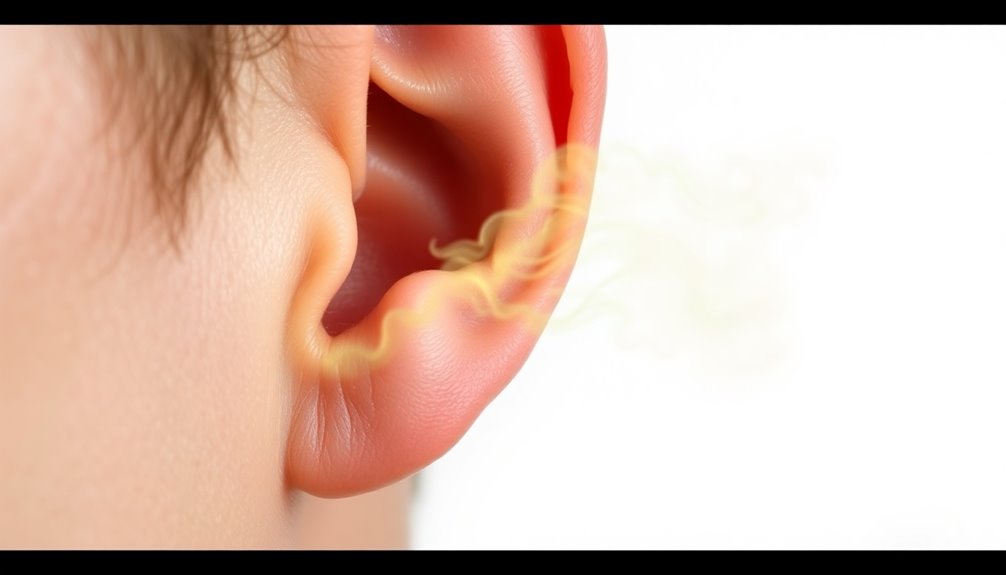

If you notice a foul or rancid odor coming from your ear, it could signal an infection. Ear infections can produce various smells, often described as cheesy or putrid, especially due to bacterial or fungal growth. You might also notice fluid drainage or pus, indicating a serious condition. Other symptoms may include itchiness, swelling, or pain in the ear. Poor hygiene or issues like skin conditions can worsen the odor. Recognizing these signs early is crucial for treatment. Stick around to discover effective ways to manage and treat ear infections and prevent further complications.

Get oils, diffusers and self-care delivered free — and shop member deals
- Fast, free delivery on millions of items
- Access to Prime Big Deal Days deals on October 6–7
- Prime Video, Amazon Music and more included
Key Takeaways
- Ear infections can produce foul-smelling pus, especially in chronic or recurring cases.
- Outer ear infections often result in excessive fluid drainage with a strong, unpleasant odor.
- Cholesteatomas are known to emit distinct, strong, and foul smells.
- Swimmer's ear typically has an unpleasant scent due to trapped water.
- Poor hygiene and skin conditions can exacerbate odors associated with ear infections.
Causes of Smell in Ear Infections

Have you ever wondered what causes that unpleasant smell during an ear infection? It often stems from a mix of poor hygiene, infections, and environmental factors. When you neglect to clean behind your ears, sweat and oils can build up, creating a perfect breeding ground for bacteria and fungi. The sweat glands there can produce perspiration that smells foul when combined with these microbes. If you have an ear infection, like otitis externa, this bacterial growth can lead to a cheeselike odor.
Additionally, if you've recently had an ear piercing, infections can result in pus and dead skin, further contributing to the bad smell. Physical barriers such as long hair, hats, or scarves can trap sweat and pollutants, worsening the situation by creating moisture that encourages bacterial growth. Thorough cleansing is essential to prevent the accumulation of sweat and oil that leads to odor.
Skin conditions like seborrheic dermatitis or eczema can exacerbate the problem by trapping odor and making your skin more vulnerable to infections. Even emotional or physical stress can lead to scratching, introducing more bacteria into the mix. So, if you notice an unpleasant smell, it's your body's way of signaling that something's off, and it's time to pay attention.
Types of Smells Associated

During an ear infection, various unpleasant smells can signal the underlying issues at play. If you're dealing with a middle ear infection, you might notice a foul-smelling pus, particularly if the infection is chronic or recurring. This odor often accompanies drainage, ear pain, and even hearing loss. The pus could carry a strong odor, indicating a bacterial infection, while the smell may also mix with wax and other debris.
In outer ear infections, you might encounter excessive fluid drainage, which can be quite odorous. Your outer ear may feel itchy, red, and swollen, with a foul-smelling discharge. Infected ear canals often generate bad smells due to water retention and infections caused by bacteria, fungi, or viruses. Excessive moisture may promote bacterial growth, affecting the foul odors you experience.
Specific conditions can also produce distinct odors. For instance, cholesteatomas create strong, foul smells, while swimmer's ear is noted for its unpleasant scent due to water retention. Moreover, infections like myringitis and herpes zoster of the ear also emit foul odors. Lastly, external factors like infected piercings or poor hygiene can contribute to the unpleasant smells you might experience.
Symptoms Indicating Smell

Many symptoms can indicate the presence of an ear infection and are often accompanied by unpleasant smells. If you're experiencing itchiness in your ear canal, it could signal an outer ear infection. You might also notice swelling, redness, or heat around the outer skin. Pain or discomfort in your ear, coupled with discharge of pus or excessive fluid, is another warning sign. It's important to note that poor hygiene can exacerbate these symptoms, leading to a stronger odor.
For middle ear infections, pay attention to persistent pain, muffled sounds, or ear discharge. You might even develop a fever or headache, which can also accompany the infection.
Inner ear infections present distinct symptoms like buzzing or humming noises, loss of balance, or vertigo. Nausea and vomiting may occur, alongside hearing loss.
In general, if you notice a loss of appetite, generalized headache, or reddened, swollen skin over the affected area, it's time to consult a healthcare professional. Intense pain, particularly in severe conditions like acute mastoiditis, can also indicate an infection. Recognizing these symptoms early can help you seek treatment before the smell becomes a more significant issue.
Conditions Leading to Smell

Several conditions can lead to an unpleasant smell emanating from your ears. Infections are a primary culprit; bacteria, yeast, and fungi can thrive in moist environments, causing foul odors. For instance, otitis externa, or outer ear infection, often results in a bad smell due to excess moisture and microbial growth. Similarly, a middle ear infection can lead to fluid buildup and a stinky discharge. If you have an infected ear piercing, pus and dead skin can contribute to the odor.
Poor hygiene can also play a significant role. Neglecting to clean behind your ears may lead to sweat and sebum buildup, which results in odor. Overactive sweat glands and earwax accumulation can exacerbate this issue, especially when mixed with dirt and bacteria. Normal earwax is produced to help clean and protect the ear, but when it accumulates excessively, it can lead to an unpleasant smell.
Skin conditions like seborrheic dermatitis can cause irritation, making your skin more susceptible to infections that produce unpleasant smells. Additionally, foreign bodies in the ear, such as insects or small particles, can lead to infections and foul odors. Ultimately, if you notice a persistent smell, it's essential to address the underlying condition to improve your ear health.
Treatment and Management

If you've noticed an unpleasant smell from your ear, addressing the underlying infection is key to effective treatment and management. Start with home remedies to ease discomfort. Over-the-counter pain relievers like acetaminophen or ibuprofen can help reduce pain and fever. Applying a warm compress to the affected ear for up to 20 minutes may provide relief. If your infection's related to a swollen throat, a saltwater gargle can also reduce inflammation.
In addition to these remedies, practicing good hygiene practices helps reduce the spread of infections, making it easier to prevent future occurrences. For medical treatments, antibiotics might be necessary if the infection is bacterial. Make sure to finish the entire course, even if you start feeling better. If you experience recurrent infections, your doctor may suggest antibiotic drops or, in some cases, tympanostomy tubes to prevent fluid buildup.
Preventive measures are essential too. Practice good hygiene, stay hydrated, and avoid smoking. If symptoms worsen or you notice severe signs like a high fever or intense pain, consult a doctor promptly. Monitoring for complications like pus or drainage is crucial, as these could indicate a need for stronger antibiotics or further medical intervention. Taking these steps will help you manage and treat your ear infection effectively.
Frequently Asked Questions
Can Ear Infections Cause Hearing Loss?
Yes, ear infections can cause hearing loss. When you have an infection, fluid builds up in your middle ear, creating pressure and blocking sound. This can lead to temporary hearing loss, which usually resolves once the infection clears. However, if infections become chronic, they might damage your ear structures, resulting in permanent hearing loss. It's essential to seek treatment promptly to prevent long-term issues with your hearing. Stay vigilant about your ear health!
How Long Do Smells From Ear Infections Last?
The duration of smells from ear infections can vary, but they usually persist until symptoms improve. You might notice that the smell often lessens within three days of effective treatment, such as antibiotic ear drops, which typically last 7-10 days. Keeping your ear dry and practicing good hygiene can help speed up recovery. Remember, the severity of the infection also influences how long you'll experience any unpleasant odors.
Are Certain Age Groups More Prone to Smelly Ear Infections?
Certain age groups are indeed more prone to ear infections. Children, especially those between 6 months and 2 years, have a higher susceptibility due to their eustachian tube structure. Infants show irritability and difficulty feeding, while older children may experience ear pain and drainage. Adults can get ear infections too, but they're less common. If you notice symptoms, it's essential to consult a healthcare professional for proper evaluation and treatment.
Can Allergies Contribute to Ear Infection Smells?
Yes, allergies can definitely contribute to ear infection smells. When you experience allergic reactions, congestion can trap fluid and bacteria in your ears, leading to infections. This buildup often results in foul-smelling discharge. Additionally, the inflammation from allergies may worsen your symptoms and increase the likelihood of recurrent infections. By managing your allergies and avoiding known triggers, you can help reduce the severity and frequency of these unpleasant odors associated with ear infections.
Is There a Home Remedy for Ear Infection Odors?
Yes, there are several home remedies you can try for ear infection odors. A warm compress can ease discomfort and swelling. You might also mix garlic with olive oil and apply a few drops into the affected ear. Alternatively, consider using a combination of rubbing alcohol and white vinegar to dry out the ear canal. Apple cider vinegar can also help; just soak a cotton ball and place it in your ear for a few minutes.
Conclusion
If you notice a foul smell coming from your ear, it could be a sign of an infection or other underlying condition. Don't ignore this warning sign—it's essential to pay attention to your body. Seek medical advice to address the issue and prevent further complications. Early treatment can help you avoid more serious health problems down the line. Remember, taking care of your ears is just as important as caring for the rest of your body!
Fall Picks
fall essentials
As an affiliate, we earn on qualifying purchases.