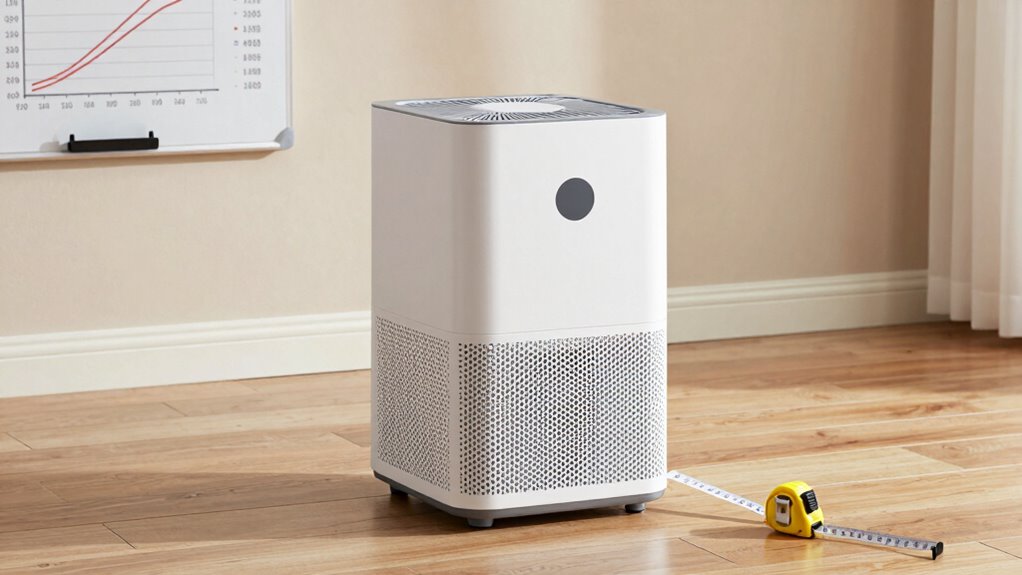

To size a dehumidifier correctly, measure your room’s square footage and consider typical humidity levels. Match the unit’s moisture removal capacity to your space’s needs by consulting manufacturer guidelines. Avoid oversizing, which wastes energy and money, and undersizing, which won’t control humidity effectively. Focus on energy efficiency and noise levels that suit your environment. If you want detailed steps to guarantee you pick the right size without overbuying, keep exploring this topic.

Get oils, diffusers and self-care delivered free — and shop member deals
- Fast, free delivery on millions of items
- Access to Prime Big Deal Days deals on October 6–7
- Prime Video, Amazon Music and more included
Key Takeaways
- Measure your room’s square footage and assess typical humidity levels to determine necessary capacity.
- Match the dehumidifier’s moisture removal capacity (pints/day) to your space and humidity needs.
- Avoid oversizing by following manufacturer guidelines for room size and capacity recommendations.
- Consider energy efficiency ratings to balance size with long-term operating costs.
- Account for noise levels to ensure the unit’s operation suits your environment and comfort.

Are you unsure how to choose the right dehumidifier for your space? If so, you’re not alone. Picking the perfect size can feel overwhelming, especially with so many options on the market. The key is to find a unit that effectively manages humidity levels without wasting energy or creating unnecessary noise. When considering your options, focus on two main factors: energy efficiency and noise levels. A dehumidifier that’s energy-efficient helps you save money on electricity bills over time, which is especially important if you plan to run it continuously. Look for models with high Energy Star ratings; these are designed to use less power while still performing well. An energy-efficient dehumidifier might cost more upfront, but it pays off in the long run through lower operating costs.
Noise levels also matter, particularly if you’re placing the dehumidifier in a bedroom, living room, or any space where quiet is appreciated. Some units are loud enough to disrupt daily activities or sleep, so it’s worth checking the decibel ratings before making a purchase. Generally, quieter models operate around 50 decibels or less, comparable to a soft conversation, while louder units can reach 60-70 decibels or more. The good news is that many modern dehumidifiers are designed with noise reduction features, so you don’t have to sacrifice comfort for efficiency. Additionally, understanding the appropriate size of the dehumidifier for your space is crucial to ensure optimal performance. Proper sizing also involves considering the moisture removal capacity relative to your environment, which can help prevent over or under-humidifying. This capacity should align with your room’s size and typical humidity levels to maintain a healthy environment.
Choosing a unit with the right capacity for your environment can also help prevent issues like mold growth or excess dryness, which can be harmful to health. Once you’ve considered these factors, you should evaluate the size of the unit based on the space you want to dehumidify. A unit that’s too small will struggle to maintain proper humidity levels, leading to frustration and potential mold growth. Conversely, oversizing doesn’t mean you’ll do better; it often results in unnecessary energy consumption and higher costs. To avoid this, measure your space accurately, noting the square footage and typical humidity levels. Use this information to match a dehumidifier’s capacity, usually specified in pints of moisture removed per day. Manufacturers often provide guidelines for different room sizes, making it easier to select an appropriately sized unit. Additionally, consider the long-term energy costs associated with different models to make a more informed decision.
Finally, think about your long-term needs. An energy-efficient, quiet dehumidifier tailored to your space prevents overbuying and ensures you’re not wasting resources. By balancing capacity, energy use, and noise levels, you’ll find a unit that keeps your environment comfortable without draining your wallet or disturbing your peace.
energy efficient dehumidifier with high EStar rating
As an affiliate, we earn on qualifying purchases.
As an affiliate, we earn on qualifying purchases.
Frequently Asked Questions
Can I Use a Larger Dehumidifier for Faster Drying?
Yes, using a larger dehumidifier can speed up drying because it has a higher moisture removal rate. However, choosing a unit with excessive capacity may lead to energy waste and unnecessary costs. To avoid this, match the dehumidifier capacity to your space’s moisture level. A properly sized dehumidifier efficiently removes moisture without overworking, ensuring faster drying without overspending on unnecessary capacity.
How Does Room Insulation Affect Dehumidifier Sizing?
Think of your room as a sponge—insulation acts like a shield, controlling thermal resistance and moisture transfer. When your space is well-insulated, less moisture enters or escapes, so you need a smaller dehumidifier. Conversely, poor insulation allows more moisture transfer, requiring a larger unit. Properly evaluating insulation helps you size your dehumidifier accurately, ensuring efficient moisture control without overbuying or underperforming.
Do Dehumidifiers Consume More Energy if Oversized?
Yes, an oversized dehumidifier can consume more energy because it runs more frequently than necessary, reducing energy efficiency. This excess operation also increases noise levels, making it less comfortable. To keep energy use ideal and noise low, choose a unit that matches your room’s humidity needs. Proper sizing ensures you don’t waste power, stay comfortable, and maintain good air quality without unnecessary energy costs.
Is It Better to Buy a Portable or Whole-Home Dehumidifier?
Why settle for a tiny hero or a giant villain? When it comes to humidity levels and moisture control, a whole-home dehumidifier offers consistent performance across your entire space, saving you from the hassle of multiple units. Portable models are handy for targeted spots, but they often fall short in thorough moisture control. So, choose wisely—your comfort depends on it, and nobody wants a soggy surprise!
How Often Should I Run My Dehumidifier for Optimal Results?
You should run your dehumidifier daily until the humidity levels stabilize between 30-50%. Keep an eye on moisture control, especially in damp areas, and run it longer if you notice persistent moisture or mold. Adjust the runtime based on seasonal changes and humidity fluctuations. Regular use guarantees ideal moisture control, preventing excess humidity and protecting your home from mold, mildew, and other moisture-related problems.
Conclusion
Choosing the right-sized dehumidifier guarantees ideal comfort and energy efficiency. Did you know that an undersized unit struggles to keep up, increasing your energy bills? Conversely, overbuying wastes money and space. By precisely evaluating your space’s moisture levels and room size, you’ll find a unit that works effectively without overspending. Proper sizing not only improves air quality but also saves you money in the long run—making your home healthier and more comfortable.
Fall Picks
fall essentials
As an affiliate, we earn on qualifying purchases.