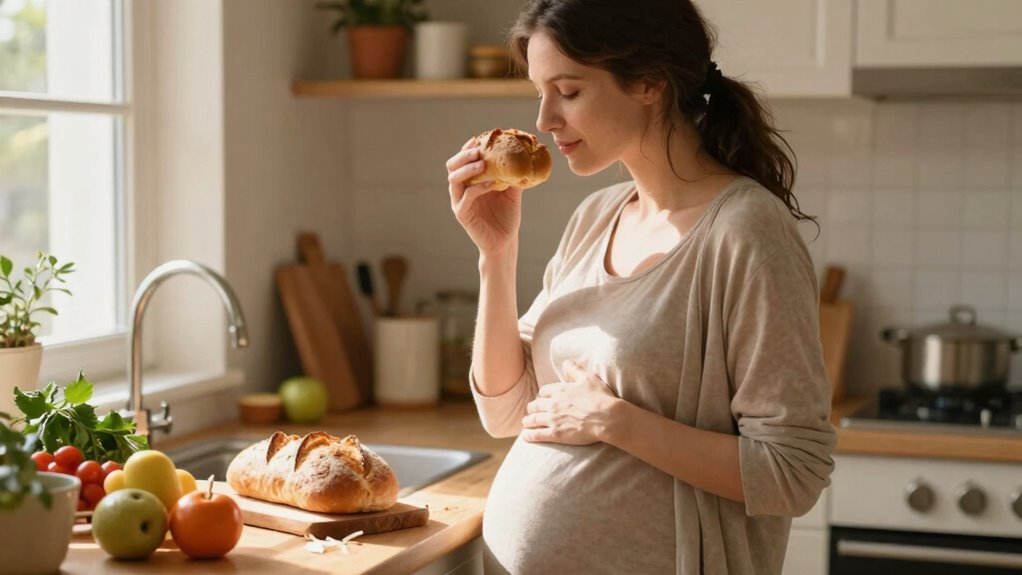

During pregnancy, hormonal fluctuations like increased estrogen and hCG heighten your sense of smell, making odors seem stronger and often overwhelming. This change can cause food aversions, sensitivity to environmental smells, and emotional reactions to certain scents. It might also slow your brain’s ability to adapt to familiar odors, leading to discomfort or nausea. These temporary shifts impact your daily routines, but understanding what’s happening can help you manage them better if you look further.

Get oils, diffusers and self-care delivered free with Prime
- Fast, free delivery on millions of items
- Prime Video, Amazon Music and more included
- Member-only deals all year
Key Takeaways
- Elevated hormone levels like estrogen and hCG enhance olfactory sensitivity during pregnancy.
- Hormonal fluctuations impair sensory adaptation, making odors seem more intense and overwhelming.
- Increased smell sensitivity affects food choices, causing aversions and nausea.
- Strong odors influence daily routines, triggering avoidance and emotional responses.
- Recognizing hormonal causes helps manage sensitivities for better comfort during pregnancy.

During pregnancy, many women notice their sense of smell becomes more sensitive, leading to heightened awareness of odors that once went unnoticed. This change isn’t coincidental; it’s driven by hormonal fluctuations that occur as your body adapts to support pregnancy. Elevated levels of hormones like estrogen and human chorionic gonadotropin (hCG) influence your sensory perception, making smells seem more intense and often more unpleasant. You might find that familiar scents suddenly become overpowering, or that you can detect odors from farther away than before. This heightened sensitivity is your body’s way of alerting you to potential hazards, like spoiled food or environmental toxins, especially important during pregnancy.
Pregnancy hormones heighten your sense of smell, making odors more intense and often overwhelming.
As your body adjusts to these hormonal shifts, you also experience sensory adaptation. This process means that, over time, your brain learns to filter out persistent or harmless odors, preventing constant sensory overload. For example, if you’re regularly exposed to a particular smell, like a certain cooking aroma or perfume, your brain gradually tunes it out, reducing the intensity of your reaction. However, during pregnancy, this adaptation can be slower or less effective because of the ongoing hormonal fluctuations that keep your sensory system in a heightened state. Consequently, you may feel overwhelmed by smells that previously didn’t bother you, leading to nausea or discomfort. Additionally, some women find that their heightened sense of smell can also impact their emotional well-being, making them more prone to mood swings related to sensory sensitivities.
This increased olfactory sensitivity markedly impacts your daily life. Food choices become more complicated; scents of certain foods may become intolerable, prompting you to avoid cooking or eating specific dishes altogether. You might find yourself constantly on alert for strong odors in your environment, which can influence your social interactions and routines. For example, perfume, cleaning products, or even certain fabrics can trigger aversions, making everyday activities more challenging. This heightened sense of smell can also extend to your emotional state—certain scents might evoke strong memories or feelings, either comforting or distressing. Recognizing how hormonal fluctuations influence sensory perception can help you better understand and manage these changes during pregnancy. Additionally, understanding the role of sensory adaptation can empower you to develop effective coping strategies.
Understanding that these changes are a normal part of pregnancy can help you cope better. Recognize that hormonal fluctuations are the root cause, and your body is simply adjusting through sensory adaptation. While it can be inconvenient, this heightened sense of smell is a temporary phase, usually subsiding after childbirth when hormone levels stabilize. It’s also helpful to note that environmental factors can further influence your olfactory experiences, so creating a comfortable environment is beneficial. It’s helpful to learn coping strategies to manage your environment and reduce discomfort during this time. Until then, you can manage your environment by avoiding strong odors and maintaining good ventilation, making daily life more comfortable despite these olfactory changes.
As an affiliate, we earn on qualifying purchases.
Frequently Asked Questions
Can Smell Sensitivity During Pregnancy Persist After Childbirth?
Yes, smell sensitivity during pregnancy can persist after childbirth, leading to postpartum sensory changes. Some women experience long-term olfactory effects, where their sense of smell remains heightened or altered. These changes can influence daily life, making certain scents more intense or bothersome. While many women notice a gradual return to normal, others might experience lasting sensory shifts, highlighting how pregnancy can have prolonged effects on your senses even after your baby is born.
Are There Specific Scents That Become More Intense?
Like a magnifying glass intensifies sunlight, certain scents become more intense for you during pregnancy. You might notice everyday smells—like coffee or perfume—feeling sharper. This heightened sensitivity can even trigger scent memories, making familiar smells evoke strong emotions. To manage this, consider olfactory training; it helps your senses adjust over time. Yes, some scents become more pungent, but with awareness, you can navigate these changes more comfortably.
How Does Increased Smell Affect Eating Habits?
Your heightened sense of smell influences your eating habits by amplifying certain scents, which can lead to food aversions or a preference for specific flavors. You might find some foods smell unappealing, reducing your desire to eat them, while others become more tempting due to their aroma. This shift causes you to adjust your diet, seeking out or avoiding particular foods to better match your new flavor preferences and comfort.
Does Heightened Smell Vary Between Pregnancies?
Think of your sense of smell as a delicate musical instrument, tuned differently with each pregnancy. Scent adaptation varies because hormonal fluctuations fluctuate, affecting your heightened senses. Sometimes, your nose becomes a sharp, sensitive flute; other times, it softens, like a gentle harp. So yes, heightened smell differs between pregnancies, making each experience uniquely intense or subdued. Your body’s ever-changing chemistry shapes how you perceive the world through scent, season after season.
Can Strong Odors Cause Discomfort or Nausea?
Yes, strong odors can cause discomfort or nausea during pregnancy. Your heightened sense of smell may lead to odor aversion, making certain scents unbearable. Scent adaptation helps you become more sensitive to these smells, amplifying discomfort. You might notice everyday odors triggering nausea or aversion, prompting you to avoid certain environments. Being mindful of scent triggers and managing exposure can help reduce these unpleasant sensations and improve your daily well-being.
Conclusion
Even if the heightened sense of smell feels overwhelming at times, remember it’s a temporary change that signifies your body’s incredible adaptations. This heightened awareness can actually help you better navigate your surroundings and stay attuned to your needs. Think of it as a unique part of this special journey—one that, despite its challenges, ultimately deepens your connection to your pregnancy experience. Embrace these changes; they’re a sign your body is working hard for both you and your little one.
Halloween Picks
halloween
As an affiliate, we earn on qualifying purchases.