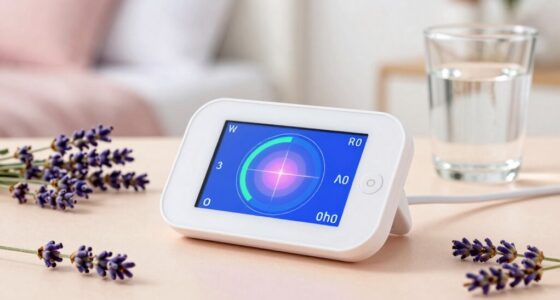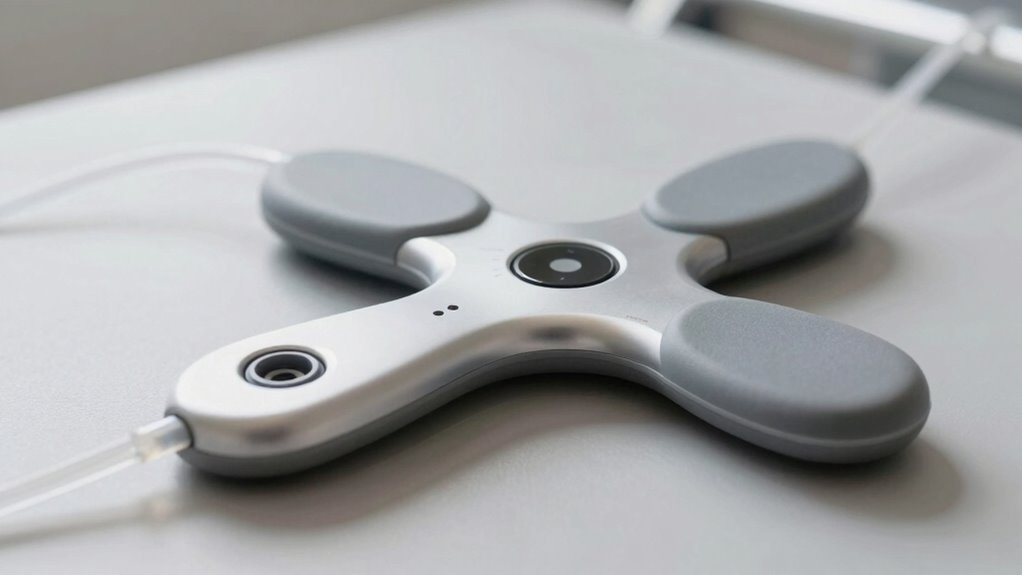

Pelvic floor trainers measure the electrical activity of your muscles to guarantee you’re engaging the right ones during exercises. They use sensors to detect muscle contractions and relaxations, providing real-time feedback through visual or auditory cues. This helps you improve your control, strength, and endurance by making certain you’re activating the correct muscles effectively. If you’re interested in how this technology optimizes your progress, there’s more to discover behind the scenes.

Get oils, diffusers and self-care delivered free — and shop member deals
- Fast, free delivery on millions of items
- Access to Prime Big Deal Days deals on October 6–7
- Prime Video, Amazon Music and more included
Key Takeaways
- They measure electrical signals from pelvic floor muscles to assess activation during exercises.
- Biofeedback translates muscle activity into visual or auditory cues for proper engagement.
- Data tracking helps monitor progress and refine exercise techniques for better outcomes.
- Sensors ensure accurate detection of correct muscle contractions and detect unintended muscle activation.
- Real-time feedback guides users to improve voluntary control, strength, and endurance over time.
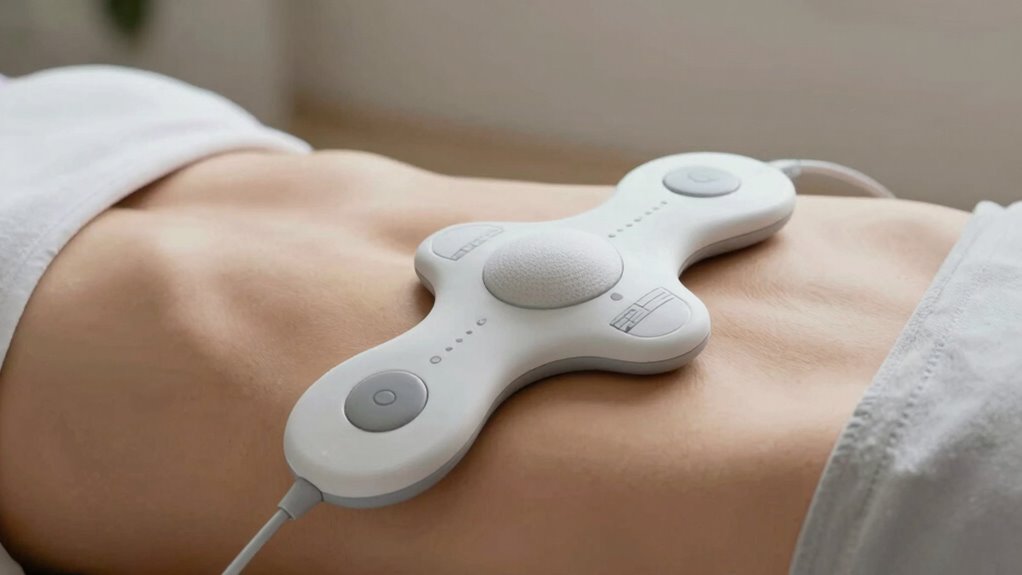
Pelvic floor trainers are effective tools designed to strengthen the muscles that support your bladder, bowel, and, in women, the uterus. When you use these devices, you’re engaging in more than just simple exercises; behind the scenes, they’re measuring muscle activation to give you real-time feedback on how well you’re contracting those muscles. This process involves sensors that detect electrical activity generated by muscle fibers when you squeeze or relax your pelvic floor muscles. As you perform the exercises, the trainer picks up on these signals, helping you understand whether you’re activating the correct muscles or if you’re inadvertently engaging other areas.
Pelvic floor trainers measure muscle activation in real-time, providing feedback to improve exercises and target the right muscles effectively.
The core function of pelvic floor trainers hinges on biofeedback mechanisms. These systems translate your muscle activity into visual or auditory cues, allowing you to adjust your efforts accordingly. For example, if your muscles aren’t contracting strongly enough, the device might alert you with a sound or a change on a display, prompting you to increase your effort. Conversely, if you’re overusing other muscles, the biofeedback helps you refine your technique, ensuring you’re isolating your pelvic floor muscles. This immediate feedback accelerates learning and improves the effectiveness of your exercises, making sure you’re not only doing the movements but doing them correctly.
As you continue to use the trainer, your brain becomes more aware of what proper muscle activation feels like, leading to better voluntary control over your pelvic floor muscles. Over time, this heightened awareness can translate into increased strength, endurance, and coordination. The biofeedback mechanisms also help track your progress, providing data that motivates you to maintain consistency and see improvements. Because these tools are designed to be user-friendly, they often come with programs tailored to different needs—whether you’re recovering from childbirth, managing incontinence, or aiming to enhance your core stability.
Understanding what the device measures behind the scenes empowers you to take control of your pelvic health. It’s not just about doing exercises; it’s about engaging with your body more consciously. The muscle activation data collected by the trainer guides you to optimize each contraction, making your workouts more efficient. This targeted approach minimizes guesswork, accelerates progress, and helps you achieve better bladder, bowel, and reproductive health outcomes. Additionally, understanding biofeedback technologies can help you better appreciate how these devices support your progress through precise measurements. Recognizing that these devices utilize muscle activation data can also motivate you to use them consistently for optimal results. With consistent use, you’ll gain confidence in your ability to control these muscles, leading to long-term benefits that extend beyond the training sessions. Moreover, the integration of sensor technology ensures that the feedback you receive is accurate and reliable, further enhancing your training experience.
pelvic floor muscle trainer with biofeedback
As an affiliate, we earn on qualifying purchases.
As an affiliate, we earn on qualifying purchases.
Frequently Asked Questions
How Accurate Are Pelvic Floor Trainer Measurements?
Pelvic floor trainer measurements are generally quite accurate, especially when you consider user experience and proper device calibration. When you regularly calibrate your device, it guarantees precise readings, helping you track progress effectively. Keep in mind that individual differences can impact results, but with consistent use and proper setup, these devices provide reliable feedback to guide your exercises and improve your pelvic health over time.
Can Pelvic Floor Trainers Detect Muscle Fatigue?
Imagine you’re using a pelvic floor trainer, and suddenly, your muscle activation levels drop during an exercise. This indicates the device’s sensor sensitivity can detect muscle fatigue. These trainers measure real-time changes in muscle activation, alerting you when muscles tire. By monitoring sensor feedback, you can adjust your workout, ensuring ideal engagement and preventing overexertion. So yes, pelvic floor trainers can detect muscle fatigue through their sensitive sensors.
Do Trainers Measure Pelvic Floor Muscle Strength Over Time?
Yes, pelvic floor trainers measure your pelvic floor muscle strength over time. By tracking your progress, they help you monitor your pelvic health and fitness improvements. These devices often use sensors to provide real-time feedback, allowing you to see how your muscles become stronger with consistent exercise. This fitness tracking encourages motivation and guarantees you’re effectively targeting your pelvic muscles, promoting overall pelvic health and better control.
Are There Privacy Concerns With Data Collection?
Yes, there are privacy concerns with data collection. You need to be aware that your data security and user confidentiality are essential when using pelvic floor trainers. Manufacturers should implement strong encryption and privacy policies to protect your information. Don’t get caught with your pants down—ensure the device you choose respects your privacy, so your personal health data stays safe and confidential while you track your progress.
Can These Trainers Differentiate Between Different Pelvic Muscles?
Yes, pelvic floor trainers can differentiate between different pelvic muscles by analyzing signal specificity and muscle differentiation. They use advanced sensors to detect distinct electrical signals from various muscles, allowing precise identification. This technology helps you target specific muscles for effective exercises. By focusing on signal specificity, these trainers guarantee you’re engaging the right muscles, improving workout results and reducing the risk of incorrect muscle activation during training sessions.
Conclusion
Now that you understand what pelvic floor trainers are measuring behind the scenes, you’re better equipped to make informed choices. These devices offer valuable insights that can truly turn the tide in your pelvic health journey. Remember, knowledge is power, and in this case, it’s the key to gaining better strength and control. Keep the ball rolling, and don’t let the grass grow under your feet—your progress depends on staying proactive and engaged.
Evergreen bestsellers Picks
bestsellers
As an affiliate, we earn on qualifying purchases.