
Ovulation devices work by tracking hormone levels, mainly luteinizing hormone (LH), to identify your fertile days. They detect hormone surges, especially LH, testing your urine to predict when you’re most likely to ovulate within 12 to 36 hours. However, they can’t confirm if ovulation actually occurs or predict pregnancy. Factors like PCOS or stress can affect their accuracy. Keep exploring to learn how to use them effectively and what limitations they have.

Get oils, diffusers and self-care delivered free with Prime
- Fast, free delivery on millions of items
- Prime Video, Amazon Music and more included
- Member-only deals all year
Key Takeaways
- Ovulation devices primarily track hormone surges, especially LH, to predict the fertile window.
- They cannot confirm actual ovulation or pregnancy, only indicate likely fertile days.
- External factors like stress or medications can cause inaccurate results.
- They do not monitor cervical mucus, basal body temperature, or overall fertility health.
- Their predictions are not foolproof and should be used alongside other fertility awareness methods.
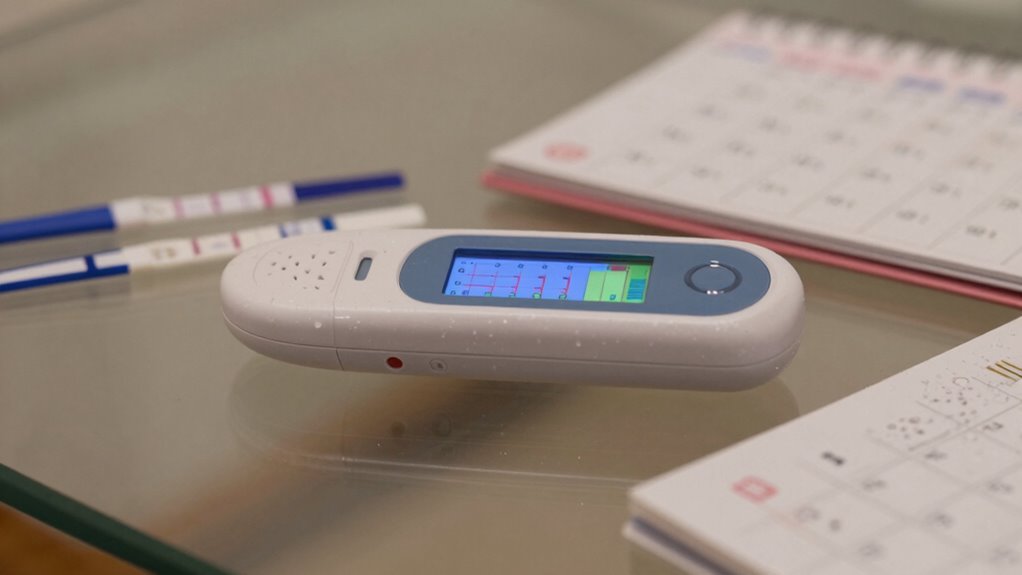
Ovulation devices have become popular tools for women trying to conceive or better understand their menstrual cycles. These devices utilize fertility tracking and hormone monitoring to help you identify the most fertile days in your cycle. By analyzing your hormone levels, especially luteinizing hormone (LH) and sometimes estrogen, they give you a clear signal when ovulation is likely to occur. This makes it easier to plan intercourse around your fertile window, increasing your chances of conception. You might find them especially helpful if your cycles are irregular or if you’re new to tracking fertility signs manually.
Most ovulation devices work by testing your urine for hormone surges. When your LH levels spike, it indicates that ovulation is imminent, usually within the next 12 to 36 hours. This hormone monitoring is quite accurate for predicting the timing of ovulation, but it’s important to remember that it only tracks a specific hormone associated with ovulation. It doesn’t tell you about other factors that can affect your fertility, such as cervical mucus quality or basal body temperature. So, while these devices are excellent tools for identifying your most fertile days, they don’t provide a complete picture of your overall fertility health.
Most ovulation devices track LH surges to predict fertile days but don’t assess overall fertility health.
It’s also essential to understand what ovulation devices can’t predict. They won’t tell you if you’re ovulating at all, especially if your hormone levels are too low to produce a detectable surge. Conditions like polycystic ovary syndrome (PCOS) or thyroid issues can interfere with hormone production, making these devices less reliable. Moreover, they can’t predict pregnancy or determine if your fertilized egg successfully implants in your uterus. They only indicate when you’re most likely to ovulate, not whether conception has occurred or if your pregnancy progresses normally.
While ovulation devices are powerful tools for fertility tracking, they aren’t foolproof. Factors like medication, stress, illness, or irregular cycles can affect hormone levels and cause false positives or negatives. So, it’s wise to combine their use with other fertility awareness methods, like monitoring basal body temperature or cervical mucus changes, for a more comprehensive approach. Remember, these devices are designed to help you understand your cycle better, but they don’t replace medical advice or fertility testing if you’re facing challenges. Using them as part of a broader fertility plan can maximize your chances and give you valuable insights into your reproductive health.
ovulation predictor kit LH surge test
As an affiliate, we earn on qualifying purchases.
As an affiliate, we earn on qualifying purchases.
Frequently Asked Questions
Can Ovulation Devices Predict Pregnancy Chances?
Ovulation devices can’t predict pregnancy chances directly. They track fertility signs like LH surges, but fertility myths suggest they can tell you exactly when you’re most fertile—however, device limitations mean they don’t account for all factors affecting conception. Your chances depend on many variables, so while these devices help identify fertile days, they don’t guarantee pregnancy. Keep realistic expectations and consult a healthcare professional for personalized advice.
How Accurate Are Ovulation Devices for Irregular Cycles?
Ovulation devices are less accurate for irregular cycles because cycle variability can affect hormone levels they detect. These devices often rely on consistent hormone patterns, which irregular cycles lack. Device limitations mean they might miss, or falsely predict, ovulation. If your cycles are unpredictable, consider tracking over several months or consulting a healthcare professional to better understand your unique cycle, rather than relying solely on these devices.
Do Ovulation Devices Detect Early Pregnancy?
Sure, your ovulation device isn’t a pregnancy detector, so don’t hold your breath for early pregnancy detection. It’s designed to track hormone fluctuations, not confirm pregnancy. Ironically, while it’s great for pinpointing your fertile window, it can’t detect early pregnancy signs or limitations. If you suspect pregnancy, a test or doctor’s visit is your best bet, not relying on your trusty ovulation device!
Are Ovulation Devices Effective for Menopause?
Ovulation devices aren’t effective for menopause because menopause symptoms, like hot flashes or irregular periods, aren’t related to ovulation. These devices mainly track hormone levels to predict ovulation, but during menopause, hormone fluctuations are unpredictable, and the devices have limitations in providing useful information. If you’re experiencing menopause symptoms, it’s best to consult a healthcare provider for appropriate management rather than relying on ovulation devices.
Can Medications Affect Ovulation Device Readings?
Medications can throw a wrench in your ovulation device readings, acting like a fog that obscures clear signals. Medication interference often stems from hormonal fluctuations induced by drugs, which may fool the device into false positives or negatives. If you’re on medication affecting hormones, your ovulation tracking might become less reliable, so consult your healthcare provider to interpret the results accurately and consider alternative methods for tracking ovulation.
Conclusion
So, while ovulation devices can give you a helpful glimpse into your fertility, they don’t reveal everything. They might pinpoint your most fertile days, but what about the surprises that could still come your way? Keep tracking, stay curious, and remember—your body might hold some secrets yet. Are you ready to uncover what’s next? The journey of understanding your cycle isn’t over; it’s just beginning. Stay attentive, and you might just catch something unexpected.
Halloween Picks
halloween
As an affiliate, we earn on qualifying purchases.