Your hormonal cycle constantly influences your skin, sweat, and body odor. As estrogen and progesterone levels fluctuate, your skin can become oilier or drier, affecting hydration and clarity. These changes also impact sweat production, often increasing it before menstruation, which can intensify body odor. Bacteria feed on sweat and oils, further affecting scent. Understanding these natural shifts can help you better manage your skin and hygiene routines — keep exploring to learn more.

Get oils, diffusers and self-care delivered free with Prime
- Fast, free delivery on millions of items
- Prime Video, Amazon Music and more included
- Member-only deals all year
Key Takeaways
- Hormonal fluctuations during the menstrual cycle alter oil production, hydration, and skin sensitivity.
- Increased progesterone in premenstrual phases boosts oil and sweat, affecting skin shine and odor.
- Rising estrogen levels during the follicular phase enhance skin hydration and softness.
- Changes in sweat gland activity and bacterial growth influence body odor intensity across cycle phases.
- Hormonal shifts impact skin texture, hydration, and response to skincare, causing visible and sensory variations.

Your menstrual cycle can considerably influence your skin, sweat, and body odor, often in ways you might not immediately notice. As your cycle progresses, hormonal fluctuations cause changes that directly impact your skin’s condition and how your body manages moisture and odors. These fluctuations, especially in estrogen and progesterone levels, can make your skin feel oilier or drier at different times. For instance, during the premenstrual phase, increased progesterone can lead to more oil production, making your skin appear shinier or more prone to breakouts. Conversely, during the follicular phase, rising estrogen levels help boost skin hydration, leaving your skin feeling softer and more plump.
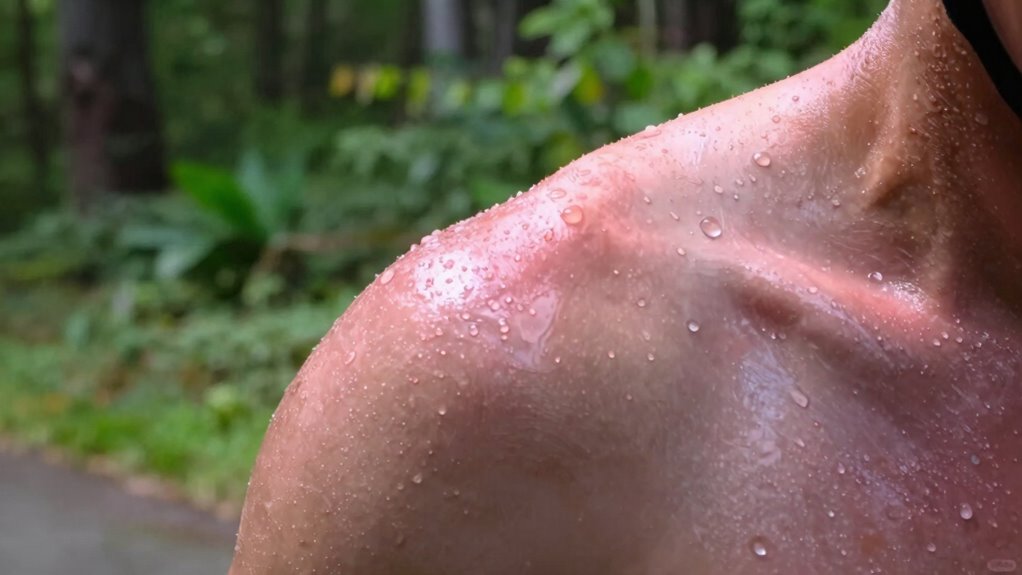
Hormonal fluctuations also influence your sweat production. When hormones shift, your sweat glands respond accordingly, often increasing activity during certain cycle phases. You might find yourself sweating more during the luteal phase, which can make you feel warmer or more uncomfortable, especially in humid environments. This increase in sweat, combined with oil production, can amplify body odor because bacteria on the skin break down sweat more rapidly under these conditions. Additionally, the changes in hormone levels can alter the composition of your sweat, sometimes leading to a stronger or more distinct smell. Understanding these hormonal effects can help you better manage your skincare and hygiene routines throughout your cycle.
Your body’s smell, including body odor, is closely tied to these hormonal shifts. During certain cycle points, particularly just before your period, you might notice a more pronounced scent. This change is partly due to fluctuations in hormones like estrogen and progesterone, which influence the activity of sweat glands and bacterial growth on your skin. These bacteria feed on sweat and oils, producing compounds that can give off a stronger odor. Increasing body temperature during specific phases also enhances sweat production, further contributing to these scent variations. Recognizing these natural changes can help reduce anxiety about body odor and promote healthier habits. Moreover, maintaining proper hygiene during these times can mitigate some of the odor intensification caused by hormonal changes.
Furthermore, your skin’s hydration levels fluctuate with your cycle. Higher estrogen levels during the follicular phase promote better skin hydration, making your skin look more luminous and feel smoother. On the other hand, during the luteal phase, decreased estrogen can cause your skin to become drier and more sensitive, which might lead to flakiness or irritation. These changes in skin hydration not only affect how your skin looks but also how it feels and responds to skincare products. Interestingly, these hormonal shifts are also connected to broader biodiversity and environmental factors, highlighting how interconnected our bodies are with the natural world. This understanding underscores the importance of hormonal balance in overall skin health. Recognizing the impact of hormonal fluctuations can help you adapt your skincare routines for better comfort and results. Additionally, staying informed about seasonal changes can further support your skin’s health throughout your cycle.
hormonal cycle skincare products
As an affiliate, we earn on qualifying purchases.
As an affiliate, we earn on qualifying purchases.
Frequently Asked Questions
Do Hormonal Changes Affect Skin Pigmentation During Menstrual Cycles?
Yes, hormonal fluctuations during your menstrual cycle can affect skin pigmentation. These hormonal changes, especially involving estrogen and progesterone, may trigger increased melanin production, leading to darker patches or spots on your skin. You might notice these pigmentation changes more before your period or during pregnancy. Understanding this link helps you manage skin care better and adapt routines to minimize pigmentation issues during hormonal shifts.
How Does Cycle Phase Influence Skin Hydration Levels?
During different cycle phases, hormonal fluctuations directly influence your skin hydration levels. In the luteal phase, increased progesterone can cause your skin to become drier, while during the follicular phase, estrogen boosts skin hydration, making your skin appear more plump and dewy. You might notice these changes as your cycle progresses. Staying well-hydrated and using suitable skincare can help balance these hormonal effects on your skin’s moisture levels.
Can Cycle Changes Cause Sudden Skin Breakouts?
Did you know that up to 80% of women experience skin breakouts during hormonal fluctuations? Yes, cycle changes can cause sudden skin breakouts due to hormonal fluctuations that trigger increased oil production, leading to clogged pores. These fluctuations often result in skin irritation, making your skin more prone to blemishes. So, during certain cycle phases, you might notice unexpected breakouts, and managing these hormonal shifts can help keep your skin clearer.
Are There Specific Scents Linked to Different Cycle Phases?
Yes, hormonal fluctuations during your cycle can lead to scent variations. You might notice different scents at various phases, like a stronger or more distinct smell during ovulation or PMS. These changes happen because hormones influence sweat and skin oils, which interact with bacteria on your skin. So, your scent can subtly shift throughout your cycle, reflecting your body’s hormonal changes and affecting how you smell at different times.
How Do Cycle Changes Impact Skin Sensitivity?
Your skin becomes an emotional rollercoaster during your cycle! Hormonal fluctuations dramatically amplify skin sensitivity, making it feel like you’re walking on a razor’s edge. Suddenly, even the gentlest touch or product can cause redness, irritation, or breakouts. These hormonal shifts trick your skin into overreacting, turning ordinary days into a sensitivity showdown. Embrace the chaos—your skin’s just responding to nature’s wild hormonal ride!
Conclusion
Understanding how your cycle influences skin, sweat, and smell helps you steer these changes with grace, much like a seasoned Roman navigating the shifting tides of empire. Embrace the natural fluctuations, knowing they are part of your body’s timeless rhythm. By tuning into these signals, you can adapt your self-care routine and feel more in harmony with yourself. After all, in the grand timeline of life, these changes are just a fleeting yet essential chapter.
Fall Picks
fall essentials
As an affiliate, we earn on qualifying purchases.