TL;DR

Get oils, diffusers and self-care delivered free with Prime
- Fast, free delivery on millions of items
- Prime Video, Amazon Music and more included
- Member-only deals all year
A guest essay published by Astral Codex Ten recounts how a couple used ChatGPT for questions during six years of fertility treatment. The writer says the chatbot suggested an MRI that revealed a previously undetected 6-centimeter uterine fibroid; the account does not establish that the AI caused a successful pregnancy or that its advice is generally reliable.
A couple undergoing years of fertility treatment says ChatGPT suggested an MRI that revealed a previously undetected 6-centimeter uterine fibroid, according to a guest essay by Drew Housman published by Astral Codex Ten. The account describes the chatbot as a source of questions and possible leads, not a replacement for the couple’s clinicians, who reviewed the scan and recommended removing the growth.
Housman writes that he and his wife could create embryos, but repeated embryo transfers did not result in a pregnancy. After clinicians found no clear explanation, they were told the infertility was unexplained. The couple began asking ChatGPT questions about fertility treatment, test results, scans, hormone levels and other topics they had limited time to discuss during appointments.
In the essay, Housman says the couple called the chatbot “Dr. Reid.” He reports that its answers often matched what their doctors told them when checked, though he also describes errors, including occasions when it misread an ultrasound and incorrectly said his wife was pregnant. These are the writer’s observations, not an independent evaluation of the chatbot’s diagnostic performance.
After the chatbot suggested an MRI, the couple raised the idea with their fertility doctor. Housman says the doctor was initially reluctant, and the couple insisted before the scan was ordered. He reports that the MRI showed a submucosal fibroid in the uterine wall, described in the clinical notes as 6 centimeters in diameter. According to his account, the fertility doctor then recommended prompt removal. The supplied essay excerpt does not report the outcome of surgery or whether the couple later became pregnant.
An AI Suggestion Led to Further Imaging
The account illustrates one way patients may use chatbots: to generate questions or raise possibilities they can discuss with a clinician, particularly when appointments are brief and a diagnosis remains unclear. In this case, Housman says the MRI identified a finding that had not been detected during years of fertility care. The report may prompt readers to ask how clinicians decide when additional imaging is appropriate, and how patients can bring outside suggestions into a medical appointment.
It does not show that ChatGPT can reliably diagnose infertility, that an MRI is appropriate for every patient, or that the fibroid alone caused the couple’s unsuccessful transfers. The article is a personal account, not a clinical study. Medical decisions about testing and treatment depend on a patient’s history and should be made with qualified clinicians; chatbot answers can be wrong, as Housman’s own examples acknowledge.
Products Worth Considering
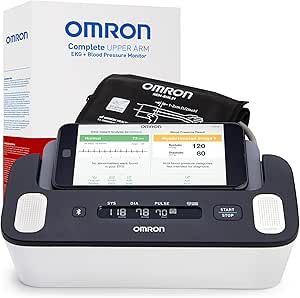
OMRON Complete 2-in-1 Upper Arm Blood Pressure Monitor with EKG

Levoit Eleva 300X HEPA Air Purifier for Home and Bedroom

OMRON VIVA 360+ Body Composition Monitor and Smart Scale
As an affiliate, we earn on qualifying purchases.
Six Years of Unexplained Infertility
Housman describes a long fertility journey in which the couple underwent extensive testing and treatment but did not receive a clear explanation for the failed embryo transfers. He says that after a diagnosis of unexplained infertility, they felt their doctors were less likely to pursue new avenues, although that is his characterization of their experience rather than a finding about fertility care generally.
The couple began using GPT-4 after it became available, according to the essay. Housman says the chatbot initially declined many medical questions, and he recounts prompting it to answer in the form of a fictional medical-drama scene. The model’s responses and willingness to answer changed over time, he writes. The eventual MRI recommendation emerged during this ongoing exchange, after earlier scans, tests and biopsies had not identified the fibroid, according to his account.
“That’s when our LLM doctor stepped in.”
— Drew Housman, writing in a guest essay for Astral Codex Ten
What the Account Does Not Establish
The supplied material is a first-person essay and does not include medical records, comments from the treating clinicians, or an independent assessment of the MRI or chatbot responses. It is not clear why the fertility doctor initially opposed the MRI, whether the fibroid had been visible or suspected on earlier tests, or how the couple’s clinicians assessed its relationship to the failed embryo transfers.
The excerpt also does not say whether the fibroid was removed, what the procedure involved, or what happened to the couple’s fertility treatment afterward. Housman’s report that the chatbot’s answers matched doctors when checked is anecdotal; it does not establish a general level of accuracy or safety. The chatbot’s occasional ultrasound misreading, as described in the essay, underscores that its output was not consistently correct.
The Couple’s Treatment Outcome Is Unreported
The account says the fertility doctor recommended removing the fibroid after reviewing the MRI, but the supplied material does not provide a date for the procedure or an update on the couple’s treatment. No further outcome can be confirmed from the essay excerpt. Any decision about removal, additional imaging or subsequent fertility treatment would need to come from the couple and their medical team.
For readers, the practical point is limited: an AI chatbot can suggest questions to raise, but it cannot verify a diagnosis or replace clinical review. Patients considering a test or treatment mentioned by an AI should discuss the possible benefits, risks and alternatives with a qualified clinician familiar with their case.
Key Questions
What did ChatGPT suggest?
Housman says the chatbot, which the couple called “Dr. Reid,” suggested that his wife get an MRI during their fertility treatment.
What did the MRI find?
According to the essay, it showed a previously undetected 6-centimeter submucosal fibroid in the uterine wall. The treating fertility doctor reportedly recommended removing it.
Does the story prove ChatGPT can diagnose infertility?
No. It is a personal account, not a clinical study or independent test of the chatbot. Housman also describes occasions when it gave an incorrect interpretation of an ultrasound.
Did the couple have the fibroid removed or become pregnant?
The supplied essay material does not report whether the procedure took place or give a later pregnancy outcome.
Should patients follow medical advice from a chatbot?
Chatbot responses can be inaccurate and should not substitute for care from a qualified clinician. Patients can discuss AI-generated questions or suggestions with their medical team, which can assess them in light of the patient’s history.
Source: hn