
When you paint a room, the strong smell is due to VOCs off-gassing, which can last from a few days up to two weeks, especially in poorly ventilated spaces. To speed up the process, open windows and doors to create good airflow, use fans, and consider air purifiers with activated carbon filters. Proper ventilation is key to reducing chemical levels and making your space safer. If you want to learn more about effective techniques, keep exploring solutions.

Get oils, diffusers and self-care delivered free with Prime
- Fast, free delivery on millions of items
- Prime Video, Amazon Music and more included
- Member-only deals all year
Key Takeaways
- Off-gassing from new paint typically lasts from a few days up to two weeks, depending on ventilation and paint type.
- Proper ventilation, such as opening windows and using fans, significantly reduces the duration of VOC emissions.
- Air purifiers with activated carbon filters help trap VOC molecules and improve indoor air quality.
- Using low-VOC or zero-VOC paints minimizes initial odors and shortens off-gassing periods.
- Limiting time in freshly painted rooms until odors diminish enhances safety and comfort.
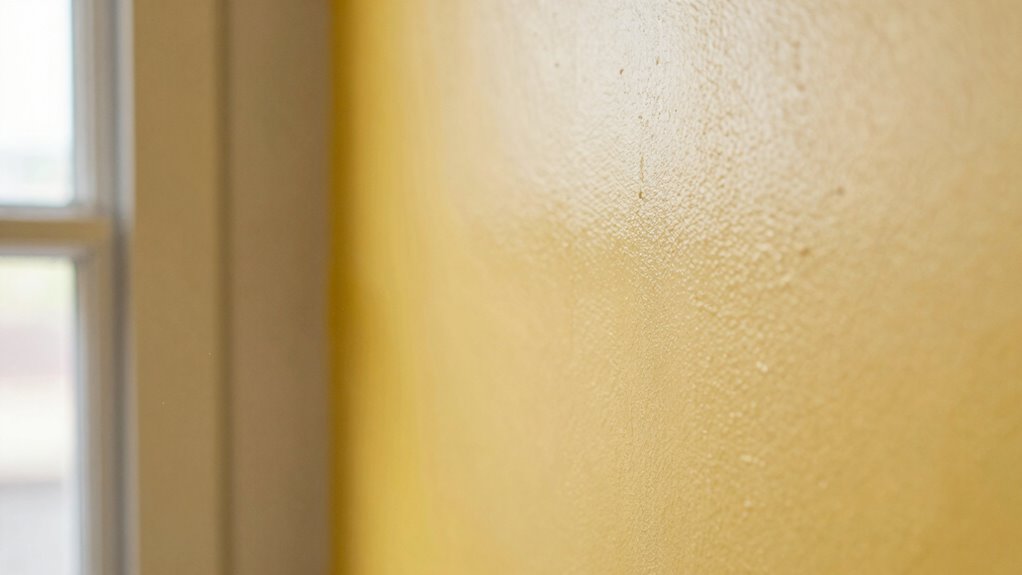
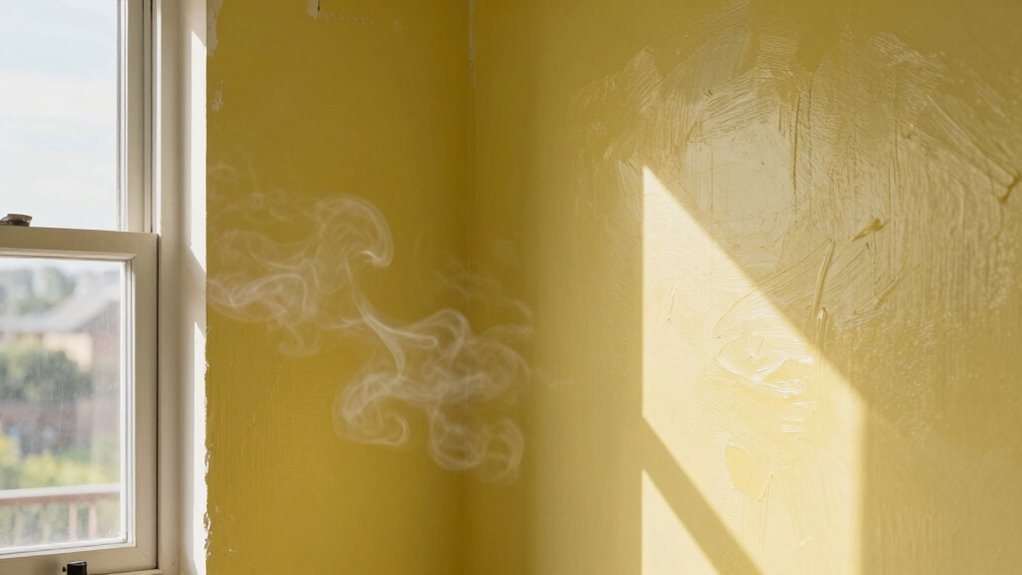
Have you ever noticed that distinct, sharp smell after painting a room? That pungent odor isn’t just unpleasant—it’s a sign of VOC emissions, or volatile organic compounds, released into the air during and after the painting process. These emissions can linger for days or even weeks, depending on the paint type and ventilation. Understanding how long off-gassing lasts can help you manage indoor air quality and reduce exposure to potentially harmful chemicals.
The lingering VOC smell from painted rooms can last days or weeks, depending on ventilation and paint type.
When you paint, VOCs evaporate from the paint’s surface and become airborne, contributing to the strong smell. These emissions can cause eye, nose, and throat irritation, headaches, or respiratory issues, especially in sensitive individuals. The good news is that proper air purification and ventilation techniques can markedly diminish VOC levels and speed up the off-gassing process. Using air purifiers equipped with activated carbon filters can trap VOC molecules, helping to cleanse the air more quickly. These devices work by adsorbing the chemicals as the air passes through, reducing the lingering odors and airborne toxins.
Ventilation plays a vital role in dispersing VOC emissions and improving indoor air quality. Opening windows and doors creates a natural airflow that helps carry away the off-gassing chemicals. If possible, keep windows open for several hours after painting, especially during the first few days when VOC emissions are at their peak. Using fans to circulate fresh air further accelerates this process, pushing contaminated air outside and drawing in cleaner air from the outside. Keep in mind that even with good ventilation, some VOCs can persist for a week or more, especially in poorly ventilated or enclosed spaces. Proper ventilation is essential for reducing indoor chemical concentrations and improving overall air quality.
To minimize VOC emissions from the start, opt for low-VOC or zero-VOC paints, which contain fewer harmful chemicals and emit less odor. When painting, try to do so in well-ventilated areas and avoid sealing off the space completely until the smell diminishes. It’s also wise to limit your time in freshly painted rooms until the odor dissipates and the VOC levels drop to safer levels, which can take anywhere from a few days to a couple of weeks. Proper air purification and consistent ventilation are your best tools to combat that stubborn new paint smell, helping to clear the air and keep your indoor environment safe and comfortable.
air purifier with activated carbon filter
As an affiliate, we earn on qualifying purchases.
As an affiliate, we earn on qualifying purchases.
Frequently Asked Questions
Are There Natural Paints That Don’T Emit Harmful Fumes?
Yes, you can find eco-friendly options made with natural ingredients that don’t emit harmful fumes. These natural paints are formulated without volatile organic compounds (VOCs), making them safer for your indoor air quality. When choosing, look for labels that specify non-toxic, low or zero VOC content. These paints are a great way to decorate your space sustainably while avoiding the strong odors and potential health risks associated with conventional paints.
How Can I Remove Paint Smell From Clothing and Furniture?
To remove paint smell from clothing and furniture, you should use chemical absorption techniques and odor neutralizers. First, air out your items by placing them in a well-ventilated area, preferably outside. Then, sprinkle baking soda or activated charcoal on fabric surfaces to absorb odors. For furniture, wipe down with a mixture of vinegar and water, which helps neutralize lingering paint fumes, leaving your items smelling fresh and clean.
Does the Type of Paint Affect the Duration of Off-Gassing?
Yes, the type of paint affects how long off-gassing persists. Paints with higher VOC levels, often due to their chemical composition, tend to off-gas longer than low-VOC or zero-VOC options. You might notice a stronger smell and extended off-gassing period with oil-based paints. To minimize exposure, choose paints labeled low-VOC or zero-VOC, and ensure good ventilation during and after painting.
Can Air Purifiers Completely Eliminate Paint Fumes?
Think of an air purifier as a shield against paint fumes. While it markedly reduces airborne chemicals with effective chemical filtration, it can’t completely eliminate all fumes. Air purifier effectiveness depends on the device’s quality and the room size. To maximize results, combine it with proper ventilation. This teamwork of filtration and airflow creates a cleaner, safer environment, but remember, no solution is entirely fail-safe alone.
Is It Safe to Stay Indoors During Paint Off-Gassing?
Yes, it’s generally safe to stay indoors during paint off-gassing if you follow proper ventilation strategies. You should open windows, use fans to circulate fresh air, and guarantee good airflow to improve indoor safety. Keep the area well-ventilated and avoid spending extended periods directly in the fumes. If you notice lingering strong odors or symptoms like headaches, consider leaving temporarily until the fumes diminish.
Conclusion
So, while that new paint smell might seem strong now, it’s just like a passing storm—eventually, it’ll clear. Ventilate your space well, open windows, and run fans to help speed up the process. Most off-gassing lasts a few days to a week, but patience pays off for a fresh, healthy home. Before you know it, your room will smell as clean and bright as a spring morning.
Halloween Picks
halloween
As an affiliate, we earn on qualifying purchases.