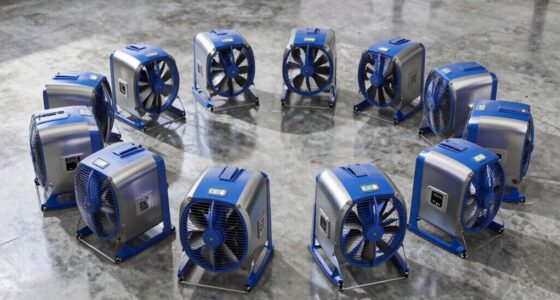
For drywall dust, I’d choose the VEVOR 550 CFM Air Scrubber as my best overall pick because its three-stage filtration and high airflow suit active renovation work better than a typical room purifier. The ALORAIR Clean Shield HEPA 550 and CADPXS Shield-550 are close alternatives for a dedicated jobsite setup, while the Levoit Core 300-P is a simpler fit for a small room after dusty work ends. The main tradeoff is between high-airflow, jobsite-style scrubbers and quieter household purifiers designed for occupied rooms. Room-size claims alone can be misleading: airflow, filtration stages, filter upkeep, and whether the machine can run continuously all matter. Read on for the full breakdown and guidance on matching a unit to your renovation, room, and cleanup routine.

Get oils, diffusers and self-care delivered free with Prime
- Fast, free delivery on millions of items
- Prime Video, Amazon Music and more included
- Member-only deals all year
Complete the kit

Key Takeaways
- The VEVOR, ALORAIR, and CADPXS scrubbers form the jobsite-focused group: each is listed at 550 CFM with three-stage filtration, making them more relevant to active drywall work than bedroom-oriented designs.
- The WEN 3410 is the airflow alternative: its 400 CFM filtration system is built around air circulation, but its product details do not specify the same three-stage filtration setup as the 550 CFM scrubbers.
- Large-room purifiers are not interchangeable with air scrubbers: models from DREO, FreAire, MOOKA, KNKA, and ECOSELF emphasize broad room coverage and household use rather than jobsite filtration.
- Small-space and post-work use point to a different shortlist: the Levoit Core 300-P and MOOKA B-D02L are more practical to evaluate for a single room than for containing dust during sanding or demolition.
- Published coverage figures vary widely and use different framing: I rank the dedicated scrubbers ahead for active renovation, while household models make more sense when quiet operation, controls, and everyday room use matter more.
| DREO Air Purifier for Home, DR-HAP009 (Dreo 539) |  | Best Room-Style Pick for Dust Monitoring | CADR: 158 CFM | Room refresh rate: 4.8 air changes per hour in 245 sq. ft. | Maximum stated coverage: 1,176 sq. ft. at 1 air change per hour | VIEW ON AMAZON | See Our Full Breakdown |
| FreAire Air Purifier for Large Rooms, Up to 2,600 sq. ft. per Hour, with HEPA Filter |  | Best Value-Style Pick for Large-Room Use | Stated coverage: Up to 2,600 sq. ft. per hour | Filtration: HEPA filter; captures 99.97% of airborne particles | Pre-filter: Washable | VIEW ON AMAZON | See Our Full Breakdown |
| VEVOR 550 CFM Air Scrubber with 3-Stage Filtration |  | Best Overall for Active Drywall Work | Airflow: Up to 550 CFM, adjustable | Filtration stages: MERV-10 pre-filter, carbon filter, and H13 HEPA filter | Particle capture: 99.97% of particles as small as 0.3 microns | VIEW ON AMAZON | See Our Full Breakdown |
| ALORAIR Clean Shield HEPA 550 Air Scrubber |  | Best for Repeated Restoration Jobs | Airflow: 270–550 CFM, adjustable | Filtration: Three-stage MERV-10, activated carbon, and HEPA | HEPA efficiency: Captures 99.97% of particles larger than 0.3 microns | VIEW ON AMAZON | See Our Full Breakdown |
| MOOKA B-D02L True HEPA Air Purifier for Large Rooms |  | Best Quiet Option for Post-Renovation Rooms | Model: B-D02L | Maximum stated coverage: Up to 1,076 sq. ft. at 1 air change per hour | Air changes: 6 per hour in 215 sq. ft.; 1 per hour in 1,076 sq. ft. | VIEW ON AMAZON | See Our Full Breakdown |
| MOOKA PR1 Air Purifier for Large Rooms, White |  | Best for Washable Pre-Filter Maintenance | Coverage: Up to 2,200 sq. ft. | Filtration: Four-stage filtration | Pre-filter: Washable | VIEW ON AMAZON | See Our Full Breakdown |
| KNKA APH4000 Air Purifier for Home, Black |  | Best for Measurable Dust-Cleaning Performance | Model: APH4000 | Maximum coverage: 1,695 sq. ft. at one air refresh per hour | Coverage at 4.8 air refreshes per hour: 350 sq. ft. | VIEW ON AMAZON | See Our Full Breakdown |
| ECOSELF HEPA Air Purifier for Large Rooms up to 1800 ft² |  | Best for Quiet, Sensor-Led Operation | Coverage area: Up to 1,800 sq. ft. | Filtration stages: Pre-filter, HEPA filter, activated carbon | Air intake: 360-degree intake with top outlet | VIEW ON AMAZON | See Our Full Breakdown |
| ECOSELF HAP602 Air Purifier for Large Rooms, 2,400 sq ft, White |  | Best for Broad-Coverage Everyday Dust Control | Model: HAP602 | Room coverage: Up to 2,400 sq. ft. | Air refresh rate: Every 30 minutes | VIEW ON AMAZON | See Our Full Breakdown |
| Levoit Core 300-P Air Purifier |  | Best Compact Pick for a Small Dusty Room | Model: Core 300-P | Motor power: 56 W | CADR: 143 CFM smoke; 153 CFM dust; 167 CFM pollen | VIEW ON AMAZON | See Our Full Breakdown |
| MOOKA Air Purifier for Home Bedroom Large Room 2200 Ft², HEPA Filter, White |  | Best for Quiet, Large-Room Dust Control | Coverage area: Up to 2200 ft² | Filtration: 3-stage: washable pre-filter, HEPA, activated carbon | Sleep-mode noise: 20 dB | VIEW ON AMAZON | See Our Full Breakdown |
| WEN 3410 3-Speed Remote-Controlled Air Filtration System, 400 CFM | 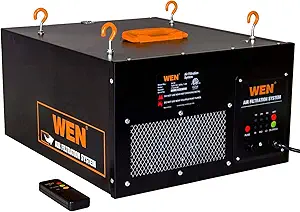 | Best for Workshop Airflow on a Budget of Space | Airflow: 300, 350, or 400 CFM | Room coverage: Up to 400 ft² | Filters: Replaceable 1-micron filter and 5-micron pre-filter | VIEW ON AMAZON | See Our Full Breakdown |
| CADPXS Shield-550 Air Scrubber, 550 CFM, 3-Stage Filtration |  | Best for Active Drywall Renovation | Airflow: 550 CFM | Filtration stages: 3-stage | Pre-filter: MERV-10 | VIEW ON AMAZON | See Our Full Breakdown |
| air purifier for drywall dust | Filtration | Sleep-mode noise |
|---|---|---|
| DREO Air Purifier for Home | Pre-filter, high-efficiency filter, and activated carbon layer | — |
| FreAire Air Purifier for Large | HEPA filter; captures 99.97% of airborne particles | 22 dB |
| VEVOR 550 CFM Air Scrubber wit | — | — |
| ALORAIR Clean Shield HEPA 550 | Three-stage MERV-10, activated carbon, and HEPA | — |
| MOOKA B-D02L True HEPA Air Pur | Pre-filter, True HEPA filter, and activated carbon filter | — |
| MOOKA PR1 Air Purifier for Lar | Four-stage filtration | As low as 26 dB |
| KNKA APH4000 Air Purifier for | Dual three-stage cartridges with washable pre-filters, high-efficiency filters, and activated carbon | 22–24 dB |
| ECOSELF HEPA Air Purifier for | — | 20 dB |
| ECOSELF HAP602 Air Purifier fo | Three-stage | 20 dB |
| Levoit Core 300-P Air Purifier | — | 24 dB |
| MOOKA Air Purifier for Home Be | 3-stage: washable pre-filter, HEPA, activated carbon | 20 dB |
| WEN 3410 3-Speed Remote-Contro | — | — |
| CADPXS Shield-550 Air Scrubber | — | — |
More Details on Our Top Picks
DREO Air Purifier for Home, DR-HAP009 (Dreo 539)
For drywall dust in an occupied home, I’d favor the DREO DR-HAP009 when the goal is ongoing room filtration rather than jobsite extraction. Its AHAM-verified 158 CFM CADR gives a more useful comparison point than a broad maximum-area claim: it refreshes air about 4.8 times per hour in 245 square feet, while its 1,176-square-foot figure represents only one air change per hour. The PM2.5 display and Auto mode help track changing particle levels, and the three-layer filter includes a pre-filter to catch larger dust. Compared with the VEVOR 550 CFM scrubber, DREO is quieter and more home-oriented, but it moves far less air and is not a substitute for source control or construction containment. I’d skip it for a renovation zone needing aggressive cleanup.
Pros:- AHAM-verified 158 CFM CADR provides a defined performance measure
- PM2.5 display and Auto mode respond to changing airborne particle levels
- Pre-filter, high-efficiency filter, and activated carbon layer address particles and odors
- Sleep mode and ENERGY STAR certification suit regular home operation
Cons:- The 1,176-square-foot figure is based on just one air change per hour, not rapid dust removal
- Its 158 CFM CADR is substantially lower than the 550 CFM VEVOR and ALORAIR scrubbers
- A room purifier cannot replace dust extraction, barriers, or cleanup at the sanding source
Best for: People living in a home during light renovation who want a monitored purifier for a bedroom or modest-sized room after dust-producing work is contained.
Not ideal for: Contractors or homeowners trying to capture heavy drywall dust during sanding; its room-purifier airflow is far below the VEVOR and ALORAIR scrubbers.
- CADR:158 CFM
- Room refresh rate:4.8 air changes per hour in 245 sq. ft.
- Maximum stated coverage:1,176 sq. ft. at 1 air change per hour
- Filtration:Pre-filter, high-efficiency filter, and activated carbon layer
- Air-quality monitoring:PM2.5 sensor with AQI display
- Modes:Auto, Turbo, Sleep, and Normal; four speeds
- Energy use:Approximately 162 kWh annually; ENERGY STAR certified
Our verdict“Choose the DREO for monitored, quieter filtration in a lived-in room after drywall dust is controlled at the source, not for active construction cleanup.”
FreAire Air Purifier for Large Rooms, Up to 2,600 sq. ft. per Hour, with HEPA Filter
I’d place the FreAire large-room purifier among the room units for buyers who want automatic particle monitoring and a washable first filter. Its triple air intakes, HEPA filtration, and PM2.5 display make it more informative for everyday dust management than a basic purifier, while Auto mode can raise the fan speed as readings change. The washable pre-filter can catch larger debris before it reaches the HEPA filter, though drywall sanding can load filters quickly, so frequent inspection is sensible. Compared with the DREO DR-HAP009, FreAire claims much broader hourly coverage but does not provide a CADR figure here, making direct airflow comparison harder. Unlike the VEVOR, it is not a 550 CFM jobsite scrubber; I’d choose it for post-work room cleanup, not active sanding.
Pros:- Triple intakes support air circulation through a large room
- PM2.5 display and Auto mode provide particle feedback and automatic fan adjustment
- Washable pre-filter can reduce the load reaching the HEPA filter
- Sleep mode is listed at 22 dB and turns off the lights
Cons:- No CADR or CFM figure is provided for direct airflow comparison
- HEPA filter replacement is recommended every 3–6 months and specifies official FreAire filters
- Room-purifier format is less suited to containing heavy dust during active construction
Best for: Households wanting a large-room purifier with automatic PM2.5 response and a washable pre-filter for routine dust and post-renovation cleanup.
Not ideal for: Renovation crews or buyers needing documented high airflow for an isolated work zone; the listed coverage does not replace the VEVOR or ALORAIR scrubbers’ CFM specifications.
- Stated coverage:Up to 2,600 sq. ft. per hour
- Filtration:HEPA filter; captures 99.97% of airborne particles
- Pre-filter:Washable
- Air-quality sensor:PM2.5 display
- Fan speeds:Four
- Sleep-mode noise:22 dB
- Timer:2, 4, 6, or 8 hours
- Filter replacement:Recommended every 3–6 months
- Certifications:ETL, FCC, EPA, CARB, and DOE
Our verdict“Pick FreAire for monitored, large-room filtration after drywall work, but choose a rated air scrubber for active sanding or a contained renovation zone.”
VEVOR 550 CFM Air Scrubber with 3-Stage Filtration
For active drywall sanding or cleanup in a contained work area, I rank the VEVOR 550 CFM Air Scrubber ahead of the home purifiers here. Its adjustable airflow up to 550 CFM and staged MERV-10, carbon, and H13 HEPA filtration are built around restoration and construction work, rather than quiet everyday room use. The HEPA stage is specified to capture 99.97% of particles as small as 0.3 microns; the pre-filter provides an initial layer for larger dust. Compared with the ALORAIR Clean Shield HEPA 550, VEVOR is lighter at 35 pounds and offers two auxiliary sockets, but ALORAIR adds stackable construction and a stated 10-year limited warranty. VEVOR’s major compromise is that the listing gives no noise level, and it still needs dust barriers and source extraction to manage sanding dust effectively.
Pros:- Adjustable airflow reaches 550 CFM for work-zone air cleaning
- MERV-10 pre-filter, carbon filter, and H13 HEPA provide three filtration stages
- Can daisy-chain up to three units for larger restoration setups
- Foldable handle and 35-pound weight support portability between work areas
Cons:- No noise-level specification is provided
- Filters require replacement as they load with construction dust
- Less suited to quiet, unattended living-room or bedroom use than the DREO or MOOKA
Best for: DIY renovators and restoration teams needing portable, adjustable high-airflow filtration for a contained drywall work area.
Not ideal for: People seeking a quiet bedroom purifier or a ready-made solution for an uncontained home; its noise level is unspecified and it does not replace dust containment.
- Airflow:Up to 550 CFM, adjustable
- Filtration stages:MERV-10 pre-filter, carbon filter, and H13 HEPA filter
- Particle capture:99.97% of particles as small as 0.3 microns
- Filtration area:5,500 cubic feet
- Intake diameter:15.5 inches
- Outlet diameter:8.5 inches
- Weight:35 pounds
- Additional features:Resettable timer, circuit breaker, filter-change indicator, foldable handle, and two auxiliary sockets
Our verdict“Choose the VEVOR for active, contained drywall work when adjustable 550 CFM airflow matters more than quiet operation or home-style convenience.”
ALORAIR Clean Shield HEPA 550 Air Scrubber
The ALORAIR Clean Shield HEPA 550 is the more jobsite-oriented alternative to the room purifiers, with adjustable 270–550 CFM airflow and three-stage MERV-10, carbon, and HEPA filtration. For drywall dust, that higher airflow is useful in a contained work zone, while the 16-inch inlet and 8-inch outlet allow duct connections when a setup calls for directed intake or exhaust; the ducts must be purchased separately. Compared with the VEVOR 550 CFM scrubber, ALORAIR offers stackable construction, auxiliary GFCI outlets, and a stated 10-year limited warranty, but it weighs 39.6 pounds versus VEVOR’s 35. Its rotomolded housing suits repeated restoration work, though that rugged format is bulkier and less convenient than the DREO or MOOKA for ordinary room use.
Pros:- Variable 270–550 CFM airflow supports different work-zone needs
- MERV-10, activated carbon, and HEPA stages target particles and odors
- Stackable design and daisy-chaining support larger setups
- Rotomolded housing, GFCI outlets, and a stated 10-year limited warranty suit repeated jobsite use
Cons:- At 39.6 pounds, it is heavier than the VEVOR scrubber
- Compatible 16-inch inlet and 8-inch outlet ducts are not included
- Its size and worksite format are excessive for everyday bedroom purification
Best for: Restoration contractors and frequent DIY renovators who need a stackable scrubber with variable airflow and optional duct connections.
Not ideal for: Small homes or occasional users who want a quiet, compact room purifier; it is a 39.6-pound work unit, and compatible ducts are not included.
- Airflow:270–550 CFM, adjustable
- Filtration:Three-stage MERV-10, activated carbon, and HEPA
- HEPA efficiency:Captures 99.97% of particles larger than 0.3 microns
- Filtration area:5,500 cubic feet
- Dimensions:20.87 x 24.8 x 14.96 inches
- Weight:39.6 pounds
- Housing:Rotomolded polyethylene (LLDPE)
- Duct compatibility:16-inch inlet and 8-inch outlet; ducts not included
- Build and certification:Stackable horizontally or vertically, up to three units can be daisy-chained; ETL-certified; 10-year limited warranty
Our verdict“Choose ALORAIR for repeated restoration jobs that benefit from stackability, duct options, and rugged construction, rather than for quiet home use.”
MOOKA B-D02L True HEPA Air Purifier for Large Rooms
The MOOKA B-D02L fits a different drywall-dust task from the VEVOR and ALORAIR: keeping a bedroom or living space filtering after sanding and cleanup are finished. Its three-stage filter combines a pre-filter, True HEPA, and activated carbon, while the stated 20 dB noise level and sleep mode suit overnight operation. The coverage claim needs context: it reaches six air changes per hour in 215 square feet, but only one per hour at 1,076 square feet. That makes it less compelling for fast, large-room dust clearing than either 550 CFM scrubber, and less transparent on measured performance than the DREO’s AHAM-verified CADR. A 3–6 month filter interval also calls for checking the filter more often during dusty renovation periods. I’d choose it for quiet ongoing filtration, not active sanding.
Pros:- Three-stage filtration includes a pre-filter, True HEPA filter, and activated carbon
- Stated 20 dB noise level supports quiet operation
- Six air changes per hour in a 215-square-foot room suit smaller spaces
- Child lock, night light, four fan modes, and timer settings add household controls
Cons:- At 1,076 square feet, the stated air-change rate falls to one per hour
- No CADR or CFM figure is supplied for direct comparison with the DREO or air scrubbers
- Filter replacement is recommended every 3–6 months and may be needed sooner in dusty conditions
Best for: Households that have completed dusty work and want a quiet purifier running in a bedroom or smaller room while residual airborne particles settle and are filtered.
Not ideal for: People needing rapid dust removal across a large renovation zone or active jobsite filtration; its largest coverage claim is only one air change per hour.
- Model:B-D02L
- Maximum stated coverage:Up to 1,076 sq. ft. at 1 air change per hour
- Air changes:6 per hour in 215 sq. ft.; 1 per hour in 1,076 sq. ft.
- Filtration:Pre-filter, True HEPA filter, and activated carbon filter
- Particle filtration:Down to 0.3 microns
- Noise level:20 dB
- Fan modes:Sleep, Low, Medium, and High
- Timer settings:1, 2, 4, or 8 hours
- Filter replacement:Recommended every 3–6 months, depending on use and environment
Our verdict“Choose the MOOKA B-D02L for quiet post-renovation filtration in a bedroom or modest room, not for active drywall sanding or fast whole-room cleanup.”
MOOKA PR1 Air Purifier for Large Rooms, White
For drywall dust cleanup in a large lived-in room, the MOOKA PR1 pairs a washable pre-filter with four-stage filtration, so larger debris can be cleared from the pre-filter instead of loading the main filter as quickly. Its PM2.5 display and Auto mode give you a way to track fine airborne particles and let the unit adjust its fan, while six settings offer more control than the three-speed ECOSELF HAP602. The stated coverage reaches 2,200 square feet, but that figure alone does not show how quickly it can clear a dusty work zone; the KNKA APH4000 provides a dust CADR, which is more useful for comparing cleaning rate. The PR1 is better suited to ongoing household dust control than intense renovation cleanup. Expect filter replacement every 3–6 months, and note that the air-quality indicator may flash briefly after startup.
Pros:- Washable pre-filter can catch larger debris before it reaches the main filtration stages.
- PM2.5 sensor and display show changes in measured fine-particle levels.
- Six fan modes provide more adjustment than the three speeds on the ECOSELF HAP602.
- Sleep mode is specified as low as 26 dB.
Cons:- Replacement filters are recommended every 3–6 months.
- The 2,200-square-foot coverage figure does not specify a rapid air-refresh rate for dust cleanup.
- The air-quality indicator may flash for about a minute after startup.
Best for: Homeowners managing lingering drywall dust in a large room who want a washable pre-filter, adjustable fan settings, and a visible PM2.5 reading.
Not ideal for: People tackling heavy sanding or active renovation dust who need a published high airflow rating or a jobsite-style air scrubber.
- Coverage:Up to 2,200 sq. ft.
- Filtration:Four-stage filtration
- Pre-filter:Washable
- Air-quality sensor:PM2.5 sensor with display
- Fan modes:Sleep, I, II, III, Auto, Pet
- Sleep-mode noise:As low as 26 dB
- Other features:Timer, child lock, aroma function, filter replacement reminder
- Certifications:CARB, ETL, DOE, FCC
Our verdict“Choose the MOOKA PR1 for large-room household dust control when a washable pre-filter and broad fan selection matter more than a documented high dust CADR.”
KNKA APH4000 Air Purifier for Home, Black
The KNKA APH4000 is the strongest choice here when a buyer wants a published dust-cleaning figure rather than relying on a broad maximum-coverage claim. Its 226 CFM dust CADR and stated coverage of 350 square feet at 4.8 air refreshes per hour make it easier to size for a room where drywall dust has settled into the air. That gives it a clearer performance case than the MOOKA PR1, whose supplied data lists 2,200-square-foot coverage but no CADR. Dual three-stage filter cartridges add washable pre-filters and activated carbon, though the stated replacement interval of 3–6 months means ongoing filter upkeep. Sleep mode is quieter on paper than the PR1, at 22–24 dB. This is still a residential purifier, not a substitute for a high-CFM air scrubber during active sanding.
Pros:- Published dust CADR of 226 CFM supports more direct comparison of cleaning performance.
- Specified to cover 350 square feet at 4.8 air refreshes per hour.
- Dual filter cartridges include washable pre-filters, high-efficiency filters, and activated carbon.
- Sleep mode is specified at 22–24 dB, quieter on paper than the MOOKA PR1.
Cons:- Recommended filter replacement every 3–6 months adds recurring maintenance.
- The maximum 1,695-square-foot coverage is only specified at one air refresh per hour.
- Filter plastic packaging must be removed before installation.
Best for: DIY renovators choosing a residential purifier for a defined room who want a published dust CADR and a clear high-refresh coverage figure.
Not ideal for: Anyone needing filtration for an active, high-dust worksite or a very large room at several air changes per hour.
- Model:APH4000
- Maximum coverage:1,695 sq. ft. at one air refresh per hour
- Coverage at 4.8 air refreshes per hour:350 sq. ft.
- Smoke/dust/PM2.5 CADR:226 CFM (384 m³/h)
- Pollen CADR:244 CFM (415 m³/h)
- Filtration:Dual three-stage cartridges with washable pre-filters, high-efficiency filters, and activated carbon
- Modes and fan speeds:PET, ECO, Sleep, Auto; four fan speeds
- Sleep-mode noise:22–24 dB
- Recommended filter replacement:Every 3–6 months
Our verdict“Pick the KNKA APH4000 when a room-sized dust CADR and frequent air refreshes matter more than maximum-room coverage claims.”
ECOSELF HEPA Air Purifier for Large Rooms up to 1800 ft²
The ECOSELF HEPA suits a household that wants a purifier running quietly after the sanding stops. Its 20 dB Sleep Mode is quieter on the stated specifications than the MOOKA PR1 and Levoit Core 300-P, while the real-time PM2.5 sensor can adjust the fan automatically as particle readings change. A 360-degree intake supports placement in an open area, but it still needs clearance around the body for airflow. The 1,800-square-foot coverage claim is useful context, yet the supplied details do not give a CADR or an air-refresh rate; unlike the KNKA APH4000, that makes it harder to judge its speed against a drywall-dust load. Three-stage filtration includes a pre-filter, HEPA filter, and activated carbon. The main ownership limitation is filter sourcing: the manufacturer calls for genuine ECOSELF replacements and says third-party filters may affect warranty coverage.
Pros:- 20 dB Sleep Mode is quieter on paper than the Levoit Core 300-P and MOOKA PR1.
- Real-time PM2.5 sensor and Auto mode adjust fan speed as readings change.
- Three-stage filtration combines a pre-filter, HEPA filter, and activated carbon.
- 360-degree intake allows airflow from around the unit when it has open space.
Cons:- No CADR or air-refresh rate is provided, making dust-cleaning speed difficult to compare.
- Third-party replacement filters may void the warranty.
- Three fan speeds offer fewer manual adjustments than the MOOKA PR1.
Best for: Light sleepers who want a quiet, sensor-controlled purifier for lingering household dust in a large open room.
Not ideal for: Renovators who need a documented dust CADR, rapid air-change data, or flexibility to use third-party replacement filters.
- Coverage area:Up to 1,800 sq. ft.
- Filtration stages:Pre-filter, HEPA filter, activated carbon
- Air intake:360-degree intake with top outlet
- Sleep-mode noise:20 dB
- PM2.5 sensor:Real-time sensor with Auto mode
- Fan speeds:3
- Timer:1–24 hours
- Controls:Touch panel with child/pet lock
Our verdict“Choose this ECOSELF model for quiet automatic operation after renovation, not when you need clearly documented dust-cleaning throughput.”
ECOSELF HAP602 Air Purifier for Large Rooms, 2,400 sq ft, White
The ECOSELF HAP602 makes its case with a 2,400-square-foot coverage claim and an air refresh every 30 minutes, making it a fit for broad household spaces where drywall dust remains after work is done. A PM2.5 sensor, display, and automatic mode add feedback and hands-off fan adjustment; the KNKA APH4000 is the stronger pick when you want a published dust CADR and a faster refresh rate for a smaller room. The HAP602 instead emphasizes quiet, simple operation: it has three fan speeds, a child lock, and a specified 20 dB sleep mode. Its three-stage filter targets airborne dust and other particles, but the product data cautions that it is not meant to remove substantial pet hair from floors or fabrics. Filter replacement is recommended every 3–6 months, and no CADR is supplied to quantify dust removal speed.
Pros:- Stated coverage reaches 2,400 square feet with an air refresh every 30 minutes.
- PM2.5 sensor, display, and Auto mode provide particle feedback and automatic fan adjustment.
- 20 dB sleep mode is quieter on paper than the Levoit Core 300-P.
- Child lock supports use in family spaces.
Cons:- No CADR is provided to compare its dust-cleaning throughput with the KNKA APH4000.
- Replacement filters are recommended every 3–6 months.
- Not designed to remove significant pet hair from floors or fabrics.
Best for: Households wanting a quiet purifier for a large, open living area with automatic particle monitoring and a stated 30-minute refresh cycle.
Not ideal for: People clearing heavy drywall dust quickly in a smaller work zone, or buyers who need a published CADR for sizing.
- Model:HAP602
- Room coverage:Up to 2,400 sq. ft.
- Air refresh rate:Every 30 minutes
- Filtration:Three-stage
- Air-quality monitoring:PM2.5 sensor and display
- Fan speeds:3
- Sleep-mode noise:20 dB
- Filter replacement interval:Every 3–6 months
- Color:White
Our verdict“Choose the HAP602 for quiet, sensor-guided dust control across a large open area, but choose the KNKA if room-level CADR matters more.”
Levoit Core 300-P Air Purifier
For a bedroom, home office, or enclosed room where drywall dust has become airborne, the Levoit Core 300-P is the most clearly sized compact option in this group. Its AHAM-verified dust CADR is 153 CFM, and the stated 222-square-foot coverage at 4.8 air changes per hour offers a practical room-size reference that the larger-coverage ECOSELF models do not provide. The listed 99.97% filtration efficiency applies to airborne particles measuring 0.1–0.3 microns; it does not mean the purifier will capture dust that has already settled on surfaces. Compared with the KNKA APH4000, the Core 300-P is aimed at a smaller room, not a broad living area. Its 24 dB Sleep Mode, dimmable display, timer, and check-filter indicator suit overnight use, but official replacement filters are recommended and the 120V version is for the United States.
Pros:- Published dust CADR of 153 CFM and AHAM verification provide useful performance context.
- Specified for 222 square feet refreshed 4.8 times per hour.
- Filter efficiency is listed as 99.97% for airborne particles measuring 0.1–0.3 microns.
- 24 dB Sleep Mode, timer, and check-filter indicator support bedroom use.
Cons:- Its frequent-refresh coverage is much smaller than the KNKA APH4000 or large-room ECOSELF models.
- Manufacturer recommends official Levoit replacement filters.
- The 120V version is intended for use only in the United States.
Best for: People cleaning up residual airborne dust in a bedroom, home office, or other enclosed room up to about 222 square feet at frequent air changes.
Not ideal for: Buyers trying to clean a large open-plan area or contain heavy dust during active drywall cutting and sanding.
- Model:Core 300-P
- Motor power:56 W
- CADR:143 CFM smoke; 153 CFM dust; 167 CFM pollen
- Recommended room coverage:222 sq. ft. at 4.8 air changes per hour; 1,073 sq. ft. at one air change per hour
- Filtration efficiency:99.97% for airborne particles measuring 0.1–0.3 μm
- Sleep-mode noise:24 dB
- Timer settings:2, 4, 6, or 8 hours
- Certifications:AHAM verified, FCC certified, ETL listed, CARB compliant
- Voltage and region:120 V; United States use
Our verdict“Pick the Core 300-P for a defined small room where published dust CADR and quiet overnight operation matter more than broad coverage.”
MOOKA Air Purifier for Home Bedroom Large Room 2200 Ft², HEPA Filter, White
The MOOKA pairs a large stated coverage area with bedroom-friendly controls, making it a better fit for occupied rooms during renovation than the louder WEN 3410. Its washable pre-filter can catch larger debris before it reaches the HEPA stage, while the PM2.5 sensor and auto mode adjust fan speed as airborne particles change. That convenience is useful for everyday dust, but drywall sanding can produce sustained, heavy loads: this is a household purifier, not a substitute for a source-capture setup or the CADPXS Shield-550 air scrubber. The 20 dB sleep setting favors overnight use, though running at a quieter setting may not move as much air as a renovation demands. I’d choose it for a bedroom or large living space where low noise matters more than jobsite-level airflow.
Pros:- Washable pre-filter can catch larger dust before it reaches the HEPA filter.
- PM2.5 display and auto mode respond to changing particle levels.
- 20 dB sleep setting is suited to bedrooms and light sleepers.
- Stated coverage reaches up to 2200 square feet.
Cons:- Household-style airflow is a weaker match for sustained drywall sanding than the 550 CFM CADPXS Shield-550.
- The filter’s protective plastic must be removed before operation.
- Resetting the filter reminder requires a specific button-hold sequence.
Best for: Households seeking a quiet purifier for a large bedroom or living area, with a washable pre-filter for routine dust between renovation tasks.
Not ideal for: People sanding drywall in an active work zone who need high-volume, jobsite air scrubbing; choose a dedicated air scrubber such as the CADPXS Shield-550 instead.
- Coverage area:Up to 2200 ft²
- Filtration:3-stage: washable pre-filter, HEPA, activated carbon
- Sleep-mode noise:20 dB
- Fan speeds:4 adjustable speeds
- Timer:2, 4, 6, or 8 hours
- Maximum-speed power consumption:0.63 kW·h over 24 hours
- Air-quality features:PM2.5 display and auto mode
- Certifications:CARB, ETL, DOE
Our verdict“Choose the MOOKA for quiet, large-room particle filtration during renovation, but pick a commercial air scrubber for active drywall work.”
WEN 3410 3-Speed Remote-Controlled Air Filtration System, 400 CFM
The WEN 3410 is the practical choice for a small workshop or contained work area where measured airflow matters more than bedroom-level quiet. Its three settings deliver 300, 350, or 400 CFM, and the replaceable 1-micron filter works alongside a 5-micron pre-filter. That makes its filtration approach more explicit than the MOOKA’s broad household coverage claim, but the listed filters are not the same as a HEPA stage, so I would not treat it as equivalent to the CADPXS Shield-550 for fine drywall dust. A programmable timer and RF remote let a user adjust operation without walking back into a dusty area; the remote also works without direct line of sight. The tradeoff is substantial noise at 50–60 dB and a stated room limit of 400 square feet, which narrows its usefulness in occupied living spaces.
Pros:- Three airflow settings provide up to 400 CFM.
- Replaceable 1-micron filter and 5-micron pre-filter are specified.
- Programmable timer supports automatic shutoff.
- RF remote works up to 26 feet without direct line of sight.
Cons:- Listed filtration does not include a HEPA stage, unlike the CADPXS Shield-550.
- Noise ranges from 50 to 60 dB, making it a poor fit for quiet rooms.
- Room coverage is limited to up to 400 square feet.
Best for: DIYers with a workshop or contained room up to 400 square feet who want adjustable airflow, a timer, and remote operation.
Not ideal for: People who need verified HEPA filtration for fine drywall dust, or who plan to run a purifier quietly in a bedroom or occupied living room.
- Airflow:300, 350, or 400 CFM
- Room coverage:Up to 400 ft²
- Filters:Replaceable 1-micron filter and 5-micron pre-filter
- Dimensions:17 × 20.5 × 10 in
- Electrical requirements:120 V, 60 Hz, 1 A
- Remote range:Up to 26 ft
- Speed settings:3
- Timer:Programmable
- Noise level:50–60 dB
Our verdict“Pick the WEN for a small workshop where airflow and remote control matter more than quiet operation or HEPA filtration.”
CADPXS Shield-550 Air Scrubber, 550 CFM, 3-Stage Filtration
For active sanding, the CADPXS Shield-550 is the most renovation-focused option in this group. Its 550 CFM airflow and three-stage setup—a MERV-10 pre-filter, HEPA filter, and activated carbon—are built for restoration and construction work, unlike the MOOKA household purifier or the WEN 3410’s 1-micron filtration system. The stated HEPA performance of 99.97% for particles 0.3 micrometers or larger makes it the clearest fit here for fine airborne dust, while the pre-filter adds an initial stage for larger debris. Activated carbon is also included to help reduce odors and VOCs. The tradeoff is its commercial orientation: it may be more machine than a household needs for occasional sanding, and the supplied information gives no noise level, dimensions, or room-coverage figure. Its 10-year limited warranty is a useful support detail, not a reason to overlook fit.
Pros:- 550 CFM airflow is suited to demanding cleanup and construction environments.
- Three-stage filtration combines MERV-10 pre-filter, HEPA, and activated carbon.
- Specified HEPA efficiency is 99.97% for particles 0.3 micrometers or larger.
- Includes a 10-year limited warranty.
Cons:- Commercial air-scrubber design may be excessive for routine household use.
- The provided specifications do not state noise level or dimensions.
- No room-coverage figure is provided, making direct room-size comparison difficult.
Best for: Homeowners, contractors, and restoration crews handling active drywall sanding or cleanup who want a dedicated HEPA air scrubber.
Not ideal for: People seeking a compact, quiet purifier for routine bedroom use or occasional light dust; a household model such as the MOOKA is a more room-friendly match.
- Airflow:550 CFM
- Filtration stages:3-stage
- Pre-filter:MERV-10
- HEPA filtration efficiency:99.97% for particles 0.3 micrometers or larger
- Activated carbon:Included in 3-stage filtration
- Intended applications:Restoration, construction, and residential use
- Warranty:10-year limited
Our verdict“Choose the CADPXS Shield-550 for active drywall work when dedicated HEPA air scrubbing matters more than household convenience.”
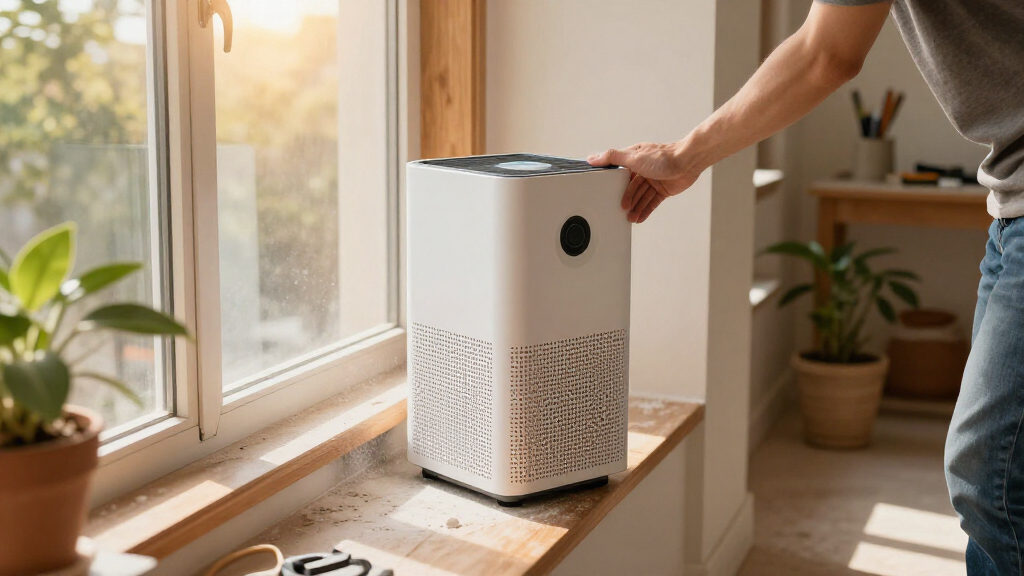
How We Picked
I ranked these products by how well their stated design matches drywall dust control, not by room coverage claims alone. For active sanding or renovation, I gave more weight to listed airflow, staged filtration, and a form factor intended for jobsite or workshop use. That put the VEVOR, ALORAIR, and CADPXS 550 CFM scrubbers ahead of household purifiers: their stated 550 CFM output and three-stage filtration are a closer match to the task, though the provided product details do not establish identical filter specifications across brands.
For the remaining picks, I weighed the listed room coverage, filtration description, controls, and likely fit for occupied spaces or cleanup after work. The WEN 3410 earns a distinct place for 400 CFM air filtration, while large-room household models rank below dedicated scrubbers for active dust capture because their product descriptions focus on general home air cleaning. Compact or simpler purifiers rank lower for renovation zones but can be sensible in bedrooms or smaller rooms. I also considered the practical cost of filter replacement and continuous operation as questions buyers should verify, since the supplied product details do not give consistent filter-life, noise, or operating-cost data for every model.
Factors to Consider When Choosing Air Purifier For Drywall Dust
Choosing an air purifier for drywall dust starts with matching the machine to the work: a dusty renovation zone has different demands from a bedroom where residual particles linger after cleanup. I’d use these broader checks to avoid buying by a large coverage number or a familiar “HEPA” label alone.
Match Airflow to the Work Zone
Airflow determines how quickly a unit can move room air through its filter, but a high CFM number does not by itself prove dust will be captured at every point in the room. For active sanding, favor a machine designed for continuous air cleaning and place it so air moves through the work area rather than straight back into the same corner. A scrubber’s duct connections, if present on a particular model, can also matter when you need to position the intake or exhaust strategically; check the exact product configuration. For a small room after work, a household purifier may be easier to live with than a large jobsite unit. Avoid comparing “square feet per hour” directly with room-area figures unless the manufacturer explains the test conditions. I’d treat coverage as a starting point and look for airflow details that match the space and task.
Check What the Filter Stages Actually Do
Drywall dust is fine, so the filter type and the full filtration path matter more than a generic claim that a product handles dust. A pre-filter can catch larger debris and help protect downstream filters, while a fine-particle filter is intended to capture smaller airborne material; additional stages may target other contaminants. Do not assume that “three-stage” means the same materials or performance across different brands. Before buying, check the exact replacement filter part, the manufacturer’s description of particle capture, and whether filters are sold separately. If a product page does not state a filtration standard or particle-size performance, treat that as unknown rather than filling in the gap. For renovation work, I’d favor clear filtration details over a longer list of general household uses.
Choose Between Jobsite and Household Designs
A jobsite scrubber usually prioritizes airflow, rugged placement, and sustained work, while a household purifier is more likely to emphasize room coverage, controls, and day-to-day comfort. Neither category is automatically right for every project. If workers are sanding for hours, the dedicated scrubbers in this roundup are the more task-focused starting point; for a bedroom that needs air cleaning after construction, a household model may fit the space better. Consider where the unit will sit, whether it can be moved easily, and whether its operating noise will interfere with work or sleep. Don’t rely on a home purifier as a substitute for controlling dust at the source. Use suitable work practices and containment alongside filtration.
Plan for Filter Loading and Replacement
Drywall dust can load filters quickly, especially during active cutting, sanding, or demolition, so maintenance is part of the buying decision rather than an afterthought. Check how the product indicates a dirty filter, whether its pre-filter can be cleaned, and which replacement components need regular changes. A model with accessible filters may be easier to maintain between work sessions than one that requires more involved disassembly. Keep spare filters available if the project schedule cannot pause for a replacement. Follow the manufacturer’s instructions for cleaning and disposal; shaking a dusty filter indoors can put particles back into the air. If the listing does not provide a clear filter-maintenance schedule, contact the manufacturer before relying on the unit for sustained renovation work.
Contain Dust at the Source
An air purifier works on airborne particles that reach its intake; it does not stop dust from escaping a work area or settling on surfaces. Seal doorways, protect vents, and use appropriate dust-control methods on tools where possible before relying on room filtration. Put the purifier near the dusty zone without blocking its intake or exhaust, and avoid placing it where people will walk through the airflow or disturb settled debris. After sanding, keep filtration running while dust settles and cleanup takes place, following the product’s operating guidance. A larger machine cannot make up for open doorways, poor placement, or a lack of containment. This is why even a strong scrubber should be treated as one part of a dust-control plan.
Account for Noise, Power, and Room Use
High airflow can bring more operating noise and a larger footprint, which may matter if a room remains occupied during renovations. A compact household unit may be easier to run in a bedroom overnight, while a jobsite scrubber may be a better fit for daytime work in a contained area. Look for speed settings, timers, or automatic modes only if they support how you plan to use the machine; convenience features do not replace adequate filtration or airflow. Check the power requirements and the manufacturer’s guidance for continuous operation, especially if the purifier will run for long work shifts. Also account for where exhaust air will travel and whether the unit can sit safely without being tipped or obstructed. Choose the strongest practical match for the task, not simply the largest number on the product page.
Frequently Asked Questions
Should I use a 550 CFM air scrubber or a household purifier while sanding drywall?
For active sanding, I’d start with a dedicated scrubber such as the VEVOR, ALORAIR, or CADPXS because each is listed at 550 CFM with three-stage filtration. That makes them more closely aligned with sustained renovation work than household purifiers whose descriptions emphasize general room cleaning. Still, the listed CFM does not guarantee effective capture throughout a room, and filtration details should be checked for the exact model. Use containment and dust-control methods at the tool as well. A household purifier is more likely to suit cleanup after the work or regular use in an occupied room.
Can a room-coverage rating tell me whether a purifier will handle drywall dust?
Not by itself. Coverage figures may be based on different assumptions, and some listings describe room area while others describe air processed over time. For drywall dust, also look for airflow, stated filtration stages, filter details, and whether the design is intended for sustained work. A large coverage claim on a household unit does not make it equivalent to a high-airflow scrubber. If the manufacturer does not explain its testing basis, compare models using the specifications they clearly share rather than treating coverage as a direct performance ranking.
Is a HEPA label enough to choose a purifier for fine drywall dust?
A HEPA claim can be useful, but I would not stop there. Check whether the manufacturer identifies the filter type or filtration performance, how air reaches the filter, and whether the unit has a pre-filter that can catch larger debris. Also confirm that suitable replacement filters are available and that the product can run in the conditions you expect. Some listings use HEPA terminology without giving the same level of technical detail, so the label alone may not support a fair comparison. For active renovation, pair the filter information with airflow and source-control plans.
Can I run a bedroom air purifier during renovation instead of buying an air scrubber?
You can use a household purifier to reduce airborne particles in a room, but I would not treat it as a direct replacement for a jobsite scrubber during heavy sanding or demolition. Household models in this roundup focus on room coverage and home features, while the 550 CFM scrubbers are more directly described for filtration work. A bedroom unit may make sense after construction or for lighter residual dust, provided its filter and capacity suit the space. Keep the work area contained and follow dust-control practices regardless of the purifier. Avoid exposing a compact unit to heavy debris that may load its filters quickly.
How often will I need to replace filters when cleaning up drywall dust?
There is no single interval that applies to every purifier or project. Filter life depends on how much dust is generated, how long the unit runs, the pre-filter design, and the manufacturer’s maintenance instructions. Heavy renovation can load filters faster than ordinary home use, so check the filter indicator and inspect or clean components only as the manual permits. Confirm the correct replacement filter is available before starting work, and keep a spare if uninterrupted operation matters. Do not continue running a unit with a clogged or damaged filter in the hope that it will maintain its stated airflow.
Conclusion
For active drywall work, my best overall recommendation is the VEVOR 550 CFM Air Scrubber: its stated airflow and three-stage filtration make it a strong task-focused match. For a jobsite buyer comparing similar configurations, the ALORAIR Clean Shield HEPA 550 and CADPXS Shield-550 are the closest alternatives; verify their filter details, replacement parts, and fit for your work zone before choosing. The WEN 3410 is my best alternative for buyers who want a dedicated air-filtration system with 400 CFM listed airflow, rather than a general room purifier. For a beginner handling a smaller room or post-work cleanup, I’d start with the Levoit Core 300-P and keep expectations suited to its compact role. Buyers prioritizing broad household use can compare the DREO 539 and larger-room options from FreAire, MOOKA, KNKA, and ECOSELF, while the MOOKA B-D02L is a more room-specific choice. My best-value pick is the VEVOR within the renovation-focused group based on its stated 550 CFM and three-stage design; my premium recommendation is the ALORAIR as another dedicated scrubber option, though I’d compare included accessories and ongoing filter costs before deciding. Whichever you choose, use source control and containment alongside filtration.
Halloween Picks
halloween
As an affiliate, we earn on qualifying purchases.