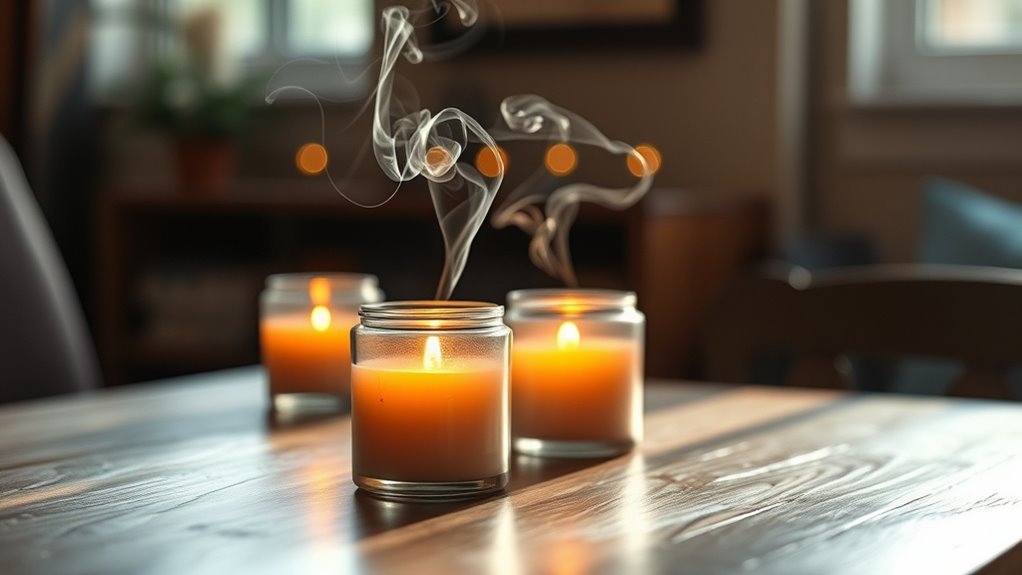

When I burn scented candles or incense, I notice they add a lovely aroma and cozy vibe, but I also realize they can release tiny particles and chemicals into the air. Over time, these can add to indoor air pollution and potentially affect our respiratory health, especially for sensitive folks. To keep air clean, I use natural options and make certain good ventilation—if you want to learn more about balancing ambiance with air quality, keep going.
Key Takeaways
- Burning scented candles and incense releases particles and chemicals that can pollute indoor air over time.
- Particulate matter from combustion can cause respiratory issues, especially in sensitive individuals.
- Proper ventilation and choosing cleaner-burning products can mitigate indoor air pollution.
- Long-term use may exacerbate conditions like asthma or bronchitis due to accumulated pollutants.
- Alternatives like essential oil diffusers offer aromatic benefits without combustion-related air quality risks.

Scented candles and incense have become popular ways to create a calming and inviting atmosphere in any space. I love how they can instantly transform a room into a cozy retreat, filling the air with pleasant aromas. But as much as I enjoy the soothing scents, I’ve also become aware of their impact on air quality and respiratory health. Burning candles and incense releases tiny particles and chemicals into the air, contributing to air pollution inside our homes. These particles can linger in the air, especially if ventilation isn’t great, and may pose health risks over time.
When I burn scented candles or incense regularly, I notice that the air sometimes feels heavier or more congested afterward. That’s because combustion releases particulate matter—tiny bits of soot and unburned compounds—that can worsen indoor air pollution. These particles are small enough to be inhaled deeply into the lungs, which concerns me about respiratory health. Long-term exposure to indoor air pollution from candles and incense can potentially lead to respiratory issues, such as asthma or bronchitis, especially for those with pre-existing conditions or sensitivities.
I’ve started paying more attention to how often I burn these products and how they affect my breathing. It’s not just about the scent; it’s also about the quality of the air I breathe. Sometimes, I notice a lingering smoky smell even after blowing out a candle or extinguishing incense, which suggests particles are settling into the air or on surfaces. This can be problematic if I or someone in my household has allergies or respiratory issues. It’s clear that while they’re beautiful and fragrant, scented candles and incense can subtly contribute to indoor air pollution, which impacts respiratory health over time.
To counteract this, I try to choose cleaner options—like candles made from soy or beeswax with natural essential oils—since they tend to produce fewer pollutants. I also ensure good ventilation whenever I burn them, opening windows or turning on fans to help circulate and clear the air. Sometimes, I opt for diffusers with essential oils instead, which don’t produce combustion byproducts. It’s a simple shift that helps me enjoy the calming atmosphere without compromising air quality or my respiratory health. Additionally, selecting clean-burning candles can significantly reduce the emission of pollutants and improve air safety. It’s about moderation and awareness—enjoying the ambiance without letting indoor air pollution take a toll on our lungs.
Frequently Asked Questions
Do Natural Scents Pose Fewer Health Risks Than Synthetic Fragrances?
Natural scents generally pose fewer health risks than synthetic fragrances, in my experience. Natural scent benefits include fewer chemical irritants and allergens, making them gentler for sensitive individuals. Synthetic fragrance risks involve exposure to artificial chemicals that can trigger allergies, headaches, or respiratory issues. I prefer choosing products with natural scents because they usually create a healthier environment and reduce potential health concerns linked to synthetic fragrances.
How Do Candle Wick Materials Affect Indoor Air Quality?
Imagine a gentle flame flickering, casting warm shadows in your space. The wick material, whether cotton or wood, influences the combustion byproducts released into the air. Cotton wicks tend to produce fewer soot particles, improving indoor air quality, while some wood wicks may emit more pollutants. Choosing the right wick material helps keep your environment cleaner and healthier, allowing your cozy moments to remain peaceful and safe.
Can Incense Use Be Linked to Respiratory Illnesses?
I believe incense use can be linked to respiratory illnesses, especially with prolonged exposure. The health implications are significant because high exposure levels to incense smoke can irritate your lungs and worsen asthma or other respiratory conditions. I recommend keeping exposure levels low by ventilating your space well and limiting incense use. Being mindful of how often and how long you burn incense helps protect your respiratory health.
Are There Safer Alternatives to Traditional Scented Candles and Incense?
Think of safer alternatives as gentle rain clearing the air. I prefer using alternative air purifiers and essential oil diffusers, which emit pleasant scents without harmful chemicals. Unlike traditional candles or incense, these options don’t produce smoke or toxins, making the air healthier. They create a calming atmosphere naturally, allowing me to enjoy aroma without risking respiratory health. Give them a try for a cleaner, safer ambiance.
How Long Does Incense Smoke Linger in Indoor Environments?
Incense smoke typically lingers in indoor environments for about 1 to 2 hours, depending on indoor air circulation and smoke dispersion dynamics. I’ve noticed that good ventilation, like opening windows or using fans, helps clear the smoke faster. Poor air circulation traps the smoke longer, so if you want to reduce lingering odors and particles, improving ventilation is key. Keep in mind, lingering smoke can impact air quality and health.
Conclusion
Like Icarus soaring too close to the sun, I’ve learned that while scented candles and incense can elevate our space, they also carry risks. When we indulge, we must remember the delicate balance—just as Daedalus warned against overreach. Let’s enjoy their warm glow and soothing scents mindfully, ensuring we don’t fly too close to the flame. After all, true comfort comes from harmony, not excess, in our quest for a fragrant sanctuary.