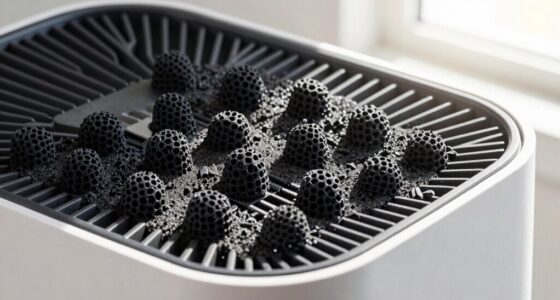

Humidity impacts how your room smells because moisture levels influence odor molecule behavior and microbial growth. When your space is humid, odors cling to surfaces longer and mold or bacteria thrive, creating musty or unpleasant scents. Low humidity, however, helps odors dissipate faster but can leave behind stale smells. Managing humidity and air circulation keeps your room smelling fresh and clean. If you keep exploring, you’ll discover more ways to control those tricky odors effectively.

Get oils, diffusers and self-care delivered free with Prime
- Fast, free delivery on millions of items
- Prime Video, Amazon Music and more included
- Member-only deals all year
Key Takeaways
- High humidity allows odor molecules to cling to surfaces, making smells stronger and longer-lasting.
- Moist air promotes microbial growth, such as mold and bacteria, which produce musty or foul odors.
- Low humidity helps odors dissipate quickly, reducing lingering smells in the environment.
- Proper humidity levels prevent mold and bacterial proliferation that cause unpleasant odors.
- Good air circulation and moisture control disperse and diminish odors, maintaining a fresher room scent.

Humidity levels play a significant role in shaping the smell of a room, influencing how odors develop and linger. When the air is too humid, it creates an environment where smells tend to become stronger and more persistent. Your sense of smell can be enhanced or dulled depending on the moisture content in the air, which directly impacts how odors interact with surfaces and your nasal receptors. High humidity causes molecules from smells to cling to fabrics, walls, and furniture longer, making odors more noticeable and difficult to eliminate. Conversely, low humidity often leads to a dry atmosphere where smells dissipate quickly, sometimes leaving a stale or dusty scent behind.
Maintaining proper humidity levels is crucial for controlling odors. When the air is excessively moist, it fosters the growth of mold and bacteria, which are common sources of unpleasant smells. Mold prevention becomes a key factor in keeping your room smelling fresh. If mold spores settle on damp surfaces or in hidden corners, they produce a musty odor that can quickly dominate a space. To prevent this, you should focus on air circulation—regularly moving air through your room with fans or ventilation systems. Good airflow helps reduce moisture accumulation, making it harder for mold to take hold and for odors to develop from microbial growth. Proper air circulation also helps distribute dehumidified air evenly throughout the space, further aiding in odor control.
By ensuring proper air circulation, you not only help control humidity but also support the overall freshness of your room’s scent. When fresh air flows in and stale air is expelled, moisture levels tend to stabilize, preventing the damp conditions that promote mold and bad smells. Using dehumidifiers or air purifiers can further assist in maintaining an ideal humidity range, typically between 30-50%. These devices help keep humidity in check, reducing the chances of mold formation and the associated musty odors. Additionally, humidity control plays a role in preventing the buildup of airborne mold spores and bacteria that contribute to bad smells. Good ventilation is also essential, as it helps remove excess moisture and airborne contaminants, promoting a cleaner environment. A properly ventilated environment can significantly reduce the likelihood of microbial growth and its accompanying odors. Proper air quality management is essential for a fresh-smelling space, especially in areas prone to moisture issues.
In addition, good air circulation aids in dispersing odors quickly, so unpleasant smells don’t settle into soft furnishings or behind walls. Regularly opening windows or using exhaust fans during activities like cooking or cleaning helps keep the air fresh and prevents lingering odors from building up. When you prioritize air circulation and mold prevention, you’re effectively managing the humidity levels in your room, which directly impacts how your space smells. This proactive approach ensures your environment remains pleasant, clean, and free of those stubborn, lingering odors that often come with poor humidity control.
best dehumidifier for odor control
As an affiliate, we earn on qualifying purchases.
As an affiliate, we earn on qualifying purchases.
Frequently Asked Questions
How Quickly Can Humidity Changes Affect Room Smell?
Humidity changes can affect your room smell within minutes, especially with poor air circulation. When humidity rises, moisture helps scent molecules absorb into surfaces or air, quickly altering the aroma. Conversely, lowering humidity can reduce scent intensity. You’ll notice the change faster if you keep air circulation low, allowing scents to linger or intensify. Adjusting humidity levels can, as a result, quickly influence how your room smells.
Does Humidity Impact All Types of Odors Equally?
Ever wondered if humidity impacts all odors equally? It doesn’t. Higher humidity enhances odor absorption and scent diffusion, making some smells more intense or lingering longer, especially organic odors like cooking or mold. However, synthetic or chemical scents might not change as much. So, humidity doesn’t affect all types of odors the same way; it depends on their composition and how they interact with moisture in the air.
Can Controlling Humidity Prevent Musty Odors?
Controlling humidity can definitely prevent musty odors. By improving air circulation, you help reduce moisture buildup that causes these smells. Using a dehumidifier enhances this effect by maintaining ideal humidity levels, making it harder for mold and mildew to thrive. Regularly managing humidity with these methods keeps your space fresh, reduces musty odors, and guarantees a healthier environment. Consistent air circulation and dehumidifier effectiveness are key.
Are There Specific Humidity Levels That Eliminate Bad Smells?
Back in the day, folks believed that a perfect humidor kept smells at bay, and today, you should aim for humidity levels around 40-50% to eliminate bad odors. Too much fluctuation can cause scent absorption, worsening odors, while steady humidity prevents mustiness. Maintaining consistent humidity helps control smells, so invest in a good hygrometer and humidifier to keep levels stable and your room smelling fresh.
How Does Humidity Influence Mold-Related Odors?
Humidity influences mold-related odors by promoting mold growth, which produces musty smells. When humidity levels are high, mold spores thrive and absorb odors from their environment, intensifying the smell. You might notice a stronger, lingering mustiness in damp spaces. To reduce these odors, keep humidity levels controlled around 40-50%, which limits mold growth and minimizes odor absorption, helping your indoor air stay fresher.
Conclusion
In summary, understanding how humidity affects room smells can help you create a more inviting space. Did you know that humidity levels between 40-60% are ideal for maintaining fresh scents and preventing mustiness? When humidity gets too high or low, odors can intensify or fade unexpectedly. By managing humidity, you’re not just controlling comfort—you’re also shaping how your room smells every day. So, keep an eye on the levels and enjoy a more pleasant atmosphere.
Halloween Picks
halloween
As an affiliate, we earn on qualifying purchases.