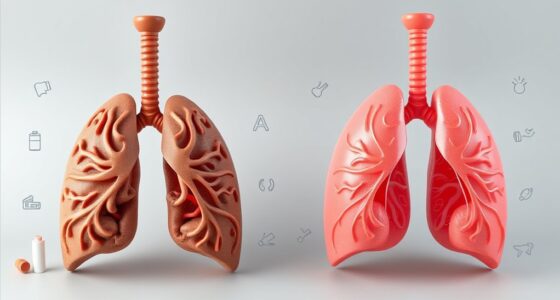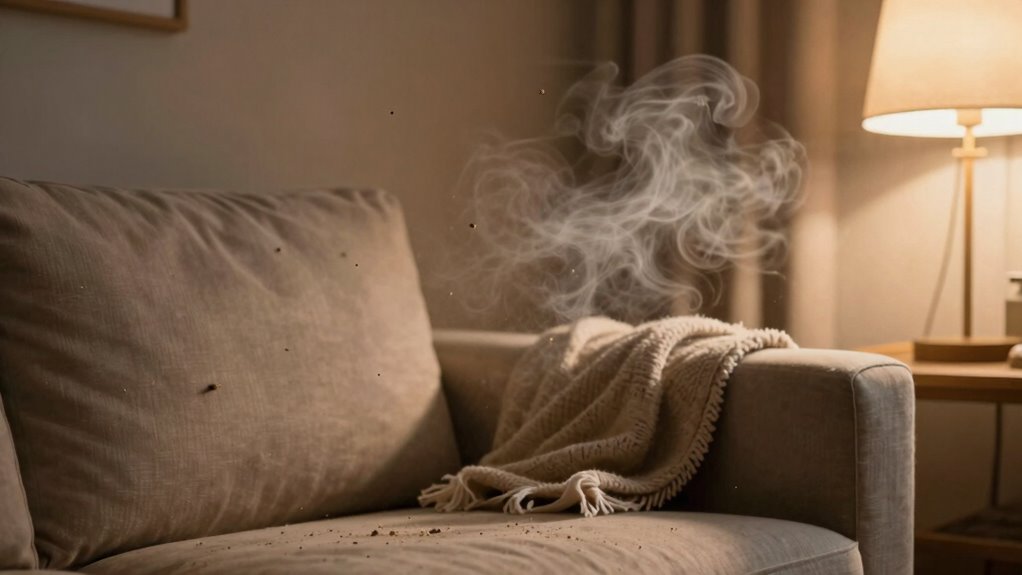
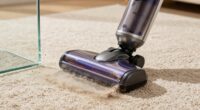
You might be breathing in invisible pollutants like dust, pet dander, pollen, mold spores, and chemicals from household items such as cleaning supplies, air fresheners, and paint. Activities like cooking, smoking, or burning candles can also release pollutants into your indoor air. Without proper ventilation and filters, these particles and chemicals can linger, impacting your health over time. Keep exploring to discover simple ways to improve your indoor air quality safely.
Key Takeaways
- Invisible airborne toxins like dust, pet dander, pollen, and mold spores circulate indoors without detection.
- Household items such as cleaning supplies, paints, and air fresheners emit VOCs that cause health issues.
- Activities like cooking, smoking, and candles release pollutants that can linger without proper ventilation.
- Poor ventilation and outdated filters allow pollutants to accumulate, impacting indoor air quality.
- Chemical emissions and airborne particles from everyday activities and products can harm long-term health.
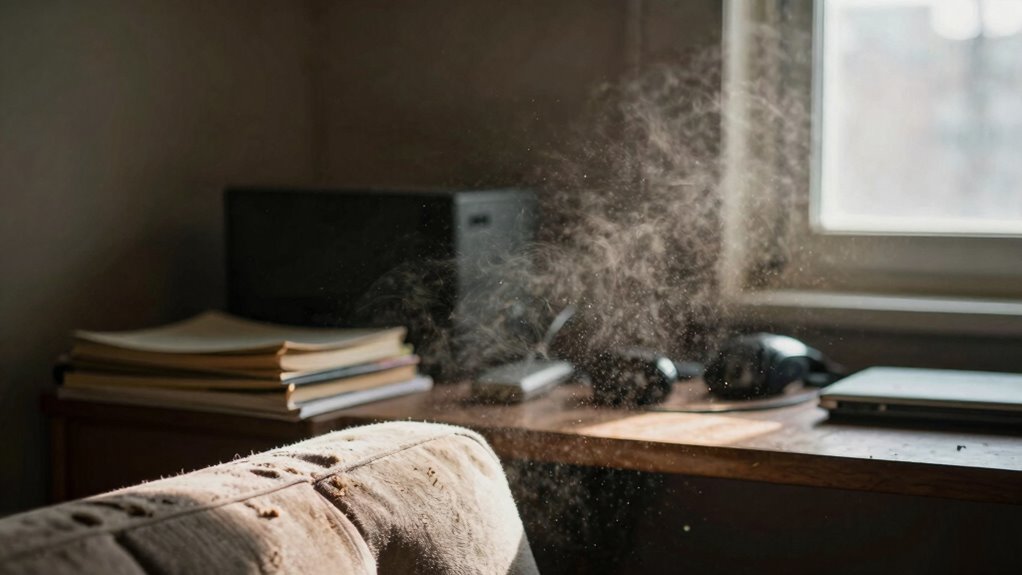
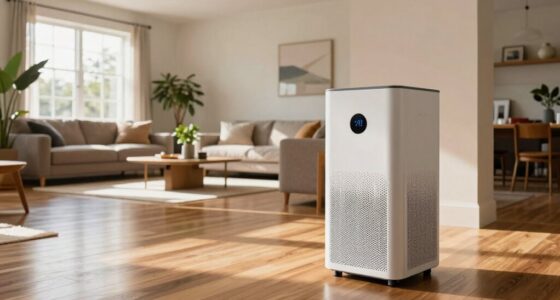
Many people underestimate the air they breathe inside their homes, unaware that hidden pollutants can affect their health daily. You might think that closing windows or running a fan keeps the air fresh, but airborne toxins can still linger, often invisible to the naked eye. One of the key ways to combat this is through effective air filtration. Quality air filters can trap dust, pet dander, pollen, and even microscopic mold spores, considerably improving your indoor air quality. Without proper filtration, these particles circulate freely, and over time, they can trigger allergies, asthma, or other respiratory issues. Investing in a good air filtration system is essential because it actively removes pollutants from the air you breathe, creating a cleaner, healthier environment.
Effective air filtration removes dust, pollen, and mold spores, improving indoor air quality and supporting better health.
Chemical exposure is another notable concern that many overlook. Everyday household items—cleaning supplies, air fresheners, paints, and even furniture—release volatile organic compounds (VOCs). These chemicals can accumulate in your indoor air, leading to irritation of your eyes, nose, and throat, and in some cases, long-term health problems. When you’re unaware of chemical exposure, you might dismiss symptoms like headaches or fatigue as normal, but they could be signs of poor indoor air quality. Recognizing that these chemical emissions are part of your daily environment helps you take steps to reduce exposure. Understanding the sources of indoor pollutants can empower you to make more informed choices about household product safety.
You might also be surprised how often indoor air quality is compromised by everyday activities. Cooking, smoking, or even burning candles can introduce pollutants that linger in your home. Many people don’t realize the importance of ventilation or air purification systems that can remove these particles effectively. Proper air filtration, combined with good ventilation practices, can minimize your exposure to both particulate matter and chemical pollutants. Regularly changing filters and using air purifiers with activated carbon can help absorb chemical emissions, providing cleaner air for you and your family. Additionally, understanding the impact of indoor pollutants can motivate you to take proactive measures. Using air quality monitors can help you keep track of pollution levels and ensure your home’s air remains safe. Incorporating proper ventilation techniques can further disperse indoor contaminants and improve overall air quality.
Taking steps to improve indoor air quality also involves understanding the role of ventilation, which is often overlooked but crucial for dispersing pollutants and replenishing fresh air. Ultimately, your health depends on the choices you make about your indoor environment. By understanding the role of air filtration in capturing airborne pollutants and being aware of chemical exposure sources, you can take proactive steps to improve your air quality. It’s not just about comfort but about protecting your long-term well-being. Small adjustments, like upgrading filters or choosing safer household products, can lead to substantial health benefits. Breathing clean air isn’t a luxury; it’s a necessity, and recognizing the pollutants hidden within your home is the first step toward a healthier living space.

Purivortex Air Purifiers for Bedroom, Covers Up to 880 Sq Ft, PX500 Black
- Covers Large Areas: Covers up to 880 sq ft
- Fast Air Purification: Purifies a 215 sq ft room in 15 mins
- High-Efficiency Filtration: Filters 99.97% of pollutants
As an affiliate, we earn on qualifying purchases.
As an affiliate, we earn on qualifying purchases.
Frequently Asked Questions
How Do Indoor Pollutants Affect Long-Term Health?
Indoor pollutants from various toxin sources can markedly impact your long-term health. Continuous exposure to these pollutants leads to cumulative health effects, such as respiratory issues, allergies, or even chronic diseases. Over time, your body struggles to eliminate these toxins, increasing health risks. Reducing indoor toxin sources through proper ventilation and cleaning can help protect your health, preventing the buildup that causes long-term damage.
Can Pets Contribute to Indoor Air Pollution?
Coincidentally, your pets can contribute to indoor air pollution through pet dander and animal allergens. When they shed fur or skin cells, those tiny particles become airborne, triggering allergies or asthma. Even if you keep your home tidy, these allergens linger, affecting your indoor air quality. You might not notice it, but your furry friends are subtly influencing the air you breathe, especially if you’re sensitive or allergic.
Are Air Purifiers Effective Against All Indoor Pollutants?
Air purifiers are effective against many indoor pollutants, but they aren’t a cure-all. Their efficiency depends on proper air purifier maintenance and regular filter replacement frequency. You should check and replace filters as recommended by the manufacturer to guarantee peak performance. Keep in mind that some pollutants, like volatile organic compounds, may require specialized filters or additional ventilation. Using an air purifier alongside other cleaning methods maximizes indoor air quality.
What Are the Signs of Indoor Air Quality Problems?
You’ll notice indoor air quality problems if you experience persistent allergies, headaches, or unusual odors. Dust buildup, mold, or condensation can also signal issues. Don’t fall for air quality myths that poor ventilation isn’t a concern; proper airflow is essential. Use ventilation tips like opening windows regularly and running exhaust fans to improve air quality. If symptoms persist, consider testing your indoor air to identify unseen pollutants.
How Often Should Indoor Air Be Tested for Pollutants?
Think of testing your indoor air like checking your health—regularly and proactively. You should test for pollutants at least once a year, especially if you notice signs of poor air quality or have sources like mold, smoke, or chemicals. Use effective ventilation strategies to reduce pollutants, and consider more frequent testing during renovations or if someone in your home has allergies or respiratory issues. Staying vigilant keeps your air safe and breathable.
Conclusion
You might not notice it, but the air inside your home could be more harmful than you think. Some believe indoor pollutants are less dangerous than outdoor ones, but studies show they can cause serious health issues over time. It’s worth questioning whether simply airing out your space is enough. Stay aware, test your indoor air quality, and take steps to reduce pollutants—your lungs will thank you for it. Breathe easy, knowing you’re actively protecting your health.