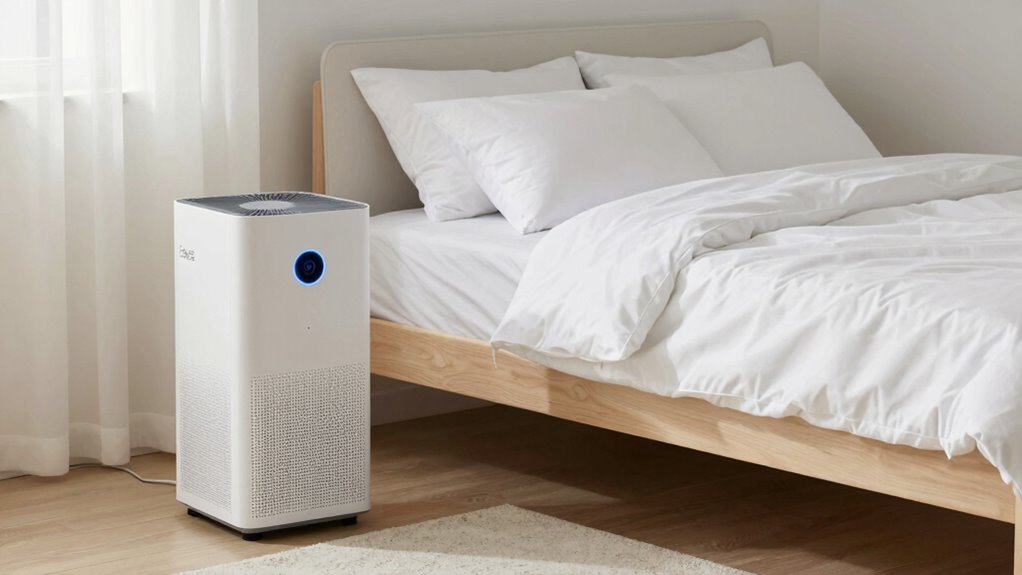
To allergy-proof your bedroom, you should use HEPA air purifiers to trap airborne allergens and make sure they’re appropriately sized for the room. Opt for hypoallergenic bedding covers and wash your sheets weekly in hot water to kill dust mites. Keep dust at bay by vacuuming regularly with filters, reducing clutter, and possibly replacing carpets with hard floors. Maintaining good ventilation also helps. Stay tuned to learn more simple yet effective strategies to create a healthier sleep space.
Key Takeaways
- Use HEPA-filter air purifiers and maintain proper ventilation to reduce airborne allergens.
- Cover pillows, mattresses, and comforters with hypoallergenic, dust mite-proof covers.
- Wash bedding weekly in hot water (at least 130°F) to eliminate dust mites and allergens.
- Replace carpets with hard flooring and vacuum regularly with a HEPA vacuum cleaner.
- Minimize clutter and keep the bedroom clean to prevent dust and allergen accumulation.
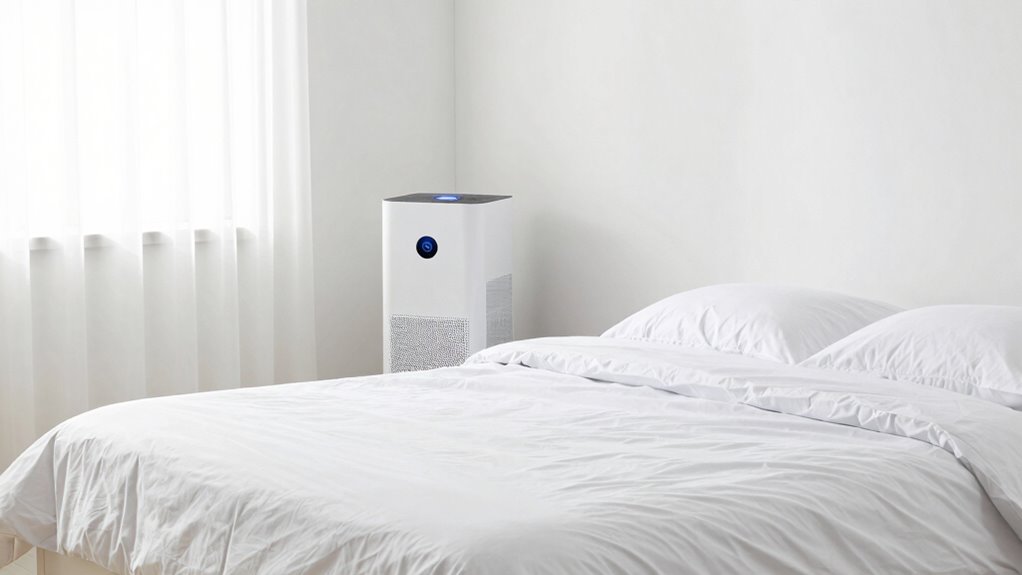
Ever wondered how to make your bedroom a safe haven for allergy sufferers? One of the most effective ways is by focusing on air purification and choosing the right bedding materials. These elements play a vital role in reducing allergens like dust mites, pet dander, and mold spores that can trigger allergy symptoms. When you invest in a good air purification system, you’re actively removing airborne particles that can irritate your respiratory system. Look for HEPA filters, which are designed to trap tiny allergens, and ensure your purifier is appropriately sized for your room. Running it regularly, especially during the day and before bedtime, helps maintain cleaner air and reduces the overall allergen load in your space.
Bedding materials are equally important. Opt for hypoallergenic covers for your pillows, mattresses, and comforters. These covers act as a barrier, preventing dust mites from burrowing into your bedding, which is a common source of allergens. When selecting sheets and pillowcases, choose those made from natural, breathable fabrics like tightly woven cotton or bamboo. These materials are less likely to trap moisture and dust, making them less hospitable for allergens. Avoid feather or down-filled bedding, as they tend to harbor dust mites and can worsen allergy symptoms. Regularly washing your bedding in hot water—at least 130°F—further eliminates dust mites and other allergens, especially if you do it weekly.
In addition to choosing the right bedding materials, consider air purifiers equipped with activated carbon filters to reduce household odors and chemical irritants, which can also aggravate allergies. Keep your bedroom well-ventilated by opening windows when weather permits, and avoid clutter that can trap dust. Regularly vacuum your carpets and upholstery with a HEPA-equipped vacuum cleaner, and consider replacing carpets with hard flooring if allergies are severe. Maintaining a consistent cleaning routine minimizes dust accumulation and creates a cleaner environment overall.

LEVOIT Air Purifier for Home Allergies and Pets Hair Smokers in Bedroom, H13 True HEPA Filter, 24db Filtration System Cleaner Odor Eliminators, Remove 99.97% Dust Smoke Mold Pollen, Core 300, White
- Certified by AHAM: Ensures reliable air quality performance
- Powerful Cleaning: 56W motor with 143 CFM CADR
- Effective for Large Rooms: Covers up to 1073 ft²
As an affiliate, we earn on qualifying purchases.
As an affiliate, we earn on qualifying purchases.
Frequently Asked Questions
How Often Should I Replace My Air Filters?
You should replace your air filter every 1 to 3 months, depending on its lifespan and your household needs. Check the filter regularly, especially if you notice dust buildup or decreased airflow. Following a consistent filter replacement schedule helps maintain good air quality and reduces allergens. If you have pets or allergies, consider replacing filters more frequently to keep your bedroom environment as clean and allergen-free as possible.
Are Natural Bedding Materials Better for Allergies?
Natural bedding materials, especially those made from natural fibers, are often better for allergies. Studies show that hypoallergenic bedding reduces allergic reactions by 30% compared to synthetic options. Choosing natural fibers like cotton or silk can help minimize dust mite accumulation and irritants. You’ll breathe easier and sleep more soundly when you opt for hypoallergenic bedding, making your bedroom a more allergy-friendly sanctuary.
Can Plants Help Reduce Indoor Allergens?
Plants can help reduce indoor allergens by improving air quality through natural filtration. Indoor greenery, like pothos or snake plants, benefits your space by absorbing toxins and increasing humidity, which can soothe allergy symptoms. However, be mindful that some plants may trigger allergies themselves or harbor dust. Incorporate plant benefits wisely, choosing low-pollen options and maintaining them well to create a healthier, allergen-reduced environment.
What’s the Best Way to Clean Hidden Dust Mites?
Don’t let hidden dust mites ruin your sleep—regular mattress cleaning is key. Vacuum your mattress thoroughly with a HEPA filter vacuum, then wash bedding weekly in hot water to eradicate dust mite allergens. Use allergen-proof covers on pillows and mattresses, and consider steam cleaning for deep dust mite eradication. These steps make a noticeable difference, ensuring a cleaner, healthier sleep environment free from sneaky dust mites.
Do Air Purifiers Eliminate All Airborne Allergens?
Air purifiers don’t eliminate all airborne allergens, despite common air purifier myths. While they considerably improve allergen removal efficiency, they can’t capture every tiny particle or allergen. To maximize benefits, choose a HEPA filter model, keep filters clean, and combine air purification with dust control and bedding hygiene. Remember, no device offers 100% allergen removal, so ongoing cleaning and dust management are essential for allergy relief.
Conclusion
By allergy-proofing your bedroom, you create a fortress against allergens, turning your space into a safe harbor. Keep the air clean, your bedding dust-free, and minimize dust collectors to breathe easy and sleep soundly. Think of your bedroom as a garden—tend to it regularly, and it’ll flourish with comfort and freshness. With these simple steps, you’re cultivating a sanctuary where allergies don’t stand a chance, letting you rest peacefully each night.