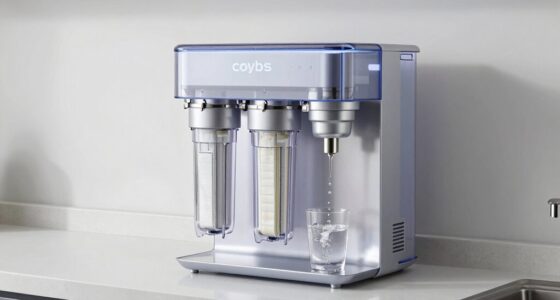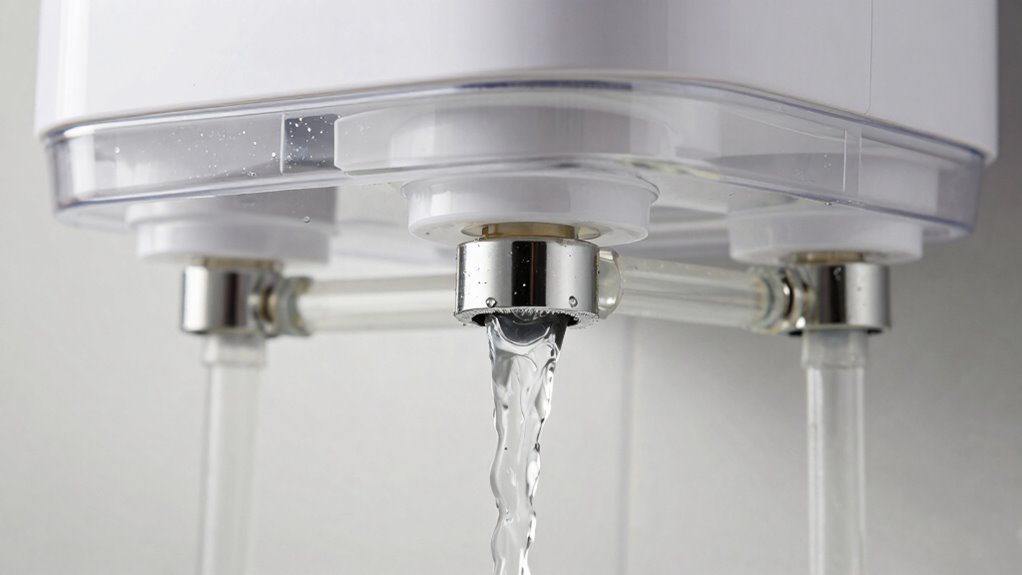

Water softeners remove minerals like calcium and magnesium that cause hard water, which isn’t necessarily dirty but can lead to scale buildup and appliance damage. They work through a process called ion exchange, where resin beads swap minerals for sodium ions, softening the water. Regular regeneration keeps the system working efficiently. If you want to understand why “soft” water isn’t about purity and how this process benefits your plumbing, keep exploring.
Open a free Amazon Business account
Business pricing, bulk buying and tax-exempt orders.
As an affiliate, we earn on qualifying purchases.
Key Takeaways
- Soft water refers to mineral content, specifically calcium and magnesium, not the absence of impurities or contaminants.
- Water softeners remove hardness-causing minerals through ion exchange, not by purifying the water.
- The process replaces calcium and magnesium ions with sodium ions on resin beads, reducing scale buildup.
- “Soft” water improves soap effectiveness and prevents pipe and appliance damage, unrelated to water purity.
- Regular system maintenance and resin regeneration ensure consistent softening, not purification of all impurities.
Hard water is a common problem that can cause buildup in pipes, reduce the effectiveness of soaps, and damage appliances. When water is hard, it contains high levels of dissolved minerals like calcium and magnesium. These minerals don’t just pass through your plumbing unnoticed—they actively interact with your water-using routines. That’s where water softeners come in, and understanding how they work can help you appreciate why “soft” water isn’t necessarily about purity but about mineral content.
Hard water causes buildup, reduces soap effectiveness, and damages appliances—softening water improves household performance by reducing mineral content.
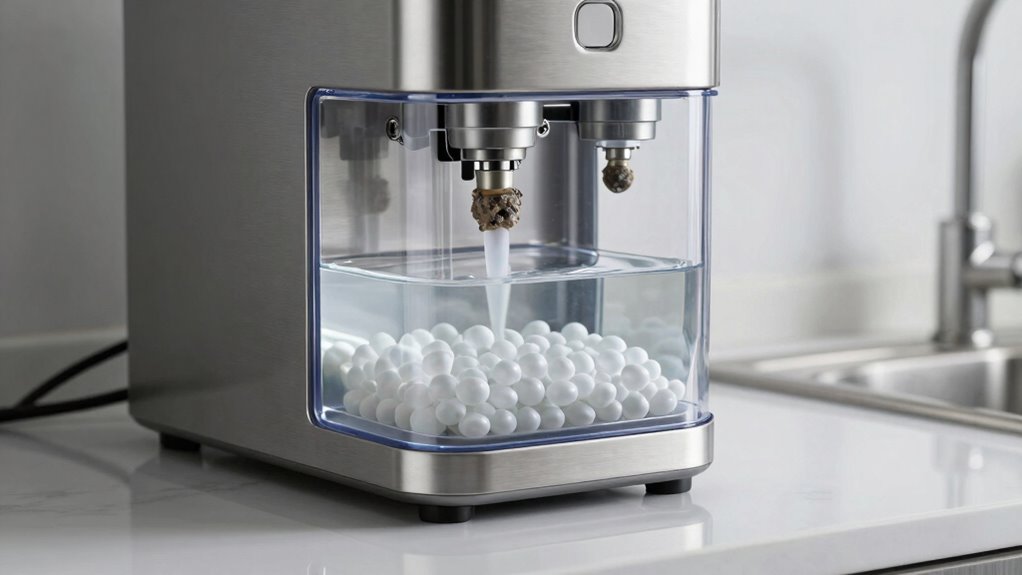
At the heart of most water softeners is a process called mineral exchange. You see, the system uses a resin bed filled with tiny beads that are coated with sodium ions. As hard water flows through the resin tank, calcium and magnesium ions—those responsible for hardness—swap places with the sodium ions on the beads. This exchange effectively removes the minerals from your water, leaving it softer and less likely to cause scale buildup or soap scum. The process is continuous as long as the resin beads have sodium ions available to exchange with incoming mineral ions.
But over time, the resin beads become saturated with calcium and magnesium, which reduces their ability to soften water. That’s when resin regeneration becomes necessary. During regeneration, a brine solution—salty water—is flushed through the resin bed. The high concentration of sodium ions in the brine displaces the accumulated minerals on the beads, effectively cleaning and recharging the resin. This cycle of mineral exchange and resin regeneration is what keeps your water soft and your household appliances running smoothly. Regular maintenance and monitoring of the regeneration cycle can help prevent issues like resin fouling or reduced efficiency over time. Proper understanding of system maintenance can extend the lifespan of your water softener and maintain optimal performance.
Additionally, regular maintenance and understanding the regeneration process can help optimize the system’s lifespan and efficiency. It’s important to realize that water softening isn’t about removing all impurities or making water pure—it’s specifically targeting minerals that cause hardness. This distinction is why soft water isn’t necessarily “cleaner” in the traditional sense but is simply free of the minerals that lead to scale and soap scum. The entire process hinges on the resin’s ability to undergo repeated cycles of mineral exchange and regeneration, which is why maintaining the resin with proper regeneration cycles is essential for your system’s efficiency.
In essence, understanding how mineral exchange works and how resin regeneration restores the softening capacity helps you see that water softeners are finely tuned machines designed not to purify water but to modify its mineral content for better household performance. This knowledge allows you to appreciate the technology behind soft water and how it benefits your plumbing and appliances in the long run.
As an affiliate, we earn on qualifying purchases.
Frequently Asked Questions
Do Water Softeners Remove Beneficial Minerals From Water?
Yes, water softeners do remove beneficial minerals like calcium and magnesium. This mineral removal can affect the water taste, making it less mineral-rich and sometimes flatter. While softeners improve appliance efficiency and reduce scale, you might notice a change in flavor. If mineral content is important to you, consider a system that retains beneficial minerals or supplements your water with mineral drops after softening.
How Often Should I Regenerate My Water Softener?
You should regenerate your water softener when the resin beads reach about 10% capacity, typically every 7 to 14 days. Regeneration frequency depends on your water usage and hardness levels. By doing it regularly, you maintain salt efficiency and guarantee your softener works effectively. Keep an eye on your system’s indicators or consult your manufacturer’s guidelines to optimize regeneration timing, preventing mineral build-up and conserving salt.
Are Water Softeners Environmentally Friendly?
It’s a mixed bag—water softeners can be environmentally friendly if you choose models with eco-conscious features. They reduce soap and energy use, supporting sustainability practices. However, the salt-based systems may have a negative environmental impact due to brine discharge, which can harm ecosystems. You can help tip the scales by opting for salt-free or more efficient systems, making sure your water softening methods align with your eco-friendly values.
Can Water Softeners Cause Skin Dryness or Irritation?
Yes, water softeners can cause skin dryness or irritation if you’re sensitive. The softened water has reduced mineral content, which may affect skin hydration, especially for those with dry or sensitive skin. To prevent irritation, consider using gentle soaps and moisturizers, and rinse thoroughly. If irritation persists, you might want to consult a dermatologist or test alternative water options to guarantee irritation prevention and maintain healthy skin.
What Is the Lifespan of a Typical Water Softener System?
Your water softener system typically lasts around 10 to 15 years, depending on usage and maintenance. Regular salt regeneration keeps the resin beads functioning smoothly, while proper care prolongs the resin lifespan. Keep an eye on mineral buildup and replace the resin when necessary. With attentive upkeep, you’ll enjoy soft water and extend your system’s life, making every drop count in your home’s comfort and efficiency.
Conclusion
Now you know that soft water isn’t about purity but about removing minerals that cause buildup. Think of water softeners as your home’s gentle shield, protecting your pipes and appliances just like a cozy blanket guards you from the cold. By choosing the right system, you’ll enjoy smoother showers, cleaner dishes, and fewer repairs—making your water feel as welcoming and effortless as a gust of fresh air. Soft water truly makes life easier, one drop at a time.
Flea & tick season Picks
flea and tick prevention
As an affiliate, we earn on qualifying purchases.