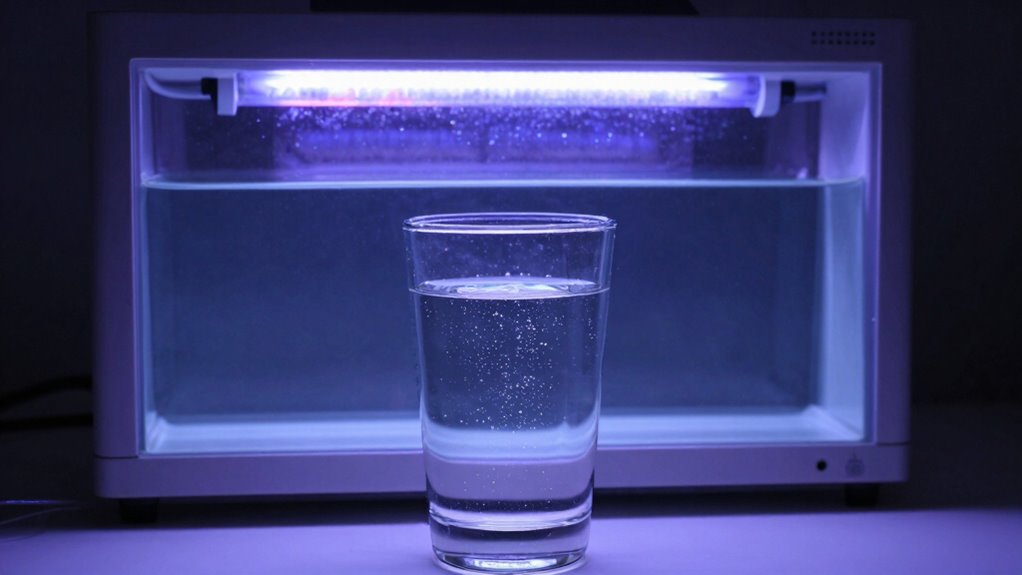

UV water purifiers kill bacteria like E. coli and viruses such as cholera and hepatitis by damaging their DNA, making them unable to reproduce. However, they don’t remove chemical contaminants, heavy metals, or particulates. Suspended particles can shield some microbes, so pre-filtration is often needed. To guarantee safety, regular maintenance and water testing are essential. Stay with us to discover more about maximizing your water treatment and safety.

Get oils, diffusers and self-care delivered free with Prime
- Fast, free delivery on millions of items
- Prime Video, Amazon Music and more included
- Member-only deals all year
Key Takeaways
- UV water purifiers effectively kill bacteria like E. coli and viruses such as cholera and hepatitis.
- They do not remove chemical contaminants, heavy metals, pesticides, or particulates.
- Proper maintenance ensures high disinfection efficiency; neglect reduces their effectiveness.
- They require clear water and pre-filtration to target parasites like Cryptosporidium and Giardia.
- UV purifiers should be used alongside other treatment methods for comprehensive water safety.
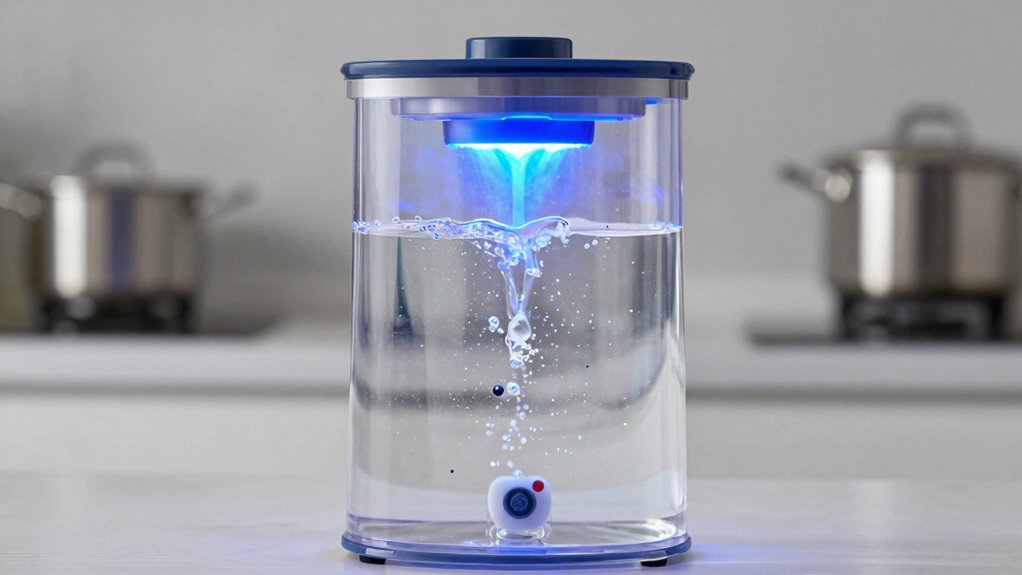
Have you ever wondered if your drinking water is truly safe? It’s a valid concern, especially with so many pollutants and microorganisms lurking in untreated water. UV water purifiers are a popular choice because they offer a chemical-free way to disinfect your water. But understanding what they kill and what they don’t can help you decide if they’re right for you. The effectiveness of these purifiers hinges on several factors, including UV intensity and maintenance practices. UV intensity refers to the strength of the ultraviolet light emitted by the device. If the intensity is too low, it won’t deliver enough energy to destroy microorganisms effectively. That’s why choosing a purifier with the right UV output is essential. Regular maintenance, like cleaning the quartz sleeve and replacing bulbs as recommended, guarantees the UV intensity remains ideal. Neglecting maintenance can cause the UV light to weaken, reducing the purifier’s ability to kill bacteria, viruses, and other pathogens. When properly maintained, UV water purifiers are highly effective against many microorganisms, including E. coli, cholera, and hepatitis viruses. They work by damaging the DNA or RNA of these pathogens, preventing them from reproducing and causing illness. Additionally, the UV intensity must be adequate to ensure thorough disinfection, which underscores the importance of quality equipment and regular checks. Conducting water testing periodically can help verify the effectiveness of your UV purifier and identify any potential issues early. However, it’s important to remember that UV purifiers don’t remove chemical contaminants, heavy metals, or particulates from water. If your water source contains pesticides, lead, or sediment, you’ll need additional treatment methods like filtration or reverse osmosis to make the water truly safe. UV purifiers are also ineffective against certain parasites like Cryptosporidium and Giardia if the water isn’t clear, because suspended particles can shield these organisms from UV light. That’s why pre-filtration is often recommended before UV treatment. You should also be aware that UV systems require a reliable power source; interruptions can leave your water untreated. To maximize safety, it’s essential to follow proper maintenance practices and regularly test your water quality. Many units come with indicators or alarms that notify you when the UV lamp needs replacement or maintenance. Proper UV system maintenance and water testing are critical for ensuring consistent disinfection performance. When you stick to these guidelines, UV water purifiers can be a powerful tool for disinfecting your water. They’re especially useful in combination with other treatment methods for complete water safety. Ultimately, they’re effective against a wide range of microorganisms, but they don’t address chemical contaminants or particulates. So, while UV water purifiers are a significant step toward safer drinking water, understanding their limitations helps you take the right steps to guarantee your water is truly safe for consumption.
UV water purifier with pre-filter
As an affiliate, we earn on qualifying purchases.
As an affiliate, we earn on qualifying purchases.
Frequently Asked Questions
Do UV Purifiers Remove Chemical Contaminants From Water?
UV purifiers don’t remove chemical contaminants from water because they focus on microbial disinfection through UV light. If you want chemical filtration and contaminant removal, you’ll need a system that includes activated carbon or other filtration media. These filters target chemicals, pesticides, and heavy metals, ensuring your water is not only microbiologically safe but also free from potentially harmful chemical pollutants. Combining UV with chemical filtration offers thorough water purification.
How Often Should UV Bulbs Be Replaced?
You should replace your UV bulb every 12 months; the UV bulb lifespan diminishes with use, making the replacement frequency crucial. While it might seem like a small task, neglecting timely replacements can compromise water safety. Think of it as maintaining a trusted shield—if you ignore its wear, it won’t effectively kill germs anymore. Regularly updating your UV bulb ensures your purifier keeps working efficiently, protecting your water and health.
Can UV Water Purifiers Eliminate Heavy Metals?
UV water purifiers can’t eliminate heavy metals because they don’t target chemical contaminants. Their primary function is sterilizing pathogens, but they have filtration limitations when it comes to heavy metal removal. If you’re concerned about heavy metals like lead or mercury, you’ll need a specialized filtration system, such as activated carbon or reverse osmosis. Combining UV with these filters provides thorough water purification, ensuring both pathogen kill and metal removal.
Are UV Purifiers Effective Against Bacteria in Cloudy Water?
UV purifiers are effective against bacteria in cloudy water, but their effectiveness depends on water clarity. Cloudy water can reduce UV light penetration, lowering bacteria removal efficiency. For ideal results, pre-filter the water to remove sediments and cloudiness, then use the UV purifier. This guarantees maximum UV exposure, improving bacteria elimination. Without clear water, the UV system’s bacteria removal efficiency drops, so always address water clarity first.
Do UV Purifiers Require Electricity to Operate?
Think of a UV water purifier as a tiny sun shining inside your unit. It needs electricity to power up and produce that UV light, so it absolutely requires electricity to operate. While it’s effective at killing germs, you should consider its energy consumption and maintenance requirements, such as bulb replacement. Without power, the purifier can’t do its job, so keep your unit plugged in and well-maintained for maximum performance.
Conclusion
Remember, while UV water purifiers are excellent at zapping bacteria and viruses, they don’t remove chemicals or sediments. Don’t put all your eggs in one basket; combine purification methods for the safest water. UV lights can be a strong line of defense, but they’re not a cure-all. Stay vigilant, and as the saying goes, “Better safe than sorry”—so use them wisely alongside other filtration systems for peace of mind.
Fall Picks
fall essentials
As an affiliate, we earn on qualifying purchases.