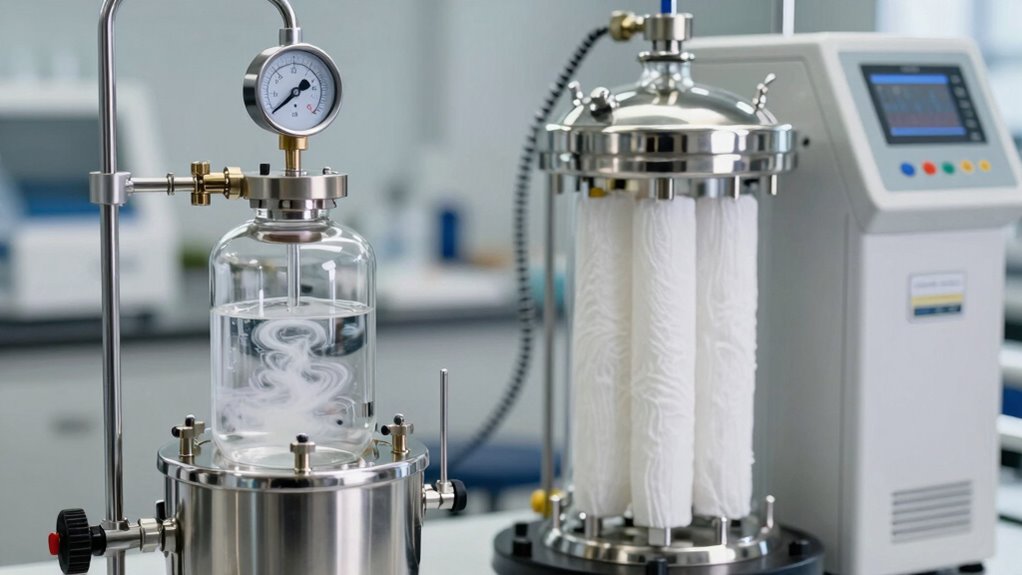

If you choose a distiller, you’ll get very pure water, but it’ll taste flat because minerals are removed, and it generally needs less maintenance but consumes more energy. Reverse osmosis preserves minerals for better flavor and requires less energy, but you’ll need to replace filters and membranes regularly. Your choice depends on whether you prioritize taste and low maintenance or are okay with a longer upkeep for higher purity. Want to know more about how these factors compare?

Get oils, diffusers and self-care delivered free with Prime
- Fast, free delivery on millions of items
- Prime Video, Amazon Music and more included
- Member-only deals all year
Key Takeaways
- Distilled water tastes flat due to mineral removal, while RO water retains minerals, offering a crisper flavor.
- Distillers are simple to maintain but require frequent cleaning; RO systems need regular filter and membrane replacements.
- Distillation involves boiling, consuming more energy; RO uses less energy but depends on a steady power supply.
- Distillers are generally more durable with fewer parts that can fail compared to RO systems.
- Taste preference and maintenance effort are key factors influencing the choice between distilled and RO water systems.
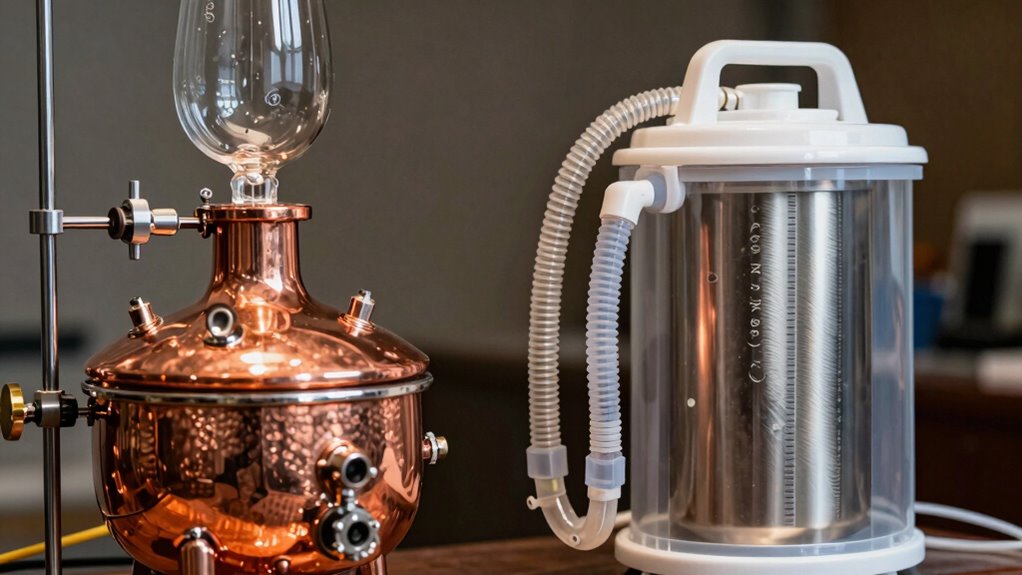
When it comes to purifying water, distillers and reverse osmosis systems are two popular methods, each with its own advantages and limitations. Your choice affects not only water purity but also how much energy you’ll use daily. Distillers work by boiling water, turning it into steam, then collecting and condensing it back into liquid. This process effectively removes most contaminants, including bacteria, viruses, and chemicals, resulting in very high water purity. However, because boiling requires a lot of energy, distillers tend to consume more power than other filtration methods. If you’re concerned about energy bills, that higher consumption might be a drawback, especially if you need purified water frequently. Additionally, because distillation removes minerals along with impurities, the water can taste flat or dull, which some people find less appealing. Mineral content can also influence the health benefits of drinking purified water, making it an important factor to consider.
Reverse osmosis (RO) systems, on the other hand, push water through a semi-permeable membrane under pressure. This process filters out a wide range of contaminants, including dissolved salts, heavy metals, and organic compounds, providing excellent water purity. RO units generally use less energy than distillers because they don’t require boiling; instead, they rely on pressure, which makes them more energy-efficient overall. But keep in mind, they do need a steady power supply to operate the pump, and their energy consumption depends on the system size and water usage. The taste of water from RO systems is often crisper and more natural because the filtration preserves minerals that contribute to flavor. Still, some minerals are stripped away, and you might need to add mineral drops or remineralization filters if you prefer a more balanced taste. Proper maintenance, such as replacing filters and membranes, is crucial for maintaining system efficiency and water quality.
Maintenance is another key consideration. Distillers are relatively simple to maintain but tend to require more frequent cleaning of the boiling chamber to prevent mineral buildup. They are usually more durable and have fewer parts that can fail. Reverse osmosis systems involve replacing filters and membranes periodically, which can add to ongoing costs and maintenance time. The membranes can also become clogged or degrade over time, requiring replacement to keep performance ideal. While both systems produce high-quality water, your decision might hinge on how much energy you’re willing to spend and whether you prioritize taste or ease of maintenance. Additionally, understanding the energy consumption of each system can help you make a more informed choice.
As an affiliate, we earn on qualifying purchases.
Frequently Asked Questions
How Do Distillers and Reverse Osmosis Systems Compare in Environmental Impact?
You’ll find that distillers generally use more energy, as they heat water to produce steam, increasing their environmental footprint. Reverse osmosis systems tend to consume less energy but produce more wastewater during filtration. If you’re concerned about waste production, RO filters generate more reject water, while distillers use energy primarily. Both impact the environment differently, so consider your priorities on energy use and waste when choosing between them.
Can Both Systems Effectively Remove All Types of Contaminants?
Both distillers and reverse osmosis systems are effective at contaminant removal, but their system efficiency varies depending on the specific contaminants. Distillers excel at removing heavy metals, bacteria, and viruses through boiling, while reverse osmosis is better for dissolved solids, chemicals, and organic compounds via membrane filtration. To guarantee thorough purity, you might consider combining both systems, as each complements the other’s strengths in contaminant removal.
What Are the Initial Installation Costs for Each System?
You’ll find the initial installation costs for distillers are higher, often due to their complex setup and hefty equipment, while reverse osmosis systems are more budget-friendly upfront. A thorough cost analysis reveals installation challenges for both, but with reverse osmosis, you can usually skip the heavy lifting. Expect to spend a few hundred dollars for a basic system, though custom setups and additional filters can bump that number up.
How Do Maintenance Requirements Differ Over the System’s Lifespan?
You’ll find that distillers generally require less frequent maintenance, thanks to their durable system design, with maintenance focused mainly on cleaning and replacing filters or parts every few years. Reverse osmosis systems may need more regular attention, such as filter changes every six to twelve months and membrane inspections, due to their complex filtration process. Overall, distillers tend to have higher system durability and lower maintenance frequency over their lifespan.
Are There Health Benefits to Choosing One System Over the Other?
Choosing a distiller may offer health benefits by removing more contaminants, including bacteria and heavy metals, leading to better health implications. It often provides a smoother, more taste-enhanced water, which can motivate healthier hydration habits. Reverse osmosis systems also improve taste by filtering impurities, but distillers tend to provide a higher level of purity. Your decision impacts not just taste but overall health, so consider which system aligns best with your wellness goals.
Conclusion
When choosing between distillers and reverse osmosis, consider your priorities—taste or maintenance. Distillers offer a straightforward approach, removing impurities and delivering a clean flavor, but they require regular cleaning. Reverse osmosis systems, meanwhile, filter water efficiently and save space, yet they can be more complex to maintain. Did you know that reverse osmosis systems account for nearly 60% of home water filtration? Ultimately, pick what suits your lifestyle best for the best tasting water and ease of upkeep.
Halloween Picks
halloween
As an affiliate, we earn on qualifying purchases.