When I eat spicy foods, I feel that fiery burn because capsaicin activates pain receptors in my mouth, tricking my brain into sensing heat and pain. It also makes my body respond by increasing blood flow, sweating, and releasing endorphins that boost my mood. notably, capsaicin can help digestion but might irritate my gut if I overdo it. If you’re curious about how this complex process works and impacts your gut health, there’s more to discover.
Key Takeaways
- Capsaicin binds to pain receptors in the mouth, causing the burning sensation associated with spicy foods.
- It stimulates digestion by increasing saliva and gastric juices, aiding in food breakdown and gut health.
- Spicy foods can irritate the stomach lining, leading to discomfort or acid reflux in sensitive individuals.
- Capsaicin triggers endorphin release, enhancing mood and creating a pleasurable, euphoric feeling.
- Regular consumption may build tolerance, increasing cravings and making spicy foods a comforting or stimulating experience.
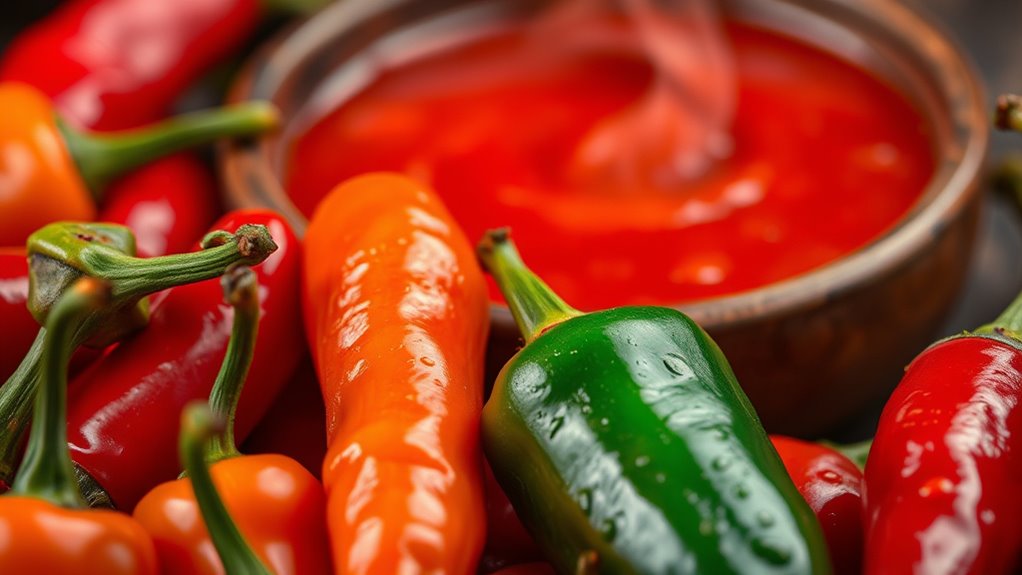
Have you ever wondered why spicy foods are so popular around the world? There’s something about that fiery kick that keeps people coming back for more, even when it makes your mouth burn. The secret lies in a compound called capsaicin, which is responsible for the heat in peppers. When I eat something spicy, I can feel the capsaicin effects almost immediately—my mouth heats up, and my senses seem sharper. That’s because capsaicin binds to pain receptors in your mouth, tricking your brain into thinking it’s experiencing real pain. But surprisingly, that burning sensation isn’t just about pain; it also triggers your body’s response to release endorphins, those natural painkillers that create a feeling of euphoria. So, in a way, the spice acts like a natural mood booster, which partly explains the spicy food cravings many of us have.
The interesting part is how the body reacts to capsaicin effects. When you consume spicy food, your nervous system kicks into gear, increasing blood flow and making you sweat as your body tries to cool down. This explains why some people even enjoy the burn—they associate it with the rush of adrenaline and endorphin release. Over time, some individuals develop a tolerance, craving more heat to get that same pleasurable feeling. I’ve noticed that my own spicy food cravings tend to spike when I’m stressed or looking for a little boost. It’s as if the spicy heat becomes a kind of comforting ritual, a way to stimulate my senses and lift my mood.
But it’s not just about the temporary thrill. There’s evidence that capsaicin effects can influence the gut too. It can promote digestion by increasing saliva and gastric juices, which helps break down food more efficiently. Of course, for some people, eating too much spicy food can lead to discomfort, like acid reflux or indigestion, because capsaicin can irritate the lining of the stomach. Still, many find that moderate consumption actually benefits gut health by encouraging better digestion and even having anti-inflammatory properties. I’ve noticed that a little spice can sometimes help settle my stomach, especially if I’ve eaten something heavy. However, everyone’s different, and listening to your body is key. Whether you crave the heat for its fiery effects or just enjoy the flavor, understanding the role of capsaicin effects helps explain why spicy foods hold such a universal appeal.
Frequently Asked Questions
Can Spicy Foods Cause Long-Term Gut Damage?
Spicy foods generally don’t cause long-term gut damage if eaten in moderation. They can trigger gut inflammation and discomfort initially, but sensory adaptation often reduces this over time. I’ve found that eating spicy foods regularly helps my body get used to them without lasting harm. However, for some people with sensitive guts or pre-existing conditions, excessive spicy intake might worsen inflammation, so it’s best to listen to your body.
Are There Health Benefits to Eating Spicy Foods Regularly?
Yes, eating spicy foods regularly can offer health benefits. Capsaicin, the compound that gives them their heat, has antioxidants that help fight inflammation and boost immunity. It may also help with weight management by reducing cravings, including spicy food cravings. Plus, capsaicin can improve digestion and promote heart health. So, if you enjoy spicy foods, you’re not just satisfying cravings—you’re also supporting your overall well-being.
How Do Spicy Foods Influence Gut Bacteria Diversity?
Spicy foods, thanks to capsaicin effects, can positively influence gut microbiota diversity. I’ve noticed that eating spicy dishes promotes the growth of beneficial bacteria, which improves digestion and overall gut health. Capsaicin stimulates the production of digestive enzymes and supports a balanced gut microbiota. So, including spicy foods in moderation can enhance your gut bacteria diversity, making your digestive system stronger and more resilient over time.
Why Do Some People Tolerate Spicy Foods Better Than Others?
I find that my capsaicin tolerance varies because of genetic factors. Some people naturally have fewer pain receptors or different enzyme levels, making them more comfortable with spicy foods. I’ve noticed that repeated exposure can also build my tolerance over time. So, it’s a combination of genetics and experience that determines why I, and others, tolerate spicy foods better or worse.
Can Spicy Foods Help With Weight Loss or Metabolism?
Sure, spicy foods might give your metabolism a little boost—temporarily, at least. They could also help suppress your appetite long enough for you to forget about that extra slice of cake. But don’t bet the diet on it! The real magic lies in balance. Spices can aid in weight management, but they’re no miracle cure. Incorporate them wisely, and enjoy the fiery ride to a healthier you.
Conclusion
So next time you reach for that fiery chili, remember it’s like a blazing sun on your tongue—hot and intense, yet warming your gut like a cozy fire in winter. The burn is fleeting, but the benefits linger, strengthening your digestive fire. Spicy foods are a fiery dance—sometimes fierce, sometimes soothing—reminding us that even in heat, there’s a touch of comfort waiting. Embrace the burn; it’s part of the spicy adventure.